



5 Key Facts About STL Files – The Core of 3D Printing
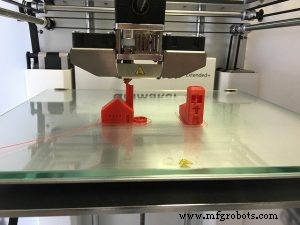
STL files, short for Standard Triangle Language, are the backbone of 3D printing. They’re the go‑to format for both hobbyists and industry professionals, enabling designers to transfer complex geometries to printers with ease.
#1. The Dominant 3D Printing File Format
While many printers accept a variety of file types, STL is the most widely used. It’s often the default format for new machines, and most slicing software outputs STL as the final print file.
#2. A Legacy From the Late 1980s
Contrary to popular belief, STL isn’t a recent invention. The format was first introduced by the Albert Consulting Group in 1987 to serve commercial‑grade printers. It quickly spread to consumer‑grade devices and remains the industry standard today.
#3. Little Has Evolved Since Its Creation
Despite over 30 years of use, the core specifications of STL have stayed largely unchanged. A 2009 update proposed minor tweaks, but the format still relies on the same triangular facet definitions that were used in the 1980s.
#4. Focused Solely on Surface Geometry
STL files describe the surface geometry of a model using triangles. They intentionally omit color, texture, and other material attributes, which is why they’re lightweight and universally supported.
#5. ASCII and Binary Variants
The standard STL format is ASCII, but its verbosity can make files unwieldy. The binary version, with an optional 80‑character header, reduces file size dramatically—often to less than 10% of the ASCII size—making it ideal for complex models.
Industrial equipment
- 5 Essential Insights About Gaskets: What You Need to Know
- Fiber Optic Cables: 5 Essential Facts You Need to Know
- 6 Expert Insights into Hinges: Design, Function, and Innovations
- 6 Key Facts About Rare‑Earth Magnets
- 5 Key Facts About Electromagnets: How They Work & Why They Matter
- 5 Key Insights into Laser Cutting Technology
- 6 Key Insights About Laser Engraving Technology
- 6 Key Facts About Screwdrivers: History, Types, and Features
- Understanding STL Files: The Backbone of 3D Printing
- Mastering STL Files: A Complete Guide for 3D Printing