



5 Key Facts About Electromagnets: How They Work & Why They Matter
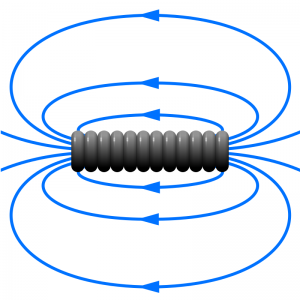
Not every magnet is a solid block of ferromagnetic material. Electromagnets—constructed from wire coils—produce a magnetic field only when electric current flows through them. Once the current stops, the field collapses, giving these devices a unique controllability that traditional permanent magnets lack.
#1) Fully Controllable
Electromagnets are uniquely controllable: the magnetic field appears only while current passes through the coil. By simply cutting the power, the field vanishes, allowing precise on/off operation. This feature makes electromagnets indispensable in modern technology where magnetic fields must be switched quickly and safely.
#2) Discovered in the 19th Century
The phenomenon was first observed by Danish scientist Hans Christian Ørsted in 1820 when he noticed that a current‑carrying wire deflected a nearby compass needle. A decade later, British inventor William Sturgeon built the first practical electromagnet, using a copper coil energized with a voltage source to generate a measurable magnetic field.
#3) Adjustable Power Level
Unlike permanent magnets, electromagnets allow the magnetic field strength to be tuned by adjusting the current. Higher current produces a stronger field; reducing current weakens it. This adjustability is essential in applications ranging from small relays to large industrial motors.
#4) Crucial in MRI Machines
Modern magnetic resonance imaging (MRI) scanners rely on superconducting electromagnets that generate extremely strong, stable magnetic fields—often powerful enough to lift heavy objects. These coils are cooled with liquid helium to achieve superconductivity, enabling the high field strengths required for detailed body imaging. Because of the intense magnetic field, patients must remove metal objects before entering the scanner.
#5) Integral to Generators
Wind, hydro, and other electrical generators depend on electromagnets. A rotating coil (or armature) passes through the magnetic field of a stationary electromagnet, inducing an electric current via Faraday’s law of induction. This principle underpins the generation of clean, renewable electricity worldwide.
Industrial equipment
- 5 Essential Insights About Gaskets: What You Need to Know
- Fiber Optic Cables: 5 Essential Facts You Need to Know
- 6 Expert Insights into Hinges: Design, Function, and Innovations
- 6 Key Facts About Rare‑Earth Magnets
- 5 Key Insights into Laser Cutting Technology
- 5 Key Facts About Chromium: From Stainless Steel to Stunning Reflectivity
- 6 Key Insights About Laser Engraving Technology
- 6 Key Facts About Screwdrivers: History, Types, and Features
- 5 Surprising Facts About Tungsten That Highlight Its Industrial Power
- 5 Fascinating Facts About Tungsten: Naming, Melting Point, and More