



Ensuring Clean Air: A Professional Guide to Managing Oil Mist in Manufacturing
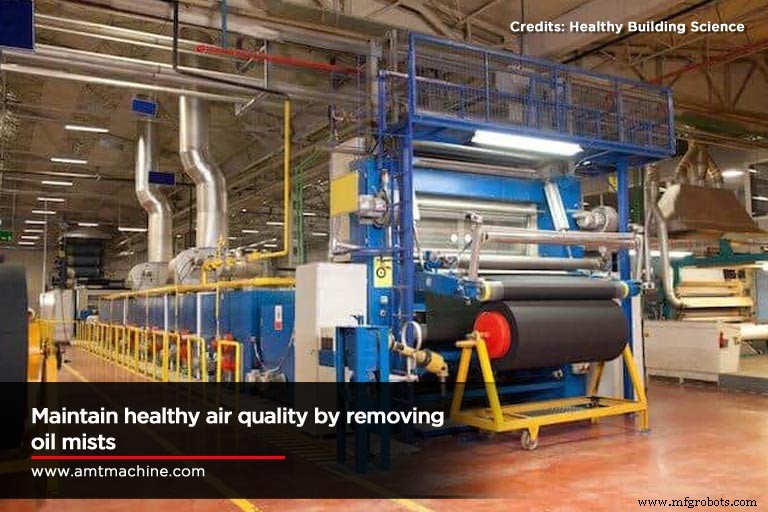
Oil mists are a natural product of machining processes that need to be monitored and controlled. An overabundance of oil mist particles in a shop, warehouse, or manufacturing floor can bring health hazards. Exposure to these pollutants can cause various skin diseases, respiratory health issues, and in extreme cases, cancer.
Sources and effects
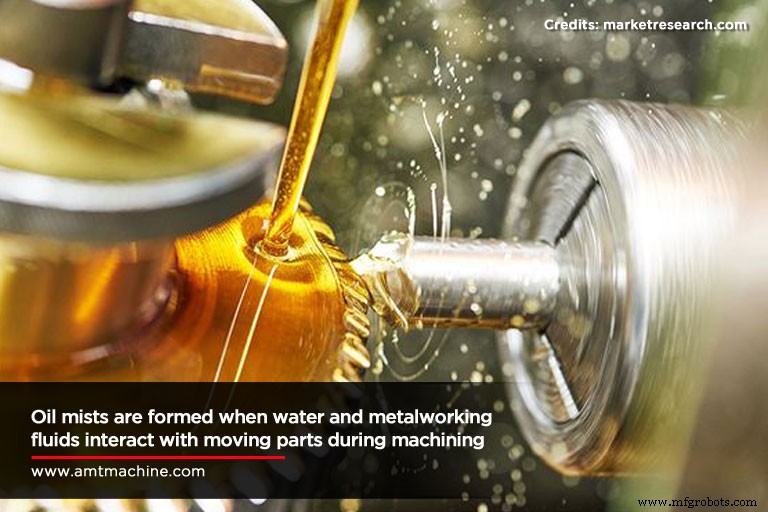
How are oil mists formed? Oil mists are created when metalworking fluids (MWFs) are sprayed to metal components to lubricate them or maintain their coolness. MWFs are used in many machining processes like drilling, turning, milling, grinding, and finishing.
Manufacturing lubricants are classified into two categories:
- Emulsion coolants – These are concentrated cooling-lubricant fluids that are diluted with water according to their intended usage concentration. They are a great agent for effectively dissipating heat and mainly used to cool metals.
- Straight oil coolants – Also called pure oil, this coolant variety is not soluble in water and is applied based on the composition specified by the manufacturer. Unlike emulsion coolants, straight oils are known for their lubricating properties.
Regardless of the type of fluid used, the application of any coolant will generate and emit fine mist particles in the air. This is the inevitable result when water and oil are mixed in the process. The emissions that result from this process are lumped into three categories:
- Coolant vapours – Gaseous substances that come from heating a liquid coolant
- Coolant-mist aerosols – Liquid aerosols that result from condensation following a mechanical or cooling process
- Coolant fumes – The byproduct of combustion processes, coolant fumes are solid particles released in the air.
These emissions might contain various additives like alkanolamines, colourants, dispersants, corrosion inhibitors, dyes, and anti-mist agents. Consistent exposure to these additives can pose a range of health concerns and create a hazardous work environment.
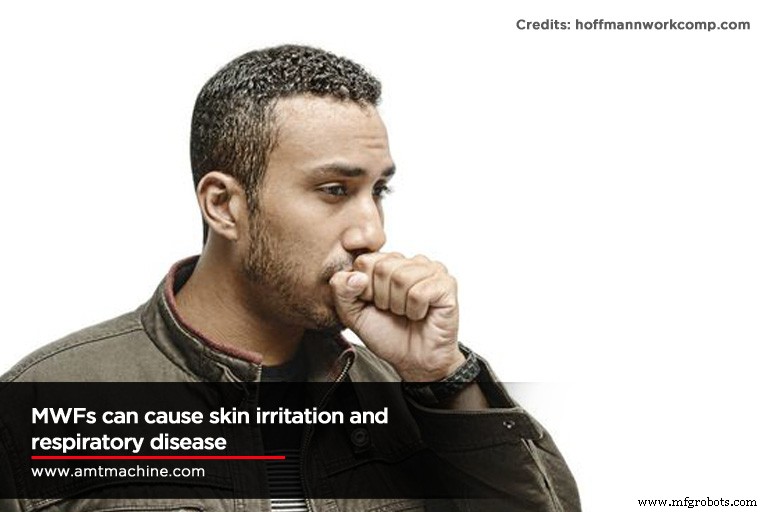
According to the Canadian Centre for Occupational Health and Safety (CCOHS), the ingestion of or contact with MWFs may result in the following major health concerns:
- Skin infection – All categories of MWFs can irritate the skin and may aggravate existing medical conditions. A worker can be exposed to its health risks when he touches the fluid, or when a person frequently handles the tools and pieces of equipment covered in a particular liquid. The likelihood of contracting skin infections also increases if a person does not wear protective gear.
Contact dermatitis is one of the skin conditions that can occur after constant exposure to synthetic, semi-synthetic, and soluble fluids. Tiny slivers of metals, also known as fines and swarfs, can worsen existing skin irritations. The chances of absorption through the skin are higher when a person has cuts or breaks in his skin. Fluids can also splash onto the skin during the cleaning and maintenance operations done on the machines.
- Respiratory diseases – Exposure to oil mist, vapour, and liquid aerosols can irritate the respiratory tract, which may then result in sore throat, breathing problems, and respiratory diseases like asthma and bronchitis. MWFs like soluble and straight oils can reportedly cause asthma.
Generally, the severity and the type of illness depend mainly on what MWF is applied, the mode of contamination to the fluid, and the duration and frequency of the person’s exposure to the MWF.
Maintaining healthy air quality
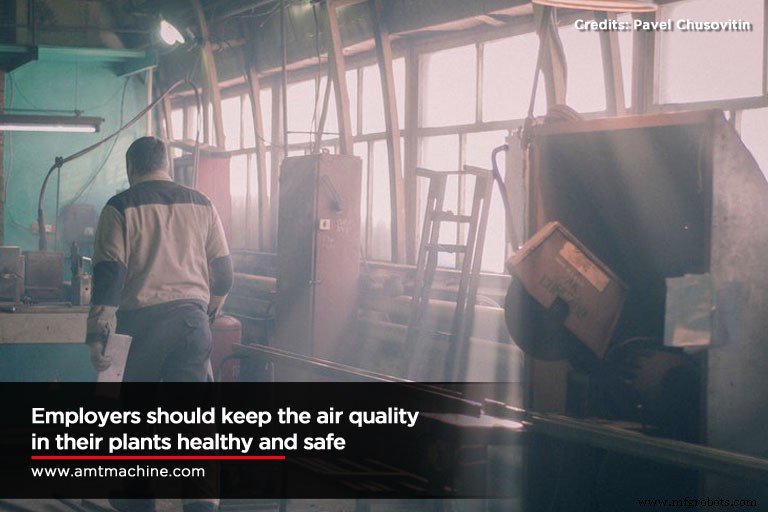
Canada has set numerous regulations in place that aim to protect workers from the health hazards caused by exposure to oil mists. The Canada Occupational Health and Safety Regulations cites that employers shall develop and maintain a “procedure for the control of the concentration or level of the hazardous substance in the workplace.” It also suggests that procedures requiring the use of such substance shall be “limited to the quantity required for one work day” to minimize exposure to workers.
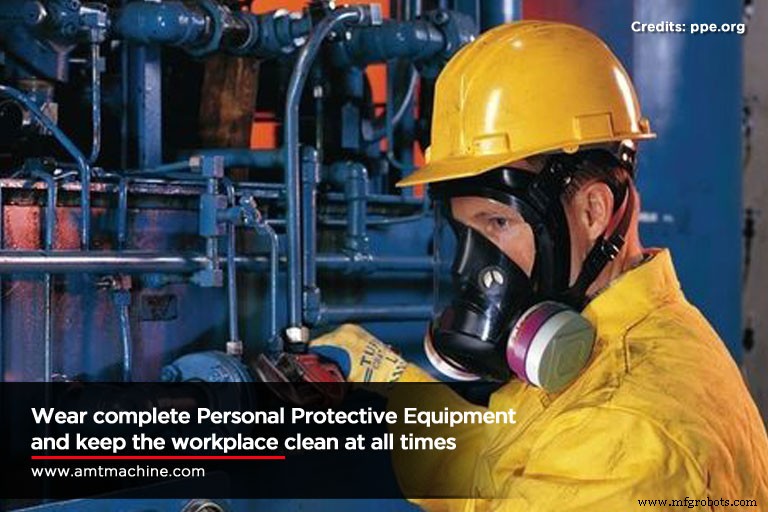
Other recommended control measures are the following:
- Use complete Personal Protective Equipment (PPE) – It is every employer’s responsibility to provide PPE for all their staff. Employees also need to undergo training on what PPE to wear for particular operations, the proper way to wear remove them, and how to take care of their PPE.
When handling metalworking machines and MWFs, employees should be provided with PPE that give them thorough protection from chemicals and fluids, sharp-edged parts, metal particles, machine noise, and falling debris. Clothing that can resist chemicals is also necessary.
- Stress out the importance of good personal hygiene – It would be best to remind your staff to diligently adhere to personal hygiene before and after handling machines and fluids. Always keep skin clean by washing with soap and clean water.
Make sure to wear clean work clothes. Minimize the risk of accidental ingestion by not eating, drinking, or smoking within the work area. Maintain cleanliness in the entire work area. Clean the machines thoroughly and change the MWF when needed. If you see oil on the floor, clean it up and locate the source to stop the leakage right away.
- Improve the ventilation system – Ventilation prevents the circulation and accumulation of air contaminants. Make sure to provide a local exhaust that’s near the source to make it more effective.
- Install an oil mist extraction system – Oil mist and other airborne pollutants are easy to remove using an oil mist extractor. The device is uniquely designed to gather and filter water-soluble and synthetic coolants from machine operations and industrial processes before they have the chance to contaminate a healthy working environment.
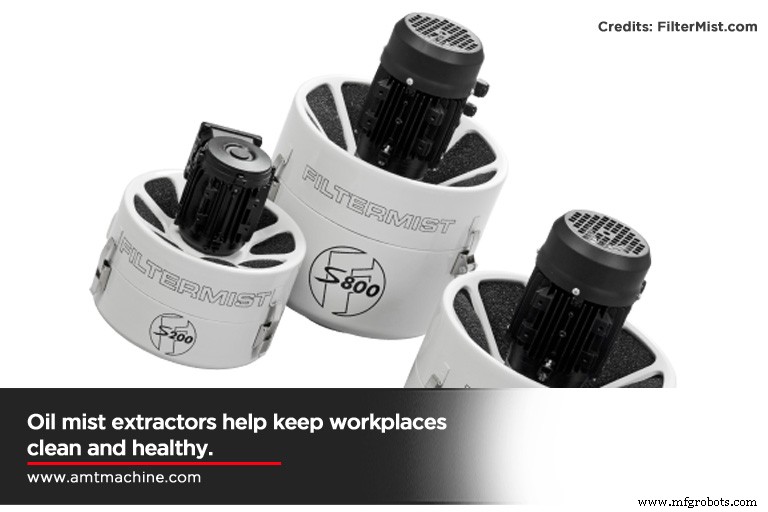
How does an oil mist remover work?
An efficient oil mist removal device is a perforated drum with a set of vanes which rotates at high speed. The oil mist is removed from the dirty air through coalescence, a process where droplets combine to form larger drops, making the removal of oil from the air more manageable. Once removed, the clean oil is pushed back to the machine, and the clean air is returned to the workplace.
The benefits of controlling oil mists include:
- Safety – Reduced health risks, reduced accident risks, better lighting, and reduced fire hazards
- Cost savings – Save on coolant costs, heating costs, and cleaning & maintenance costs
- Increased productivity – Improved employee attendance, less machine downtime, reduced scrap rates, and higher speeds & feeds
Good air quality in the workplace boosts employee health and productivity. All manufacturers have the opportunity to make their workplaces cleaner and healthier than before. An essential step toward that goal is to eliminate oil mist that can result in serious occupational illness.
When it comes to eliminating mist and smoke from your shop, warehouse, or manufacturing floor, you need the best and proven solution that is widely used by manufacturers all over the globe. That is why we carry Filtermist oil mist collectors, the finest collectors in the industry. With many models to choose from, Filtermist is the premier source for mist collectors.
Contact AMT Machine Tools now, or call 416-675-7760 for the finest selection of machine tools in the province. We are proud to serve all of Canada.
Industrial equipment
- Routine Maintenance: A Practical Guide to Extending Asset Life
- Java 8: A Comprehensive Quick Reference Guide
- Advanced Carbon‑Based NO₂ Sensor Enhances Indoor Air Quality Monitoring
- Oil Rig Equipment: A Professional Guide to Modern Extraction Technology
- Metal Alloys for Oil & Gas: A Comprehensive Guide to Corrosion Resistance
- GD&T Parallelism: A Quick Reference Guide
- Understanding Power Chucks: A Comprehensive Guide for Precision Machining
- Essential Guide to CNC Machine Oil Skimmers: Boost Performance & Reduce Contamination
- Essential Machine Shop Safety: A Practical Guide for Operators
- Why Air Quality Matters: Protecting Your Systems and Products