



Flexible Screw Conveyors: Advantages, Drawbacks, and Practical Insights
A conveyor is one important material handling equipment used across industries. As its name suggests, it conveys different products over long distances at varying speeds. There are different types of conveyors available, among which flexible screw conveyors have gained immense traction. These conveyors have many names such as flex conveyors, flexible spiral conveyors, helix or helical conveyors, and more. They are designed to convey bulk dry solid materials between two points in any direction – horizontally, vertically, route around fixed equipment, and more. Thus, flexible screw conveyors are an ideal choice for batch-type processing applications. They have become an attractive equipment option owing to their simple construction, straightforward operation, low maintenance, and many more. This post discusses the benefits and limitations of flexible screw conveyors in detail. So, stay tuned.
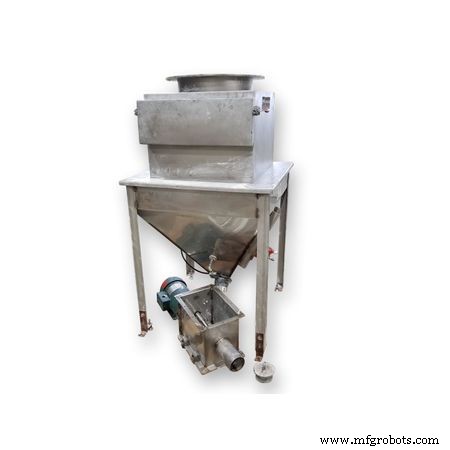
A Quick Introduction to Flexible Screw Conveyors and Its Working
Flexible screw conveyors are amongst the most widely used type of conveyors. They can transfer different types of free-flowing as well as non-free-flowing materials such as powder, granules, and small pellets using a spiral-shaped auger inside a casing. A flexible screw conveyor has a conveyor casing, an inlet hopper, a helical auger, and more. The conveyor is called flexible as the casing of the conveyor is made of ultra-high molecular weight polyethylene or UHMW- PE and the auger portion (a helical part or shaft) is a shaft-less design.
The operating principle of a flexible screw conveyor is simple. The twisted screws rotate within a tube and create a directional force. The force moves the material upward through the tube from the entrance of the equipment to the discharging point. Both, the screw and tube are flexible within the desired range and best suited for the type of material being conveyed.
Advantages of Flexible Screw Conveyors Explained
Flexible screw conveyors are a worthwhile addition to your facility. With a relatively simple construction and low operating cost, they have become a great option for transferring sluggish to free-flowing material. The following notable features make them popular across industries. Let’s have a look at them.
- Small in Size and Easy to Clean: The flexible screw conveyor is compact and can fit in small industrial units or assemblies. Also, they can be easily cleaned after each conveyance by running the motor in reverse mode. They use the sealed tube to pass the material, thus eliminating several issues related to product dust. Simply put, flexible screw conveyors are mechanically dust-tight. The tube and screws of the conveyor can easily bend within the mentioned radius. Thus, the conveyor can be routed around fixed obstacles.
- Minimal Maintenance: Flexible screw conveyors have only one moving part located at the top of the discharge head. Thus, they are not prone to frequent damages and require minimal maintenance.
- Easy Disassembling: These conveyors can be easily disassembled by separating the j-bolts, the clean-out cap, and more. The casing of the screw conveyor is removed by releasing couplings connected to the discharge head and the hopper.
- Adjustable Length: The length of the conveying unit can be adjusted as per the conveying requirement of the industry such as water treatment, pharmaceuticals, chemicals, plastic and rubber, and so on.
- Cost-effectiveness: As compared to the traditional conveyor system, flexible screw conveyors are relatively inexpensive. The initial investment is low, and this makes them a great equipment choice across applications.
Limitations of Flexible Screw Conveyors
Even with the above-mentioned advantages of flexible screw conveyors, they do have certain limitations. Here are a few important ones:
- Flexible screw conveyors are not designed to convey slurries, high moisture, large solid particles as these materials can reduce their effectiveness.
- Particle breakage of friable or fragile materials could be the result of the excessive grinding between the tube and the rotating screw.
- The screw conveyors should not run dry for a long time as this may lead to early wear of the auger.
- These conveyors cannot move materials that are more than 40 feet in length.
With this information, you’ll get a clear idea of both material characteristics and applications for selecting the appropriate new or used conveyor for your application. If you are going low on budget, then you can opt for used screw conveyors. JM Industrial is a reliable supplier of used and unused flexible screw conveyors, and more.
Industrial equipment
- Exploring the Power and Limits of Genetic Algorithms
- Why Every Business Should Invest in Print & Apply Machines: 5 Key Benefits
- 9 Proven Advantages of Flexible Screw Conveyors for Efficient Bulk Material Transport
- 5 Essential Benefits and Applications of Wire EDM Technology
- CNC Machines Explained: Types, Components, and Key Advantages
- Sinker EDM Machines: How They Work, Benefits, and Limitations
- Screw vs. Bolt: Key Differences, Types, and Applications
- Top 7 Benefits of Renting Trench & Shoring Equipment for Your Project
- Kawasaki K5V Hydraulic Pump – Durable, Easy‑Installation Replacement for Rotary Mower
- Kawasaki K3VL Hydraulic Pump: Superior Performance and Reliability