



Down-Acting vs Up-Acting Press Brakes: Which Design Wins?
There are two main types of press brake designs available; Down-Acting and Up-Acting machines. Deciding on a design is usually mader based on your experience with one or the other previously. However there are some unique advantages and disadvantages of each design that should be taken into consideration when selecting a press brake.
-
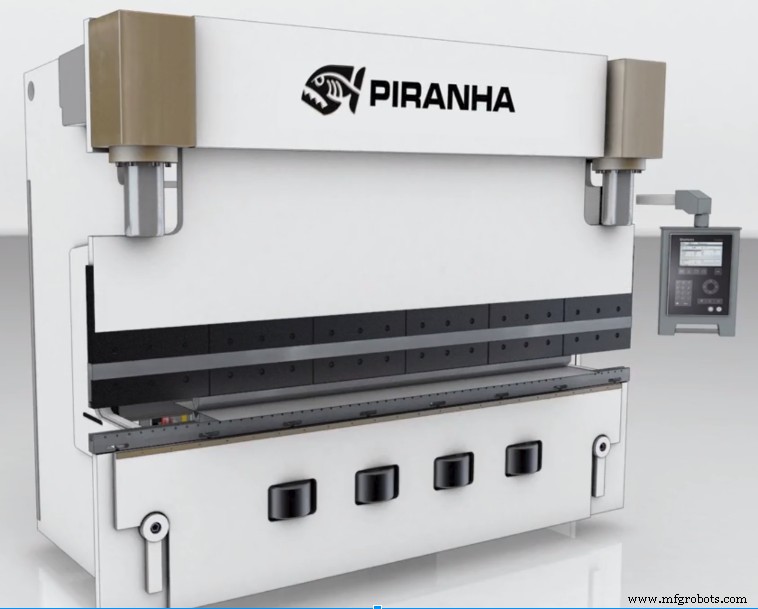
A Down-acting Press Brake refers to the motion of the upper Ram moving Downward to a fixed bed holding the bottom die set that the materials formed on. Typically driven by 2 or more hydraulic Cylinders and top mounted hydraulics a down acting machine is most popular and is the widest available press brake on the new and used market and one that most every fabricator is familiar with.
-
 An Up-Acting machine has a lower beam or “Bed” that moves upward carrying the Die and Part towards the fixed Ram which holds the forming punch. This method of motion allows for hydraulics to be mounted low but requires a bit more finesses by the operator to hold thapart in position during the entire range of motion.
Advantage Down Acting:
- Part stays fixed during approach process
- Most common Design
- Available in all tonnages
Disadvantage Down Acting
- Ram can Drop during a power outage and could create an unsafe environment.
- Ram must commonly “blocked” at night to take pressure off of the hydraulic system.
- Design Necessities need for “crowning” devices
HERE you can see a short video of a Down Acting Press Brake in action
Advantage Up Acting
-
Hydraulically driven from the center of ram reduces need for crowning devices
-
Hydraulics are located down low so maintenance is easier.
-
Machine height is typically shorter for low clearance needs.
Disadvantage Up-Acting
-
Part moves during approach process requiring careful handling to keep on gauge points.
-
Bending Tonnage is limited (typically 35-150 Tons Max).
-
Machine is typically slower on approach speeds
-
Bending should be performed only in the middle of the ram
-
Less common design.
HERE You can see a short video of an Up-Acting brake in Operation
Application:
Typically we see the Up-Acting machines employed to manufacture smaller components that can be rested in place by its own weight during the approach and bending process. However the motion of the Up-Acting brake does not limit its capabilities and many shops actually prefer its operation over that of the Down Acting type. Either of these designs can be equipped with Robotics or Automation for
Manufacturers of Down-Acting Brakes include: Accurpress, Amada, Bystronic, Cincinnati, Durma, Ermaksan, Hydrapower, Standard-Industrial, LVD, Pacific, Trumpf and others
Manufacturer’s of Up-Acting Brakes include: https://www.southernfabsales.com/machines/tag/press-brakehttps://www.southernfabsales.com/machines/tag/press-brake.
Whether you choose Down-Acting or Up-Acting for your metal fabricating and forming, Southern Fabricating Machinery Sales, Inc. can assist you in selecting the right press brake for your needs and budget. You may also want to check out our recent Blog article on Press Brake CROWNING.
Call us today at 813-444-4555 or visit us at www.southernfabsales.com for personal assistance with your used or new press brake needs.
Industrial equipment
- Unlocking Efficiency: The Advantages of Modern CNC Press Brakes
- Top 4 Advantages of Thruster Brakes for Industrial Efficiency
- Disc vs Drum Brakes: Choosing the Right System for Optimal Performance
- Maximize Operational Efficiency with Professional Industrial Brake Service
- Advanced Press Brakes & Sheet Metal Machinery – Precision CNC Solutions
- RS232 vs RS485: Selecting the Ideal Serial Communication Standard
- What Drives Modern Press Brakes?
- Mastering Press Brake Operations: A Professional Guide
- Top 10 Advantages of Press Brakes for Fabrication Efficiency
- Mastering Press Brake Bending: Three Essential Techniques