



Why Capping Hose Assemblies Protects Your Hydraulic System
Once a hydraulic hose assembly has been properly cleaned and crimped, there is still one more important step to ensuring they remain clean and contamination-free before use. Plumbing systems are often the largest locations for built-in contamination versus the rest of the hydraulic system. So, immediately capping the hose ends with either protective injection molded plastic caps and plugs, or heat-shrinkable capsules is vital.
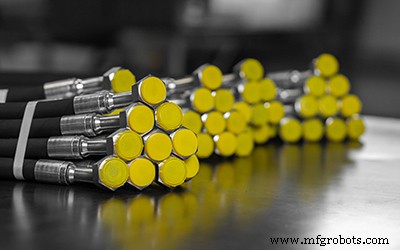
Plastic caps and plugs can be manufactured in a variety of materials to protect most styles of hydraulic hose fittings, flanges, and couplings, and can be made with several attributes to ensure a good fit and match. Caps come with a female-threaded end that screws into the male-threaded hose end and cover the openings. The male plugs have a male thread and various head shapes. Because they come in many shapes, sizes, and styles, it is imperative to ensure that the caps and plugs are compatible to the specific type of fitting to keep hose contaminant free.
Encapsulated seals simply encapsulate either hose end — the crimped fitting or tube end — of an assembly through a quick heat-shrinkable process and installation. For example, Ultra Clean’s Clean Seal Capsules shrink approximately 45% during the process which takes about one second.
Because they are heat-sealed, encapsulated designs do not generate contamination. Injection molded caps and plugs, if specified correctly, prevent contamination as well. However, if the wrong size or design is chosen, and depending on how tightly they fit over a male thread or into a female thread, they can create contamination.
Built-in tear strips on the encapsulated designs ensure fast and clean removal and reduce the risk of contamination by keeping the hose covered until the exact moment of installation. On caps and plugs, however, the sharp threads can shear bits of the plastic off, which would end up inside of the cleaned hose assembly. Or, if they are not tight enough, contaminants can slip through the gaps. Therefore, it is imperative to select the correct material, style and thread type for plastic caps and plugs.
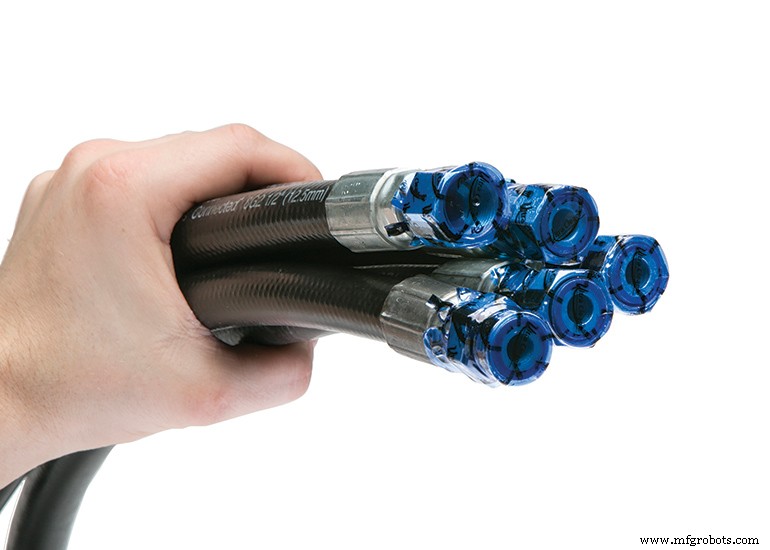
Another advantage to encapsulated designs is that they will not fall off during transportation or storage of the assembly. Once it shrinks on, it conforms to the shape of the fitting. These caps are prestacked in stick form so when you pull that top capsule off, it’s always clean on the inside. They are available in a number of sizes from the smallest hose fitting on a dash four hose all the way up through a dash 32.
Finally, both designs can be customized. Injection-molded caps and plugs can be manufactured in a variety of colors to suit customer preference, while the heat-shrink capsules can be private-labeled with customer name and logo.
Cleaning and capping your hose assemblies gives them a professional look and more importantly, eliminates the risk of contamination before it’s installed on its intended machinery.
Industrial equipment
- Why Manual Robot Programming Is Obsolete: Embrace AI‑Powered Automation
- Why D.E.F.I. Is the Premier Choice for Houston Fiberglass Solutions
- Why 3D‑Printing Your End‑of‑Arm Tools Saves Cost, Weight, and Time
- Top 3 Reasons to Upgrade Your Industrial Equipment Today
- Why Your Team Must Master Machine Maintenance: Boost Reliability & Cut Costs
- Why Digitizing Industrial Documentation Is Essential for Modern Manufacturing
- Maximize Returns: The Benefits of Consignment Sales for Your Used Machinery
- Why Replacing Defective Blades is Crucial: Safety, Quality, and Productivity
- Unlock Advanced Automation: Why 3D Vision Is Essential for Your Projects
- The Critical Importance of Cleaning New Hose Assemblies Before Use