



Why 3D‑Printing Your End‑of‑Arm Tools Saves Cost, Weight, and Time
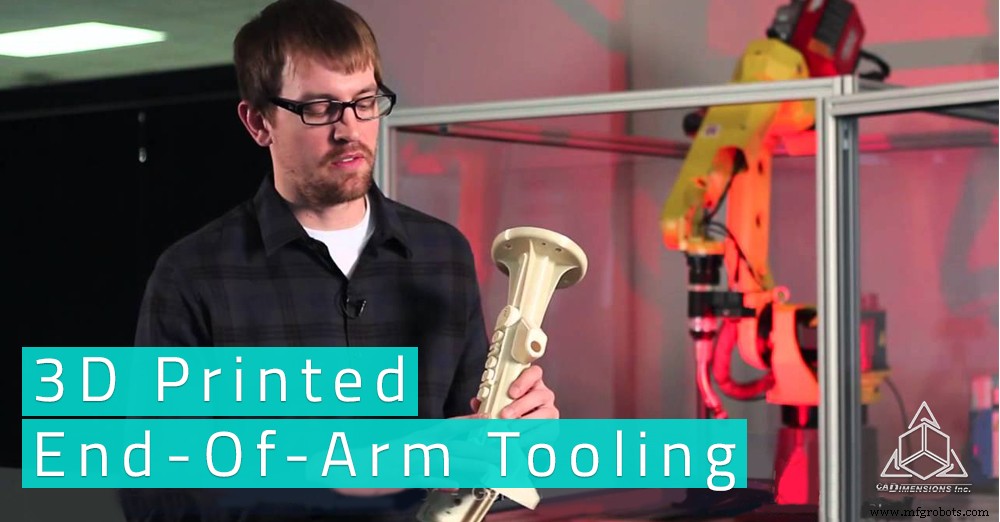
End‑of‑arm tools are essential for every automated production line. Despite the COVID‑19 slowdown, the industrial automation market is projected to reach USD 296.70 billion by 2026. Whether a robot is assembling automotive parts, packaging consumer goods, or performing precision welding, a reliable gripper or tool is critical.
Industry feedback shows that many manufacturers still resist 3D printing for tool fabrication. Yet, when the goal is to produce a custom, lightweight component, additive manufacturing is often the most efficient path.
- It is rarely cost‑effective to mill a part that could be turned on a lathe.
- Injection moulding is overkill for a component that can be produced with a simple extrusion die.
- Printing a part is slower than folding sheet metal only when the geometry truly requires it.
Building an end‑of‑arm tool from thousands of milled aluminium pieces and fasteners is wasteful when a single 3D‑printed part can deliver the same function—often in less time and at lower cost.
Lighter End‑of‑Arm Tools
Aluminium remains a popular material for its affordability and machinability, but its density of 2.7 g/cm³ means heavier end‑of‑arm tools. ULTEM (PEI) has a density of only 1.27 g/cm³, less than half that of aluminium.
By printing a thick outer shell and infilling the interior at 40‑60 % density, manufacturers can significantly reduce material use, weight, and print time.
| Material | Density | Source |
| Aluminium | 2.7 g/cm³ | Elmhurst.edu |
| PEI (ULTEM) | 1.27 g/cm³ | SigmaAldrich |
Faster Operations
A lighter tool allows a robot to move faster with the same payload, translating directly into higher daily throughput. In many cases, the operational speed gains are the most immediate ROI.
Lower Robot Arm Cost
Robotic systems can be prohibitively expensive, with base hardware often starting around $10 k and additional software or integration fees on top. The total cost is tightly coupled to the mass the arm must move and the reach required.
Designing for 3D printing from the outset can reduce the tool’s weight from, say, 5 lb to 1 lb. This weight savings allows companies to choose a smaller, cheaper robot—cutting a significant portion of the purchase price.
Consolidate Assemblies
Conventional end‑of‑arm tools are usually multi‑part assemblies, each requiring sourcing, machining, and assembly. 3D printing lets designers rethink the tool’s geometry from the ground up, eliminating unnecessary parts and streamlining the build.
Genesis, for example, redesigned their tool to integrate vacuum lines and reduced the part count from dozens to a single printed piece. The result was a more robust tool and a 17‑day reduction in manufacturing time.
Click here to download the full Genesis case study and learn how they achieved these savings.
Get Your Parts 3D Printed
The CADimensions team are your local 3D printing specialists. Use our instant quote form and see how much your part will cost and in which material.
Instant 3D Printing Parts Quote
3D printing
- Why Manual Robot Programming Is Obsolete: Embrace AI‑Powered Automation
- Top 3 Reasons to Upgrade Your Industrial Equipment Today
- 5 Key Insights on Micro Tools for Precision Machining
- Why Your Team Must Master Machine Maintenance: Boost Reliability & Cut Costs
- Why Digitizing Industrial Documentation Is Essential for Modern Manufacturing
- How Often Should You Level Your 3D Printer Bed for Optimal Print Quality?
- PMMA Filament: The Ultimate Choice for Strength & Durability in 3D Printing
- Why Replacing Defective Blades is Crucial: Safety, Quality, and Productivity
- Unlock Advanced Automation: Why 3D Vision Is Essential for Your Projects
- Why Capping Hose Assemblies Protects Your Hydraulic System