



5 Key Benefits of Adopting SLS Technology for Your Manufacturing Workflow
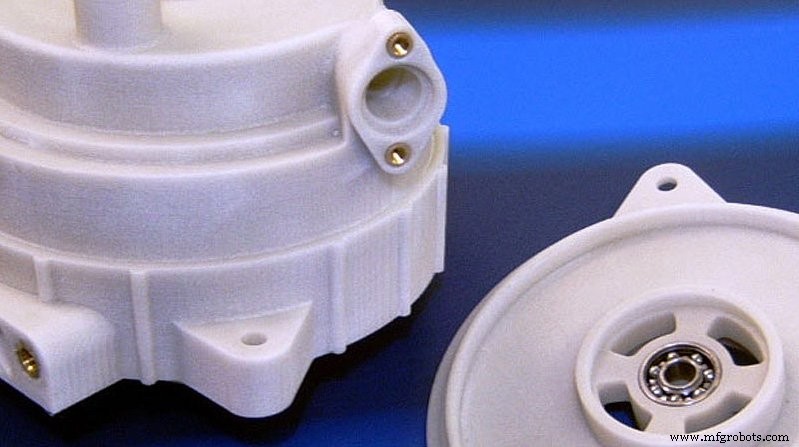
Selective Laser Sintering (SLS) has evolved from a prototyping tool into a mainstream solution for producing low‑volume end parts and support structures such as jigs and fixtures across diverse sectors. By unlocking unprecedented design freedom, SLS delivers tangible advantages that can transform product development and production.
Why should your company consider bringing SLS‑printed parts in‑house?
-
Produce Highly Complex, Lightweight Parts
SLS excels at fabricating intricate geometries without the need for external support structures—unlike SLA or FDM. The excess powder acts as an integral support system, enabling overhangs, lattice cores, and other advanced features that would be impossible or prohibitively expensive with traditional methods. Engineers can therefore create lightweight, high‑strength components ideal for aerospace, automotive, and other performance‑critical applications.
-
Save Time and Maximise Production Capacity
With SLS, you can print complex assemblies in a single build run, eliminating the need for multiple parts and reducing set‑up time. The technology also allows incremental additions during a print, so design iterations can be made on the fly without restarting the entire process. Post‑processing is streamlined, as no support removal is required, further cutting cycle time.
-
Enable Mass Customisation and On‑Demand Production
Traditional manufacturing struggles with small‑batch or one‑off parts because of tooling costs. SLS removes that barrier, enabling small‑series production without expensive molds. Leading industry players—Daimler Trucks North America, Porsche, and Emirates Airlines—already use SLS to produce spare parts on demand, reducing inventory footprints and improving supply‑chain agility.
-
Accelerate Product Development Cycles
SLS allows rapid prototyping and iteration within days, shortening the overall development timeline. Because no tooling is required, end‑use parts can be produced directly from CAD, bypassing the lengthy mold‑making stage common to injection moulding and other subtractive methods.
-
Deliver Parts with Strong, Reliable Material Properties
Polyamide and other engineering thermoplastics used in SLS offer isotropic strength, chemical resistance, and heat tolerance comparable to injection‑moulded components. The process also supports a growing range of materials—including metal powders—expanding the application envelope for durable, high‑performance parts.
Final Thoughts
While SLS brings significant benefits, it represents a substantial investment. Aligning your production goals with the capabilities of SLS—and ensuring you have the right expertise—will maximize the return on this technology. Evaluate your specific needs before integrating SLS into your in‑house workflow.
Learn More About SLS
Download our free white paper to explore how SLS can transform your manufacturing strategy.
3D printing
- Five Key Considerations for Safely Cleaning SLS 3D Prints
- Why IXON Is Your Ideal Industrial IoT and Remote Access Partner
- Top 3 Reasons to Upgrade Your Industrial Equipment Today
- 3 Key Reasons to Overhaul Your MV Motor for Optimal Performance
- Enhance Safety: The Business Case for Fire-Resistant Plastics in Product Design
- Why Your Company Needs a Data Acquisition System: 10 Compelling Reasons
- Why Digitizing Industrial Documentation Is Essential for Modern Manufacturing
- 4 Compelling Reasons to Use Reconditioned Parts for Your Heavy Machinery
- Why Replacing Defective Blades is Crucial: Safety, Quality, and Productivity
- 10 Key Benefits of Upgrading to ThinManager for Your Manufacturing Facility