



Integrating Simulation with 3D Printing: A Proven Path to Faster, Cost‑Effective Design
When comparing additive manufacturing to traditional methods, material property differences are a key consideration. The chart on the left summarizes performance criteria and how 3D printing stacks up against CAE.
Each 3D‑printing technique delivers a unique set of mechanical and thermal properties, as well as layer‑bonding characteristics that distinguish it from components produced by injection molding. Whether the material is a thermoplastic or a thermoset, these qualities dictate its potential applications.
FDM 3D Printing and Popular Materials
Fused Deposition Modeling (FDM) offers the advantage of true thermoplastics, giving engineers a familiar material palette. Common FDM materials such as polycarbonate and Nylon 12 are ideal for pre‑production prototypes, but the inherent layer structure produces anisotropic behavior that must be considered during testing.
Validating Design Performance Virtually with Simulation
Simulation bridges predictive gaps and prevents costly missteps. While rapid prototyping makes printing a “bad idea” preferable to moulding, evaluating design performance virtually reduces printer waste and yields deeper insight into real‑world behavior.
Even when parts are close to production quality, virtual testing offers distinct advantages over physical trials. It provides a noise‑free environment for apples‑to‑apples comparisons and allows visualization of complex phenomena—such as fluid flow and stress distributions—that would be intrusive or expensive to capture physically.
Physical vs. Virtual Testing
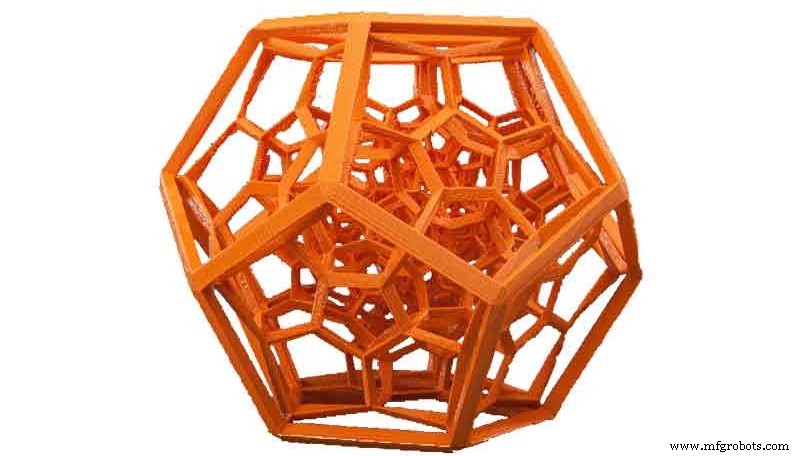
3D printing now lets us bring simulation results to life. Simulation has long been a powerful visualization tool; with tangible prototypes, designers can literally “feel” the data and refine their concepts.
Using Simulation and 3D Printing for Design Optimization
Shape optimization is one of the most exciting advances in CAE and 3D printing. A single study for one load scenario can be extended across multiple use cases, dramatically increasing value when tools like solidThinking Inspire integrate simulation into the workflow.
Optimization Workflow Using solidThinking Inspire
Topology‑optimization tools have evolved from simple shape constraints to sophisticated manufacturing‑aware algorithms. With 3D printing as a viable manufacturing route, designers can explore geometries that were previously infeasible, while still accounting for process effects.
3D Printing Process Simulation Workflow
Printing hundreds of parts with varied build paths and settings is costly and time‑consuming. Modern simulation tools predict the impact of printing variables—such as temperature, layer orientation, and cooling rates—on the final part, enabling engineers to fine‑tune process parameters before a single prototype is produced.
3D printing
- Remote Commissioning: Unlocking Efficiency and Flexibility in Industrial Operations
- Polymer Nanocomposites: Unlocking Superior Strength, Efficiency, and Innovation
- Why D.E.F.I. Is the Premier Choice for Houston Fiberglass Solutions
- Cybersecurity for Manufacturers: Why It Matters and How to Stay Safe
- Protect Your Motors: The Essential Benefits of Line Reactors
- Maximize Efficiency with Remote Expert Solutions in Industry 4.0
- Combat Workplace Fatigue: Why It Matters & How to Stay Alert
- PMMA Filament: The Ultimate Choice for Strength & Durability in 3D Printing
- NylonX vs. CarbonX: Choosing the Right Material for Your 3D Printing Projects
- Why a DC Motor Controller Is Essential: 7 Key Benefits