



Mastering Post‑Processing in Industrial 3D Printing: Emerging Trends and Solutions
Post‑processing is often the bottleneck in industrial additive manufacturing (AM). Every AM technology demands a unique set of finishing steps that must be as automated as possible to keep production running smoothly.
In recent years the industry has begun to address these challenges. New solutions now help automate and optimise the post‑print workflow for both polymer and metal parts, unlocking the full productivity potential of AM.
Related articles in this series:
- How the 3D Printing Hardware Market is Evolving in 2019
- The Evolution of 3D Printing Materials Market: Trends and Opportunities in 2019
- 3D Printing Software: Achieving True Digital Production
Automating Post‑Processing for Polymer Parts
Polymer printing—whether via powder bed or extrusion—relies heavily on manual support removal, resin washing, and powder cleaning. These labor‑intensive tasks become major bottlenecks when scaling up or adding new printer types.
Companies such as Rösler, PostProcess Technologies, AMT and DyeMansion are now delivering turnkey solutions that streamline every step of the polymer workflow.
AMT’s PostPro3D: An End‑to‑End Finishing System
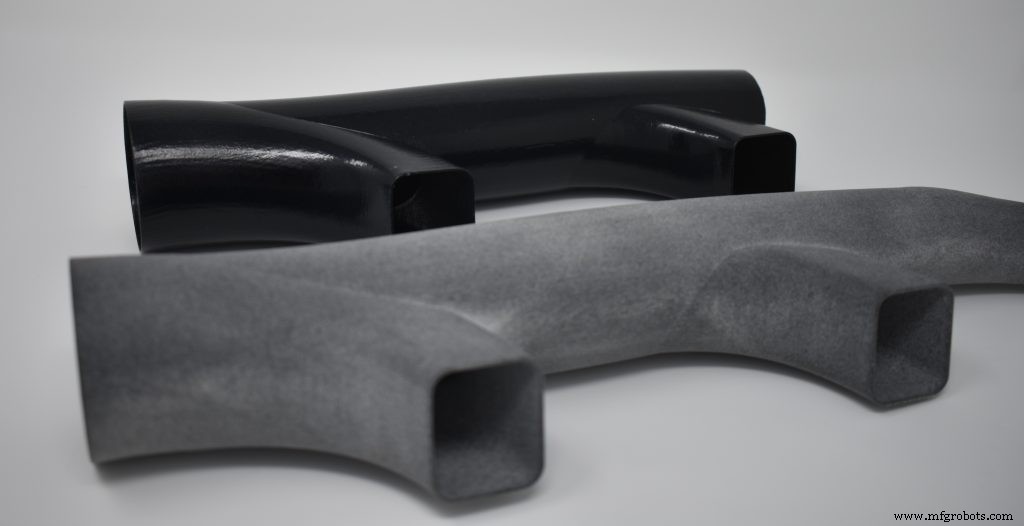
UK‑based AMT launched PostPro3D last year, a chemical‑vapour smoothing system that seals, removes porosity and enhances the mechanical properties of polymer parts. The technology works on both powder‑bed and extrusion‑based prints and has validated over 95 polymer grades, including ULTEM, nylon, TPU and TPE.
AMT has also released a compact PostPro3D Mini aimed at research labs and small‑scale service bureaus. The company plans to launch a Digital Manufacturing System that will integrate depowdering, smoothing, colouring and inspection into one automated workflow.
DyeMansion’s VaporFuse Surfacing (VFS)
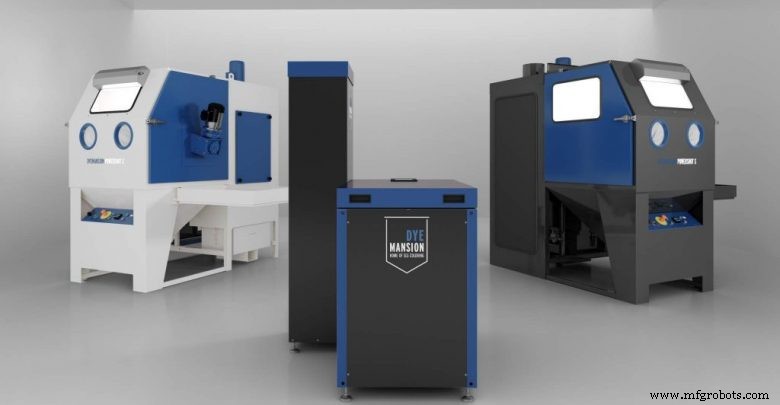
DyeMansion’s Powerfuse S platform, based on VFS, delivers closed‑loop, high‑gloss finishes that rival injection‑molded parts. The process is water‑repellent, easy to clean and works on hard polymers such as PA11/PA12 as well as flexible materials like TPU.
The system adds automated loading, connectivity and batch tracking, and is slated for integration into DyeMansion’s Print‑to‑Product Workflow, where it can be combined with PolyShot Surfacing and subsequent colouring.
Rösler Group’s AM Solutions
Rösler, a German surface‑finishing specialist with eight decades of experience, entered the AM market last year with RapidFinish, a multi‑functional platform for polymer and metal parts. The company now brands its services under AM Solutions, offering unpacking, support removal, powder extraction, cleaning, smoothing, polishing and dyeing.
AM Solutions’ equipment portfolio includes Rösler‑designed machines and third‑party units from PostProcess Technologies and GPA INNOVA. Each step is automated, delivering repeatable results and higher throughput. In a recent partnership with HP, Rösler is tailoring its finishing solutions to HP’s Multi‑Jet Fusion technology.
Post‑Processing for Metal Parts
Metal AM introduces additional complexities: parts must be detached from the build plate, debound, sintered and heat‑treated to relieve internal stresses. Different metal processes (binder jetting, powder‑bed fusion, directed energy deposition) require specialized equipment.
One promising solution is Hirtisation, pioneered by Austrian firm Hirtenberger Engineered Surfaces. The three‑step process removes supports and powder cake, reduces surface roughness to industry‑acceptable levels, and offers an optional high‑polish finish for decorative applications.
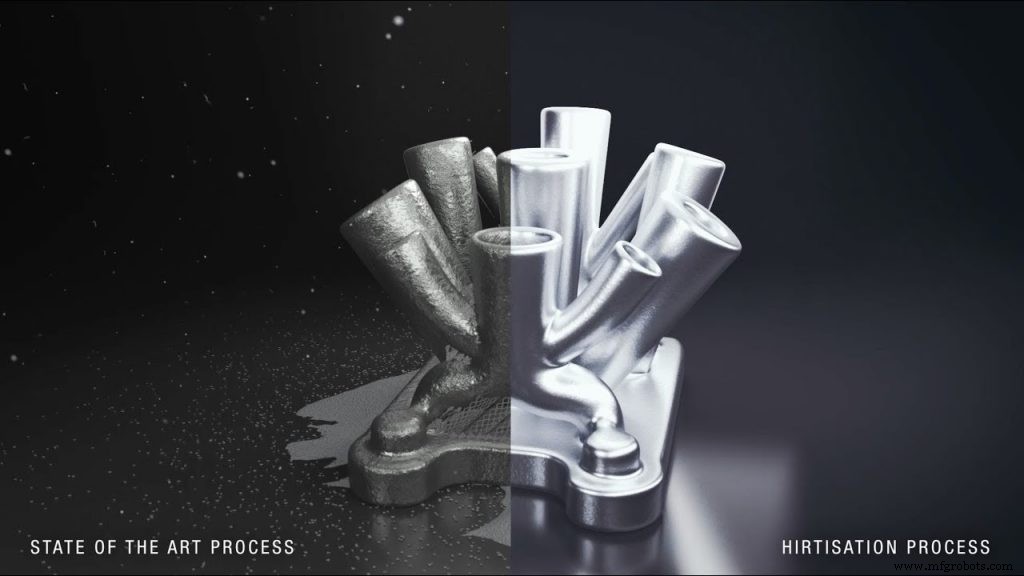
Hirtisation works across all common AM metals and alloys. Oerlikon AM is currently evaluating the process with Hirtenberger, reporting superior finishes on complex geometries that other surface treatments struggle to handle.
Automated Depowdering Solutions
In powder‑based metal AM, residual powder trapped in intricate features often forces manual removal—a time‑consuming and waste‑prone task. German company Solukon, in partnership with Siemens, has developed the SFM‑AT800S, a stainless‑steel chamber that uses controlled vibrations and axis rotation to cleanse parts up to 800 × 400 × 550 mm. The system supports post‑cleaning with 6‑bar compressed air or inert gas and safely recycles powder for reuse.
Other manufacturers are also introducing depowdering automation. Digital Metal announced a CNC‑based solution for binder‑jetting prints, while ExOne offers a dedicated depowdering station for its machines. As metal AM scales to produce complex components—fuel nozzles, heat exchangers—automated depowdering will become essential to reduce labour, powder waste and scrap.
Post‑Processing: The Key to AM Productivity
While scaling and automating post‑processing remains challenging, the industry is rapidly converging on practical, repeatable solutions. From support removal and depowdering to surface finishing and colouring, AM users now have a growing toolkit to optimise each step.
Implementing robust post‑processing infrastructure is no longer optional; it is a prerequisite for achieving the repeatability and throughput that industrial 3D printing promises. Prioritise these solutions to unlock the full potential of AM in production.
3D printing
- Mastering 3D Printing Support Structures: Essential Strategies for Every Process
- Industrial 3D Printing in 2018: 6 Key Trends Shaping the Future
- Polylactic Acid (PLA) 3D Printing: A Comprehensive Guide for Professionals
- Nylon 3D Printing: Expert Guide to Materials, Tech, and Applications
- 8 Cutting‑Edge Materials Driving Industrial 3D Printing
- Post‑Processing in Industrial 3D Printing: Advancing Toward Automation
- 2021 3D Printing Industry Statistics: 40+ Insights on Growth, Adoption, and Market Dynamics
- CNC Machining vs. 3D Printing: Which Process Best Meets Your Production Needs
- Metal 3D Printing: Knowing When It’s the Right Choice
- Additive Manufacturing & 3D Printing Explained: Key Insights & Applications