



8 Cutting‑Edge Materials Driving Industrial 3D Printing

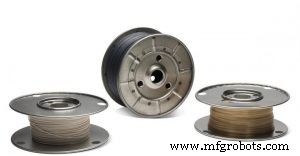
Materials are the third pillar of additive manufacturing, alongside hardware and software. They determine the mechanical performance, durability, and manufacturability of every printed part. As the AM market expands, manufacturers are actively seeking polymers, resins, metals, and ceramics that deliver superior strength, flexibility, and thermal resilience.
Additive manufacturing has moved beyond prototypes and niche applications into high‑volume production, thanks in large part to continuous material innovation. Below are eight standout materials unveiled this year that are setting new standards for industrial 3D printing.
Summary
| Material | Company | Properties | Use cases |
|---|---|---|---|
| EPX 82 | Carbon | High strength, toughness, thermal cycling durability (104‑130 °C) | Connectors, brackets, housings |
| Ultrasint PA6 | BASF | Low melting point (≈193 °C), high stiffness, high strength | Automotive, consumer goods |
| PrimePart STEvonik | Evonik | High elasticity, high strength, chemical resistance | Functional prototypes, series production |
| KetaSpire PEEK & Radel PPSU filaments | Solvay | Chemical resistance, high‑temperature tolerance (207 °C), impact resistance | Medical devices, aircraft interiors |
| ALM HT‑23 | EOS | High chemical resistance, flame retardant, high strength, lightweight | Aerospace, industrial wear‑resistant parts |
| BLDRmetal | Nanosteel | High hardness, toughness, ductility, room‑temperature printability | Tools, dies, bearings, gears |
| Scalmalloy | APWorks | Lightweight, high strength, ductility | Aerospace, motorsports brackets, heat exchangers |
| Fluorosilicone | ACEO® | High flexibility, fuel & oil resistance, temperature stability | Sealing applications |
1. Carbon’s EPX 82
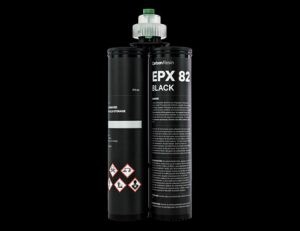
Carbon’s Digital Light Synthesis platform is now backed by the new EPX 82 resin, a high‑resolution, high‑strength material engineered for demanding engineering applications. With a heat‑deflection range of 104‑130 °C, EPX 82 delivers strength, toughness, and thermal cycling durability that rival injection‑moulded plastics. It is ideal for producing functional components such as connectors, brackets, and housings, and supports the creation of thin walls and flexible features.
2. BASF’s Ultrasint PA6
BASF 3D Printing Solutions has expanded its SLS portfolio with Ultrasint PA6 LM X085. This nylon powder offers a low melting point (~193 °C), reducing energy consumption and accelerating build times. Parts printed with Ultrasint PA6 exhibit high stiffness and strength, making them suitable for automotive and consumer goods components.
3. Evonik’s PrimePart ST
Evonik introduces the world’s first flexible, PEBA‑based powder, branded PrimePart ST. PEBA is a high‑performance thermoplastic elastomer known for low density, flexibility, and fatigue resistance. PrimePart ST provides high elasticity and strength, and is compatible with SLS, HSS, and binder jetting. Its chemical resistance and durability make it ideal for functional, flexible parts in prototyping and series production.
4. Solvay’s KetaSpire PEEK & Radel PPSU
Solvay’s new KetaSpire PEEK and Radel PPSU filaments target high‑performance AM for oil & gas, aerospace, automotive, and healthcare sectors. These filaments exhibit high part density, exceptional strength—including in the Z‑axis—and superior heat and chemical resistance. KetaSpire PEEK is integrated into e‑Xstream’s Digimat simulation, enabling precise design and simulation of high‑temperature parts.
5. EOS’s ALM HT‑23
EOS offers the first carbon‑fibre‑reinforced PEKK material for SLS, developed in partnership with Boeing. ALM HT‑23 reduces tooling costs by replacing aluminium with a lightweight, high‑strength thermoplastic, and is ideal for aerospace and industrial wear‑resistant applications that demand chemical resilience and heat tolerance.
6. Nanosteel’s BLDRmetal
Nanosteel’s BLDRmetal powders deliver microstructures that surpass conventional printable alloys. The BLDRmetal® L‑40 ferrous alloy prints at room temperature, offering high hardness, toughness, and ductility. It outperforms traditional tool steels like H13 and M300 maraging steel, making it perfect for tools, dies, bearings, and gears.
7. APWorks’ Scalmalloy
Scalmalloy, a lightweight metal for powder‑bed printing, combines aluminium’s low density with titanium‑level strength and ductility. It provides the lowest buy‑to‑fly ratio in the market, enabling high‑strength, lightweight parts for aerospace, motorsports brackets, and automotive heat exchangers.
8. ACEO®’s Fluorosilicone
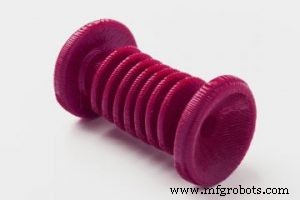
ACEO® expands its silicone portfolio with fluorosilicone, a 100 % elastomer that merges fluorocarbon resistance with silicone temperature performance. Fluorosilicone is the material of choice for sealing in fuel‑, oil‑, and lubricant‑rich environments. ACEO® plans to launch additional functional silicones in the coming months.
Future of Material Innovation
The push for more advanced materials is accelerating as additive manufacturing matures. Suppliers are investing heavily in R&D to deliver alloys, composites, and polymers that unlock new applications and streamline production workflows. Continued innovation will be key to establishing AM as a fully viable, high‑volume manufacturing technology.
3D printing
- Revolutionizing Space Travel with Next‑Generation 3D‑Printed Materials
- Industrial 3D Printing in 2018: 6 Key Trends Shaping the Future
- Metal 3D Printing: 5 Cutting‑Edge Applications Transforming Industry
- Emerging 3D Printing Materials: A Comprehensive Review of Recent Advances
- Top Metal 3D Printing Materials: Unlocking Additive Manufacturing’s Potential
- 5 Cutting‑Edge 3D Printing Innovations Driving Sustainability
- Top 5 Metal Powders for Advanced 3D Printing
- 10 Strongest 3D Printing Materials for Ultimate Durability
- Eco-Friendly Biodegradable Materials for 3D Printing: Sustainable Solutions
- Top 5 Innovative Filaments Transforming FDM 3D Printing