



Industrial 3D Printing in 2018: 6 Key Trends Shaping the Future

2017 marked a milestone year for industrial 3D printing, with high‑profile partnerships and expanding use cases. As 2018 unfolds, what trends will dominate the next 12 months? Below we outline six key developments shaping the industry.
1. Industrial 3D Printing Becomes Mainstream
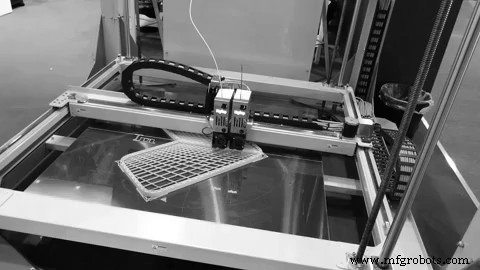
Recent hardware advances—higher precision, larger build volumes, and faster layer deposition—have made 3D printing cost‑effective enough for production. The technology is no longer confined to prototyping; it’s now a viable tool for manufacturing end‑use parts. Companies across aerospace, automotive, and medical sectors are integrating additive manufacturing into their supply chains, enjoying shorter lead times and flexible production runs.
With predictions that 3D printing will reshape business models and supply chains, 2018 will see even more firms adopt AM to stay competitive.
2. Automation Drives Additive Workflows
Widespread adoption of 3D printing is accelerating workflow optimisation. Automation—spanning pre‑production design, printing, and post‑processing—eliminates manual bottlenecks and enhances throughput. Tools such as RP Platform can integrate with existing ERP and PLM systems to orchestrate end‑to‑end production.
As additive machines move from isolated workstations to fully integrated digital production lines, opportunities for robotic handling, in‑line inspection, and automated finishing will multiply.
3. Mass Customisation Redefines Production
Consumers now expect personalised products, and businesses are learning to profit from bespoke manufacturing. Traditional methods struggle with the complexity and low volume of custom parts, but 3D printing delivers rapid design iteration and on‑demand fabrication.
Industries such as dentistry, aerospace, and medical devices already use 3D printing for specialised components. In 2018, sectors ranging from footwear to automotive are poised to leverage customisation to enhance customer experience and reduce inventory.
4. Metal 3D Printing Gains Momentum
Metal additive manufacturing has surged since 2017, driven by lower costs and broader material libraries. In 2018, companies like Markforged unveiled its first desktop metal printer, Metal X, using Atomic Diffusion Manufacturing (ADAM) technology and priced below $100,000. Desktop Metal’s Studio System, featuring Bound Metal Deposition (BMD), offers an end‑to‑end solution that is reportedly up to ten times cheaper than competing systems.
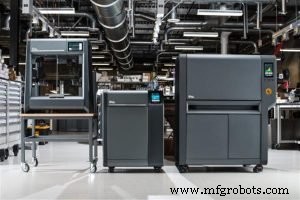
These advances lower both material and equipment costs, expanding metal AM from prototype to production of complex, customised end‑parts.
5. Expanding Material Portfolio
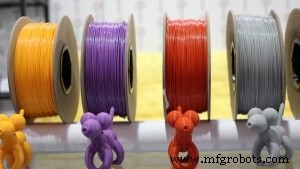
Today’s printers can work with a growing array of materials—including silicone, ceramics, and advanced polymers. Chemical giant BASF has entered the space with a range of 3D‑printing‑specific feedstocks, while new startups continue to develop performance‑tailored alloys and composites.
Material innovation—matching properties like thermal resistance, flexibility, and rigidity to application needs—is the catalyst that will drive broader adoption and unlock new markets.
6. Speed and Productivity Accelerate
Historically, high cost and slow build times hindered commercial adoption. Over the last decade, printing speeds have increased dramatically, shrinking production cycles for prototypes and parts.
For manufacturers, faster turnaround translates to lower inventory, quicker time‑to‑market, and a stronger business case for additive manufacturing.
Conclusion
The 3D‑printing market is projected to reach $32.78 billion by 2023, growing at a CAGR of 25.76%. These figures underscore a bright trajectory, yet the industry remains in its infancy when it comes to fully realizing the potential of additive manufacturing—both industrially and commercially.
Successful integration requires investment in skills, process redesign, and digital infrastructure. While change will not happen overnight, 2018 sets the stage for deeper embedding of AM into production workflows, steering us toward the digital factory of the future.
3D printing
- 8 Cutting‑Edge Materials Driving Industrial 3D Printing
- Mastering Post‑Processing in Industrial 3D Printing: Emerging Trends and Solutions
- 10 Cutting‑Edge Additive‑Manufacturing Innovations Unveiled at Formnext 2019
- Top 10 3D Printing Startups to Watch in 2020
- Top 3 3D Printing Trends That Defined 2018
- Three Key PPC Trends Shaping Industrial Marketing in 2017
- 5 Key Industrial Marketing Trends Driving Success in 2019
- 6 Key Manufacturing Trends Shaping 2018
- Is PETG Food‑Safe? Key Considerations & Safety Tips
- 5 Essential CNC Machining Trends to Watch in 2021