



10 Cutting‑Edge Additive‑Manufacturing Innovations Unveiled at Formnext 2019
In less than a week, the 3D‑printing community will converge in Frankfurt, Germany, for Formnext—the world’s largest additive‑manufacturing (AM) trade show.
Formnext’s fifth edition is slated to be the most expansive yet, with over 740 exhibitors—including AMFG—showcasing the latest breakthroughs in AM technology.
To help you navigate the bustling exhibition floor, we’ve compiled a list of ten technologies that promise to shape the future of additive manufacturing at Formnext 2019.
1. Farsoon Technologies introduces the FS301M metal 3D printer
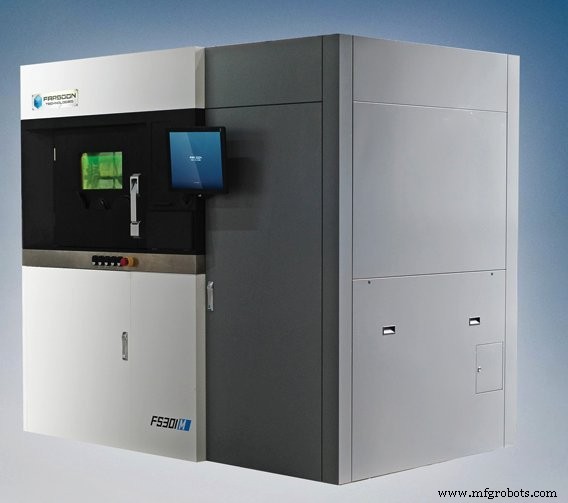
China‑based Farsoon Technologies, a leading manufacturer of metal and polymer AM systems, is set to debut its newest metal 3D‑printing platform, the FS301M, at Formnext 2019. The FS301M was unveiled in October and addresses key customer pain points—namely usability and safety.
The machine incorporates an integrated powder‑feed connector that protects operators from direct exposure to metal powder, thereby enhancing safety and streamlining powder handling.
Moreover, Farsoon has engineered the FS301M as an open‑system platform, unlocking both machine parameters and powder chemistry. This flexibility aligns with the industry’s shift toward open AM solutions, granting users greater freedom to develop bespoke metal‑printing applications.
2. VELO3D launches Assure quality‑control software for its Sapphire printer

Innovator VELO3D is set to unveil Assure, a real‑time quality‑assurance suite designed for its Sapphire laser‑based metal 3D printer. The launch will be announced at a press conference in Frankfurt alongside Stratasys Direct Manufacturing, Sapphire’s first adopter.
Sapphire already distinguishes itself with a dense array of sensors that monitor the print environment, enabling higher repeatability and reduced support requirements. Assure aggregates, analyzes, and presents this sensor data directly to operators, giving them intelligent, data‑driven control over the print.
By ensuring that each build remains within specified tolerances, Assure addresses one of the biggest challenges in metal AM—qualifying parts for production. This development marks a significant step toward mainstream adoption of metal 3D printing.
3. Incus introduces the Hammer Series—metal photopolymerisation printers
Incus GmbH, a spin‑off of Austrian ceramic printer vendor Lithoz, will showcase its Hammer Series, a new line of metal photopolymerisation 3D printers. The technology adapts vat‑polymerisation principles—traditionally used for resin—to a metal‑particle‑laden resin cured by a high‑power projector.
Key advantages include the ability to process “non‑weldable” metals, improved safety from eliminating airborne powders, higher accuracy, and faster build speeds due to the light‑based process.
Potential applications span medical devices, automotive parts, aerospace components, and luxury jewellery.
4. Laser Melting Innovations presents the Alpha 140, a cost‑effective laser printer
Laser Melting Innovations (LMI), a spin‑off of the Fraunhofer Institute for Laser Technology, has developed Alpha 140—a laser‑based metal printer that won the Formnext Start‑up Challenge this year. By substituting a diode laser for a costly fibre laser and replacing expensive scanner systems with a Cartesian‑motion laser, LMI has driven the machine’s price below €100,000.
This makes Alpha 140 an attractive option for research institutions and small businesses seeking a compact, affordable entry into metal AM.
5. AMT Technologies demonstrates its 3D‑printed modular stand
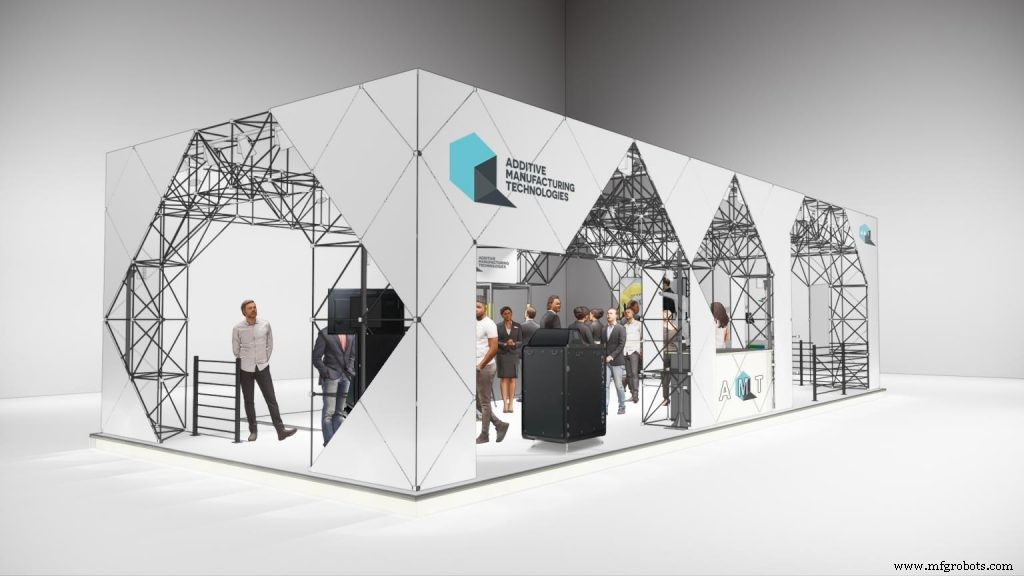
UK‑based post‑processing specialist AMT Technologies will exhibit its PostPro3D range of surface‑finishing hardware. To highlight its capabilities, AMT built a modular 84 m² stand composed of more than 6,000 3D‑printed and post‑processed parts connected by 1,100 m of lightweight aluminium tubing, weighing under 120 kg.
Joseph Crabtree, AMT CEO, notes that without the company’s post‑processing technology, the parts would not meet the necessary finish quality for structural use. This stand exemplifies the synergy between 3D printing and finishing solutions.
6. Essentium offers live demos of its High‑Speed Extrusion platform
Essentium, a US‑based extrusion printer manufacturer, claims its HSE 180•S platform achieves print‑head speeds of 1 m/s—remarkably fast for extrusion. The Frankfurt stand will feature live demonstrations of the HSE 180•S and a range of new high‑temperature materials that deliver superior heat, chemical, and fatigue resistance for industrial use.
7. Desktop Metal introduces the Fiber platform—continuous‑carbon‑fiber composites
Desktop Metal, traditionally focused on metal printing, will debut its new Fiber platform, a desktop 3D printer that incorporates automated fibre placement (AFP). The printer can embed continuous carbon fibres into thermoplastic parts, producing components that rival or exceed metal strength while remaining lightweight.
The emergence of composite 3D printing represents a significant opportunity; with the Fiber printer, Desktop Metal positions itself against established players like Markforged.
8. 3DCeram launches the C3600 Ultimate—large‑scale ceramic printer

3DCeram, a key player in the growing ceramic AM market, will present the C3600 Ultimate, its largest CERAMAKER SLA printer yet. The system offers a build volume of 600 × 600 × 300 mm and incorporates four lasers to accelerate printing speeds—a common bottleneck in ceramic SLA.
With these specifications, the C3600 is ideal for aerospace components such as satellite mirrors and dental applications, including zirconia and alumina parts that require high chemical resistance and biocompatibility.
9. Evonik unveils flexible copolyester powders for SLS
German specialty‑chemist Evonik, which has long focused on polyamide powders for AM, recently acquired Structured Polymers to broaden its material portfolio. At Formnext, Evonik will showcase two new copolyester powders for Selective Laser Sintering that combine high elasticity and excellent recovery with superior surface finish.
These materials are well suited for athletic equipment, protective gear, technical components, and design prototypes that demand both toughness and flexibility.
10. nTopology demonstrates its generative design platform
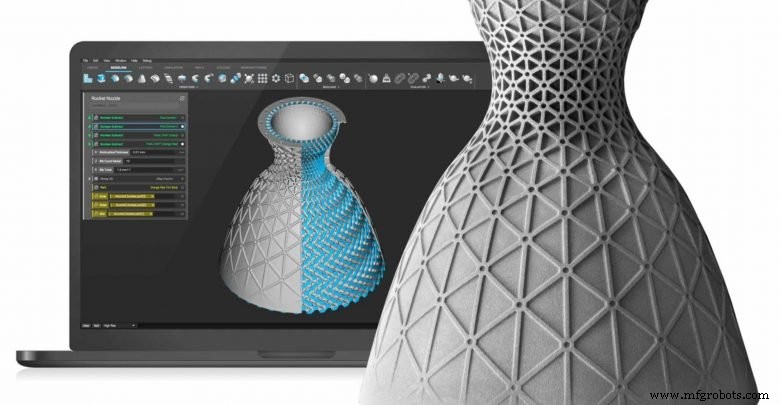
New York‑based nTopology is advancing CAD for advanced manufacturing. Its nTop platform fuses generative design—such as lattices and topology optimisation—with streamlined production preparation, eliminating the need for STL files.
At Formnext, nTopology will showcase optimised heat exchangers, rocket nozzles, and aircraft parts, illustrating how direct CAD import to printers can enhance workflow interoperability and accelerate product development.
Bonus: AMFG highlights its MES platform

AMFG will return to Formnext with its flagship Manufacturing Execution System (MES) for AM. The exhibition will feature new integrations with EOS machines and Autodesk’s Netfabb®, enabling seamless data flow across the AM workflow.
These connections provide traceability and scalability essential for industrialising AM, while supporting end‑to‑end workflow interoperability.
Visit AMFG at Stand G81 (Hall 12.1) to discuss how our MES solutions can help you optimise and scale your additive‑manufacturing operations.
Arrange a meeting with our team here.
3D printing
- Industrial 3D Printing in 2018: 6 Key Trends Shaping the Future
- Formnext 2018 Highlights: 10 Additive Manufacturing Technologies to Watch
- 7 Must‑See Additive Manufacturing Innovations at TCT Show 2019
- Top 10 3D Printing Startups to Watch in 2020
- 3D Printing Trends 2019: Metal Innovation, Binder Jetting Breakthroughs, and Advanced Plastics
- A Comprehensive Guide to Metal 3D Printing Technologies
- Top IoT Trends Driving Growth in 2019
- Key Red Flags to Spot Before Partnering with a Metal Fabrication Company
- Is PETG Food‑Safe? Key Considerations & Safety Tips
- 5 Essential CNC Machining Trends to Watch in 2021