



A Comprehensive Guide to Metal 3D Printing Technologies
Choosing the right metal 3D printing technology is essential for achieving optimal performance and cost‑efficiency. While all metal additive processes start with a powdered feedstock and a high‑energy conversion step, each method transforms powder into solid parts in a distinct way. In this guide we compare the three dominant metal 3D printing approaches—Metal Fused Filament Fabrication (M‑FFF), Powder Bed Fusion (PBF), and Binder Jetting (BJ). We’ll explore their working principles, key differentiators, operational considerations, and both current and future market trajectories.
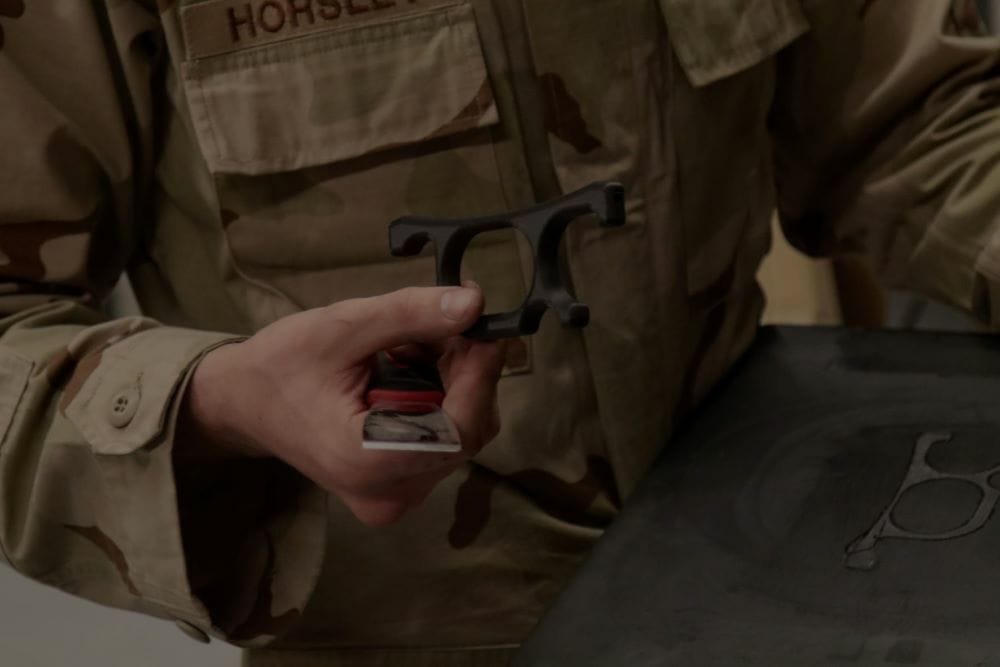
U.S. Army Case Study
Read our newest customer success story about a major training base for the U.S. Army.
Metal Fused Filament Fabrication (Bound Powder Extrusion)
Metal FFF stands out as the most accessible and safest metal additive manufacturing technology available today.
How Metal FFF Works
Metal FFF employs bound‑powder feedstock made from metal injection molding media, where metal powder is bound together with a waxy polymer. The process consists of three key stages:
- Feed – Bound powder is extruded through a heated nozzle.
- Sinter – A high‑energy furnace fuses the powder into a solid part.
- Post‑process – Debinding removes residual binder, and final machining or heat treatment may be applied.

Differentiators
- Affordability – The initial investment and operating costs are significantly lower than other metal printing methods.
- Safety – Bound‑powder filament is less hazardous; minimal PPE is required and operator training is straightforward.
- High first‑part yield – Bulk sintering reduces internal stresses, resulting in a higher success rate for the first build.
- Wide material availability – Current offerings include a broad range of alloys, with potential for future exotic materials.
Considerations
- Part density – Most builds use a closed‑cell infill; solid‑part printing is possible but can increase cycle time.
- Near‑net‑shape – Parts often require post‑processing to achieve tight tolerances.
Current Outlook
Metal FFF is rapidly maturing; newer models deliver improved reliability and expanded capabilities, enabling adoption across diverse industries.
Long‑Term View
As the technology evolves, a wider array of materials and applications will emerge, positioning Metal FFF as a staple in manufacturing facilities that demand cost‑effective, complex metal part production.

Powder Bed Fusion
How Powder Bed Fusion Works
A laser mounted on a gantry traces the geometry of each layer, precisely fusing metal powder into a solid part. The process follows these steps:
- Powder spread – A new layer of loose powder is evenly distributed over the build area.
- Laser fusion – The laser selectively melts the powder according to the design cross‑section.
- Repeat – The cycle continues until the part is complete.
After printing, parts are depowdered and post‑processed as required.
Differentiators
- Complex geometry capability – Ideal for ultra‑complex shapes, large parts, and fully dense builds.
- Mature technology – A well‑established market with a broad material selection and multiple vendors.
Considerations
- Cost – Acquisition and installation typically exceed $500 k.
- Operations – Requires skilled operators, dedicated clean space, and expensive PPE and facility modifications.
- Part refinement – Complex designs may need several iterations to eliminate internal stresses and achieve dimensional accuracy.
Current Outlook
PBF remains the market leader, especially in aerospace, automotive, and medical sectors where high‑performance, specialty parts are critical.
Long‑Term View
Wider adoption is expected to spur innovation, expand application space, and drive competitive pricing for more accessible machines.
Binder Jetting
Binder Jetting builds parts by selectively depositing a liquid binder onto a bed of metal powder, creating a loosely bonded “green” part that is later sintered. Though still emerging, it offers fast build rates and potential for high‑volume production.
How It Works
- Inkjet binding – A print head deposits binder onto powder layers, building the part layer by layer.
- Depowder & sinter – The green part is carefully cleaned, then sintered to fuse the metal into a fully dense component.
Differentiators
- Rapid production – Capable of fabricating many parts simultaneously at high speed.
- Precision – Inkjet heads enable intricate features and fine detail.
Considerations
- Safety – Handling loose powder presents health and safety challenges.
- Cost – Minimum purchase price starts at $300 k, with some models exceeding $2 m.
- Part porosity – Mechanical properties are not yet fully reliable or repeatable at scale.
- Design constraints – Current knowledge limits maximum part size and complexity.
- Green part strength – Low post‑print strength can restrict handling and throughput.
- Repeatability – Consistent high‑quality output remains an open question.
Current Outlook
Binder Jetting is still in development, with limited commercial users but growing interest from key industry players.
Long‑Term View
Some analysts foresee Binder Jetting as the future of mass‑produced metal parts, contingent on resolving its technical challenges.
Download our Free Guides to Metal 3D Printing
- Metal 3D Printing Fundamentals
- Deep Dive into Metal FFF Printing
- Metal 3D Printing Applications
3D printing
- Assessing the Maturity of Metal 3D Printing Technologies
- Exploring the Evolution and Core Technologies of 3D Printing
- 3D Printing: From Rapid Prototyping to On‑Demand Manufacturing
- Metal 3D Printing Applications: Advanced Use Cases – Part 2
- 3D Printing Trends 2019: Metal Innovation, Binder Jetting Breakthroughs, and Advanced Plastics
- Metal 3D Printing 101: How Additive Manufacturing Transforms Production
- Metal 3D Printing Fundamentals: Powder Media and High‑Energy Processes
- Mastering Metal 3D Printing: A Comprehensive Guide
- SLA vs. SLS: Choosing the Right Plastic 3D Printing Tech for Your Project
- SLA vs. FDM: Comparing the Leading 3D Printing Technologies for Quality and Precision