



Assessing the Maturity of Metal 3D Printing Technologies

[Image credit: CCDC Army Research Laboratory]
Metal 3D printing spans a wide array of processes, each with distinct advantages, applications, and maturity levels. When selecting a technology for production, understanding its current capabilities and limits is essential. Yet, separating fact from hype can be challenging.
What is the Technology Readiness Level (TRL)?
The TRL framework, created by NASA in the early 1970s, rates a technology from Level 1 (concept validation) to Level 9 (fully operational deployment). It has since become a standard tool for evaluating emerging technologies across many industries.
Using TRL to Evaluate Metal 3D Printing
We applied the TRL model to each metal 3D printing process, analyzing their evolution, industry adoption, current use cases, and future trends. In some cases, TRL varies by application—for example, Direct Energy Deposition is TRL 8 for production but TRL 9 for repair.
Our research indicates that most metal 3D printing methods have surpassed TRL 7, demonstrating operational testing and functional prototyping. Several have achieved TRL 8 and are moving toward full integration (TRL 9).
Laser Powder Bed Fusion

Technology Readiness Level: 8
Laser Powder Bed Fusion (PBF) is a leading metal additive technology. By selectively melting layers of metal powder with a precise laser, PBF builds parts layer‑by‑layer.
Since the Fraunhofer Institute patented laser metal melting in 1995, key players such as EOS, Concept Laser (now GE), and SLM Solutions have advanced the technology. Over the last decade, manufacturers have focused on modular, highly automated systems that reduce manual labor and increase throughput.
EOS recently added four new metal powders—Stainless Steel CX, Aluminum AlF357, Titanium Ti64 Grade 5, and Titanium Ti64 Grade 23—to its portfolio, expanding material options for aerospace, automotive, and medical sectors.
Aerospace has embraced PBF for complex components like engine parts, where its ability to produce intricate geometries with minimal waste is critical. While PBF consistently delivers functional parts, full‑scale production still requires fine‑tuning and testing, justifying its current TRL 8 status.
Future gains will come from software integration and streamlined workflows. For example, VELO3D’s Intelligent Fusion system delivers fewer supports, improved surface finish, and higher success rates, boosting reliability and reducing post‑processing.
Laser PBF remains the industry’s workhorse, with the largest installed base and market share among metal additive systems.
Electron Beam Melting
Technology Readiness Level: 8
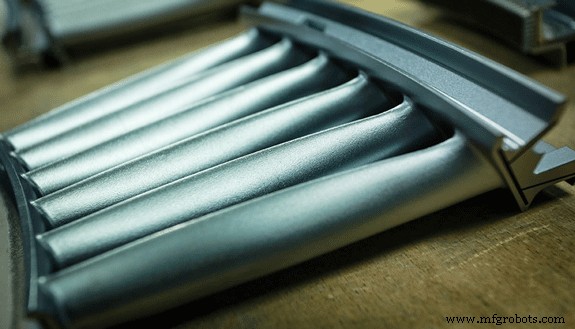
Electron Beam Melting (EBM) shares the powder‑bed fusion principle with PBF but uses a high‑powered electron beam instead of a laser to melt the metal layers.
Swedish firm Arcam pioneered EBM in 2000 and was acquired by GE in 2016. The Spectra H, introduced in 2018, can process heat‑sensitive alloys such as titanium aluminide (TiAl) at up to 1,000 °C.
Key upgrades include a 6 kW HV power unit that cuts pre‑ and post‑heating steps by 50 % and a refined layering process that saves up to five hours per build, boosting speed by 50 %.
GE Aviation’s Avio Aero operates 35 Arcam machines, producing TiAl turbine blades for the GE 9X engine. The medical sector also employs EBM for implants since 2007.
With robust use in aerospace and medical production, EBM has reached TRL 8.
Direct Energy Deposition
Technology Readiness Level: 8
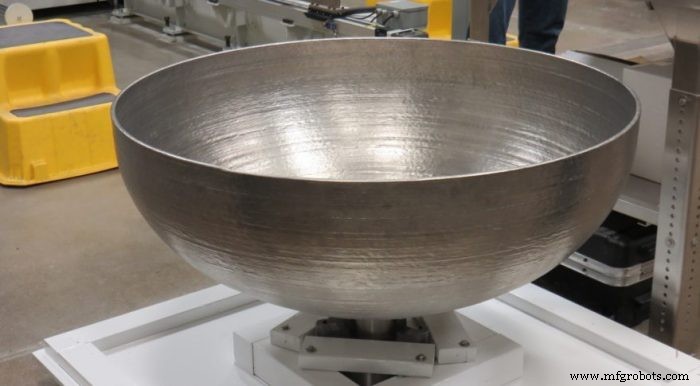
Originating from welding, Direct Energy Deposition (DED) melts metal via laser or electron beam while feeding material through a nozzle.
DED uses off‑the‑shelf wire or powder, offering a wide material palette, high quality, and lower cost.
Repair is DED’s flagship application—adding material to worn turbine blades or mold inserts—reducing downtime and extending part life. DED is TRL 9 for repair.
Manufacturers like Sciaky have introduced closed‑loop control, combining real‑time imaging and machine vision to adjust beam power, feed rate, and motion, enhancing repeatability.
DED is applied in aerospace (e.g., titanium fuel tanks for satellites, Boeing 787 structural parts) and defense. Production of near‑net shapes still requires machining; improving resolution will cut secondary processing time.
Metal Binder Jetting
Technology Readiness Level: Varies
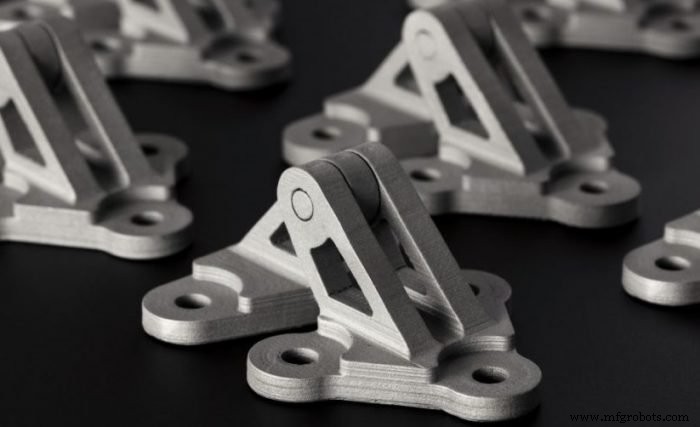
Metal Binder Jetting (MBJ) is rapidly evolving, but readiness differs across market players. First introduced at MIT in 1993, MBJ spreads a thin powder layer and deposits binder droplets, with about 95 % of the powder recycled.
ExOne, licensing MIT’s technology since 1996, dominated early production‑level MBJ, focusing on prototypes and tooling. Recent entrants—Digital Metal, HP, Desktop Metal—are expanding the field.
Digital Metal’s DM P2500, launched in 2017, has produced over 300,000 parts for aerospace, dental, and industrial markets. HP’s Metal Jet and Desktop Metal’s Production System aim for high‑volume manufacturing, featuring multiple nozzles and advanced binders.
Older, production‑tested systems fall between TRL 7 and 8; newer technologies are expected to surpass TRL 8 within a few years.
MBJ is poised to penetrate high‑volume automotive and industrial production, offering significant growth prospects.
Bound Metal Deposition
Technology Readiness Level: 7
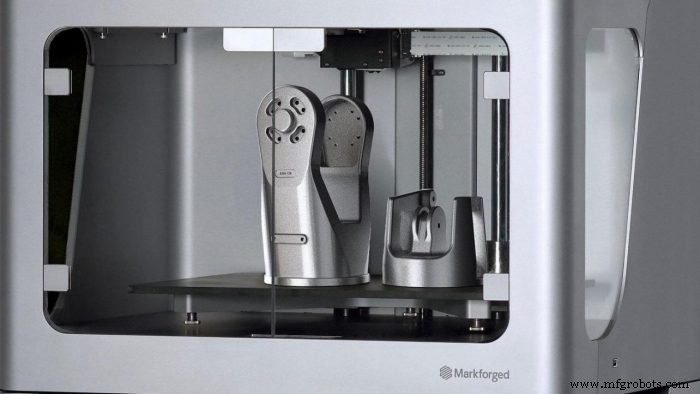
Bound Metal Deposition (BMD) is a recent entrant, analogous to Fused Filament Fabrication but using metal‑packed filaments. Markforged’s Metal X and Desktop Metal’s Studio System debuted in 2017.
BMD excels in rapid, cost‑effective prototyping and tooling. For example, Dixon Valve & Coupling Company used Metal X to print gripper jaws, cutting cost from $355 to $7 and lead time from 14 days to 1.25 days.
While BMD’s compact form factor limits large‑scale production, its scalability could grow in remote or specialty applications.
Innovation Pathways
Most metal 3D printing technologies have achieved high TRL scores, confirming their suitability for production. Nonetheless, economics and speed remain challenges; powder‑bed, DED, and MBJ processes are still costlier than conventional methods.
Lower‑cost BMD systems may open access for small‑to‑medium enterprises. However, achieving breakthrough innovation requires a mature ecosystem—integrated software, automated post‑processing, and streamlined workflows—to unlock the full potential of metal additive manufacturing.
3D printing
- How Bridges Stabilize Overhangs in 3D Printing
- How 3D Printing Transforms Metal Casting: 3 Key Benefits
- Metal 3D Printing Today: From Prototype to Production
- Industry Adoption of 3D Printing: A Maturity Landscape
- How Desktop 3D Printers Are Reshaping Industrial Manufacturing
- Understanding the Metal FFF 3D Printing Process: From Printing to Sintering
- A Comprehensive Guide to Metal 3D Printing Technologies
- Mastering Metal 3D Printing: A Comprehensive Guide
- A Step-by-Step Guide to Launching Your 3D Printing Project
- Understanding the Key Differences Between FDM and SLA 3D Printing Technologies