



Interview with Judith Distelrath, Project Office Manager, ACEO® – Pioneering Multi‑Material Silicone 3D Printing
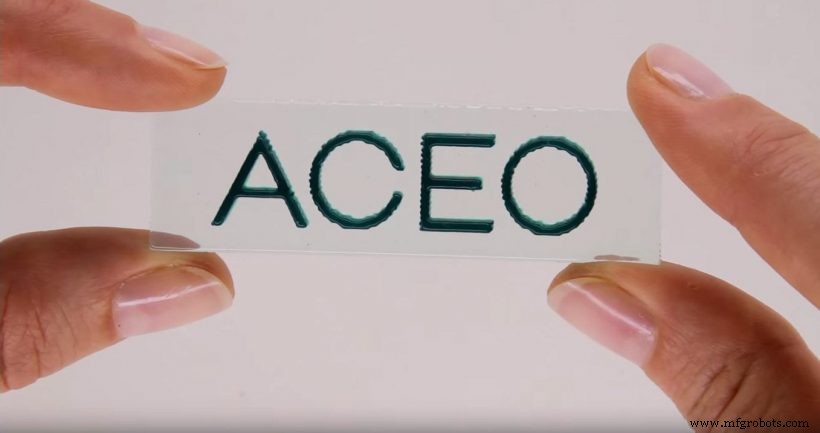
The debut of ACEO®’s multi‑material silicone 3D printer at formnext last month marked an exciting new milestone for the company. ACEO®, a spin‑off of Wacker Chemie AG and a long‑time partner of AMFG, has been driving the silicone 3D‑printing revolution since unveiling the world’s first 3‑D‑printed elastomer in 2016.
We sat down with Judith Distelrath, Project Office Manager at ACEO®, to learn more about the company’s cutting‑edge technology and its experience at formnext.
Q: What was the highlight of formnext for you?
Judith: The diversity of attendees. Beyond machinery and materials, many people were exploring services and seeking new solutions—exactly the kind of interest that fuels our work. The enthusiasm for innovation was remarkable.
Q: Tell us about your new multi‑material silicone 3D printer.
Judith: We’re finalizing development and plan to launch it on our web shop (powered by AMFG) in the second half of 2018. It will allow customers to print parts with variable Shore hardness, colors, or a combination of both—our ultimate goal.
Q: Why focus on a multi‑material printer?
Judith: Customer demand drove it. While we print soft elastomeric materials, many clients want to combine soft and hard segments in a single part. Meeting that need was the primary motivation for our R&D.
Q: Where do you see the additive manufacturing industry in five years?
Judith: Today many still think in 2‑D terms. In five years I expect a broader, deeper understanding of 3‑D engineering that will unlock new possibilities across industries.
Silicone 3D Printing – A New Horizon?
3‑D printing has opened avenues to create parts with materials that were once considered impossible to print. ACEO® has been at the forefront of this silicone revolution—displaying the first industrial silicone 3‑D printer in 2016.
Silicone’s high viscosity and unique curing requirements made it difficult to print with conventional 3‑D printers. ACEO®’s integrated system—combining advanced materials, a dedicated machine, and custom software—has broken this barrier, enabling reliable, high‑quality silicone parts. Customers can now order these parts through our online web shop.
From prototypes to highly customised, complex components, silicone additive manufacturing offers fresh opportunities across many sectors.
“Printing with silicone is truly a new dimension in 3‑D printing,” says Judith. “And we certainly agree.”
Find out more about ACEO® here.
Read our previous feature on Markforged here.
For more articles and interviews, subscribe to our mailing list and follow us on social media.
3D printing
- Dr. Richard Buswell Discusses Loughborough’s Breakthrough in Concrete 3D Printing
- Dr. Alvaro Goyanes of FabRx on 3D‑Printed Medicines: From Innovation to Personalised Care
- ACEO® Unveils Breakthrough Silicone 3D Printing Technology
- Silicone 3D Printing: The Next Frontier in Additive Manufacturing
- Interview with Dr. Billy Wu, Imperial College London: 3D Printing Innovation in Research & Education
- Silicone 3D Printing Explained: A Beginner’s Guide to Cutting‑Edge Production
- Interview with Petar Stefanov, Founder & CTO of Spectroplast AG: The Advantages of Silicone 3D Printing
- Polyurethane vs Silicone: Which Material Is Best for Your Design?
- Can 3D Printers Print Silicone? Learn How
- 3D Printing Silicone: Feasibility, Techniques, and Applications