



Dr. Alvaro Goyanes of FabRx on 3D‑Printed Medicines: From Innovation to Personalised Care
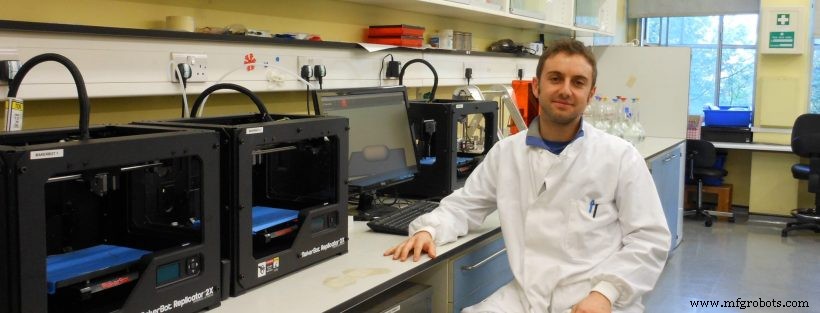
Additive manufacturing has made significant strides in the pharmaceutical sector, where 3‑D printers are now capable of producing tablet‑form medication. In this exclusive interview, we speak with Dr. Alvaro Goyanes, a pioneer at FabRx, about the origins of this technology, its current progress, and the future directions of his research.
How did you originally become interested in 3D printing?
Today, 3‑D printing is ubiquitous, enabling the creation of diverse objects from a wide range of materials. Even if you haven’t used the technology personally, it’s already shaping everyday manufacturing. My first encounter was with a Makerbot FDM printer at University College London’s School of Pharmacy, originally purchased to produce customised lab equipment and consumables, which sparked my curiosity about its broader applications.
What led to the idea of using 3D printing to create medicine?
Professor Simon Gaisford, a founding partner of FabRx and head of a research group at UCL School of Pharmacy, has long explored ink‑jet‑printed medicines—films for oral and buccal delivery and patches for topical use. Ink‑jet printing, a two‑dimensional process that requires a substrate, inspired the question: could we print without a substrate? By adapting the concept, we could manufacture complete formulations directly, giving rise to 3‑D‑printed tablets (printlets) that incorporate any drug without the need for a separate carrier.

What were the key challenges when you first started exploring this technology?
The initial hurdles were obvious: commercial 3‑D printers were not designed for pharmaceutical use, and the materials they employed were often toxic and unsuitable for human consumption. Moreover, we observed drug degradation during the printing process, rendering the technology unsuitable for medication. To overcome these obstacles, we evaluated pharmaceutical‑grade materials that could be processed by the printers and modified the machines to handle them. Continued research into new excipients and formulations remains essential as we move beyond proof‑of‑concept into scalable production.
Of the different printing technologies you are currently exploring at FabRx, how would you describe their respective advantages/disadvantages?
FabRx leverages expertise across all mainstream pharmaceutic 3‑D printing methods—fused deposition modelling (FDM), material extrusion, selective laser sintering (SLS), and stereolithography (SLA). The choice of technology depends on the desired tablet characteristics: fast‑dissolving, controlled‑release, chewable, or oral‑dispersible formulations. While FDM offers the most promise for point‑of‑dispensing personalised medicine, it requires drug‑laden filaments, which introduces challenges in filament fabrication and uniform drug distribution. Each method brings trade‑offs in resolution, material compatibility, and process speed; selecting the optimal technique hinges on formulation chemistry and the therapeutic goal.
What recent advances in 3D printing materials and technology are you currently most excited about?
3‑D printing hardware is evolving rapidly and becoming more affordable, enabling truly personalised dosing at the dispensing point. We can now automate dose control for both low‑ and high‑concentration drugs, and incorporate multiple active ingredients into a single printlet to create fixed‑dose combinations. By carefully choosing excipients and designing the tablet geometry, we can fine‑tune release kinetics for each component. Our recent publication on SLS printing demonstrates that laser‑based 3‑D printing can produce pharmaceutical‑grade printlets without drug degradation, overturning earlier assumptions about the technique’s suitability.
How do you see the use of 3D printing for pharmaceuticals evolving in the near future?
As new drugs become increasingly potent and patient‑specific, traditional large‑scale manufacturing limits dose flexibility. 3‑D printing offers a pathway to point‑of‑dispensing production, delivering individual tablets that meet rigorous pharmaceutical quality standards and allowing in‑situ dose verification—a critical regulatory requirement. In the near term, pharmacies may house 3‑D printers that produce tailor‑made medication on demand. Looking further ahead, we envision clinicians sending prescriptions directly to patients’ home printers, bringing fully personalised therapy into everyday life.
https://www.fabrx.co.uk/
3D printing
- Inside 3D Printing: Professor Neil Hopkinson on Innovation, Scale, and the Future
- Interview with Philip Cotton, Founder of 3Dfilemarket.com, UK 3D Printing Education Expert
- Interview with Spencer Wright of pencerw.com and nTopology: Expert Insights on Metal Additive Manufacturing
- Dr. Bastian Rapp on 3D‑Printed Microfluidics: Advancing Biotech with NeptunLab
- Interview with Markforged’s Ibraheem Khadar on 3D Printing Innovation at formnext
- Interview with Sintavia President Doug Hedges: Scaling Serial Production of Metal Parts via 3D Printing
- Carbon Co-Founder Philip DeSimone on Scaling 3D Printing for High‑Volume Production
- Interview with ANSYS Chief Technologist on Driving Metal 3D Printing Success Through Simulation
- How Graphite AM’s Jonathan Warbrick Drives Success in Industrial 3D Printing
- Ben Batagol on How 3D Printing is Revolutionizing Heat Exchanger Design at Conflux Technology