



Choosing the Right Plastic for 3D Printing: A Comprehensive Guide
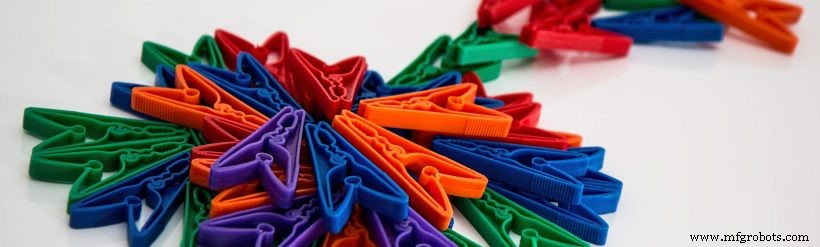
Since Chuck Hull printed the first home‑made prototype over 30 years ago, plastics have dominated additive manufacturing. 3‑D printing with plastic filaments now enables rapid, high‑quality prototyping and, thanks to recent material and printer advances, the production of functional parts suitable for mass manufacturing.
In this concise guide we explore the most common plastic filaments, their strengths and limitations, and the critical factors to weigh before choosing a material for your project.
The evolution of plastic materials for additive manufacturing
Over time the palette of printable plastics has expanded dramatically, offering a wide range of options for every application. Careful material selection is essential to meet performance, environmental, and cost goals. Below are the most widely used plastics:
- ABS (Acrylonitrile Butadiene Styrene) – A versatile, impact‑resistant filament used for everything from drain pipes to automotive parts and LEGO bricks. ABS is robust, easy to post‑process (sanding, gluing), but it is non‑biodegradable and must be stored airtight to prevent moisture absorption and UV degradation. Ventilation is recommended during printing.
- PLA (Polylactic Acid) – A biodegradable filament derived from renewable resources, ideal for disposable or environmentally sensitive parts. PLA can be sanded or painted like ABS, though it is less heat‑resistant and glues less effectively. It also requires dry storage to avoid moisture‑induced defects.
- PVA (Polyvinyl Alcohol) – A water‑soluble support material that dissolves after printing, reducing post‑processing time. PVA is available only for multi‑extruder printers, is relatively expensive, and must be kept airtight.
- PC (Polycarbonate) – Known for its high impact strength and optical clarity, PC is used in applications such as compact discs and bullet‑proof glass. It requires ventilation during printing and is prone to warping.
- HDPE (High‑Density Polyethylene) – A petroleum‑based, recyclable filament commonly used for bottles. Bonding HDPE to other materials is challenging, but it appeals to sustainability‑focused manufacturers.
- HIPS (High‑Impact Polystyrene) – Another soluble support option that dissolves in limonene. It shares ABS‑like properties but is still gaining traction in the industry.
- PA (Nylon) – A flexible, low‑friction filament ideal for mechanical components such as gears. Nylon must be dried before use, tolerates high print temperatures, and can warp if cooled too quickly.
- PEEK (Polyetheretherketone) – A high‑performance thermoplastic used in medical implants and automotive parts. Printing PEEK demands a printer with a heated, enclosed chamber capable of reaching up to 400 °C.
- TPE (Thermoplastic Elastomer) – A rubber‑like filament suitable for flexible parts like phone cases. Some extruders may experience clogs, so printer compatibility should be verified.
- TPU (Thermoplastic Polyurethane) – Similar to TPE but easier to print and more resistant to abrasion, oils, and cold temperatures.
- PMMA (Polymethyl Methacrylate) – Also known as acrylic, this transparent, rigid filament excels at fine detail for miniatures and sculptures. It is heat‑sensitive and may show layer lines more prominently, requiring precise nozzle and bed tuning.
Recent developments have introduced metal‑filled filaments that combine the ease of plastic printing with some of the strength and appearance of metal parts, offering an attractive alternative to full metal 3‑D printing.
The key points to consider when choosing a plastic
- Define the functional requirements of your final part—prototype versus production—and identify the necessary material properties.
- Verify filament diameter compatibility with your printer; most models accept 1.75 mm or 2.85 mm.
- Check the printer’s minimum and maximum wall‑thickness limits to ensure your design can be reliably printed.
- Plan for supports and overhangs; if your printer can extrude a dedicated support material, consider it to improve print quality.
- Follow the recommended storage conditions for each filament to maintain moisture control and dimensional stability.
- Confirm that your printer can reach the required extrusion temperature and that the heated bed is suitable for the chosen material.
3D printing
- Directed Energy Deposition (DED) 3D Printing: Process, Advantages, and Applications
- HP Multi Jet Fusion: Mastering 3D Printing for Speed, Quality, and Precision
- Mastering Selective Laser Sintering: From Fundamentals to Real‑World Applications
- 3D Printing with Resins: A Comprehensive Guide to Technologies, Materials, and Applications
- Titanium 3D Printing: Applications, Benefits, and Emerging Technologies
- Expert Overview of Biodegradable Plastics: Facts, History, and Applications
- 3D Printing: The Future of Manufacturing and Medicine
- Enhancing 3D Printing Accuracy with Onyx: Superior Dimensional Stability
- Mastering Material Jetting 3D Printing: Fundamentals & Applications
- Mastering Metal 3D Printing: A Comprehensive Guide