



Revealing History: How 3D Printing Transforms Archaeology and Paleontology
While most headlines focus on the future of manufacturing, 3D printing is also redefining how we study the past. By allowing researchers to create precise, manipulable replicas of fragile artifacts, the technology is unlocking new insights into ancient cultures and extinct species.
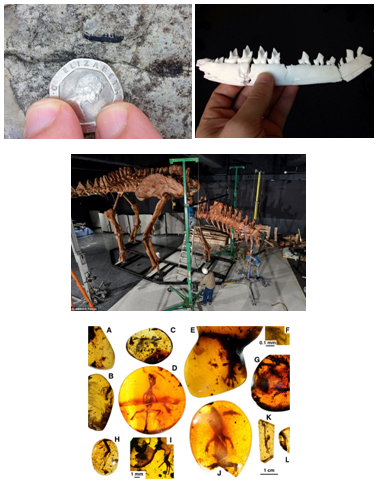
Archaeologists and paleontologists now routinely use 3D printers for tasks ranging from resizing microscopic fossils to constructing full‑scale dinosaur skeletons. For example, Western Paleo Labs printed a 50‑inch by 15‑inch model of a fossilized vertebra on a desktop uPrint SE Plus, demonstrating how even smaller machines can produce large, detailed replicas for educational displays across multiple locations.
At the University of West Florida’s Virtual Bones & Artifacts Lab, consumer‑grade MakerBots transform digitized scans from international collaborators into tangible bones, enabling hands‑on study without risking the original specimens.
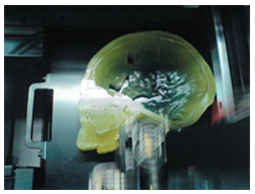
High‑end systems, such as Stratasys’ Objet PolyJet, take the process a step further. The Anthropological Institute at the University of Zurich used this technology to print highly accurate cranial fragments, allowing researchers to reconstruct the brain of a Neanderthal with unprecedented detail—despite never printing the brain itself. The in‑house printer also reduced material costs and offered the flexibility to print specific sections on demand.
Non‑invasive 3D scanning and printing provide a safe, repeatable method to record and study delicate remains. Once a digital model is created, it can be displayed virtually worldwide or replicated on any compatible printer, dramatically expanding accessibility while preserving the original.
For deeper insights into the intersection of 3D printing and ancient science, read the Scientific American feature on Lehman College’s work with primate skulls.
3D printing
- In‑House Production: The Fuse 1 Builds Its Own Parts
- Stratasys Unveils the J750: A Breakthrough in Multi‑Material 3D Printing
- Debunking 3D Printing Myths: What the Technology Truly Can Do
- The ABCs of 3D Printing: How Additive Manufacturing is Shaping Modern Industry
- How 3D Printing Revolutionized Manufacturing: A Journey Through Its Evolution
- Unlocking Innovation: The Key Advantages of 3D Printing in Modern Manufacturing
- PLA vs. ABS in 3D Printing: Key Differences and When to Use Each
- Mastering 3D Printing Supports: A Comprehensive Guide to Quality & Efficiency
- Master 3D Printing with Wood Filament: Techniques & Benefits
- 4D Printing: Revolutionizing Additive Manufacturing for Adaptive Solutions