



Titanium 3D Printing: Applications, Benefits, and Emerging Technologies
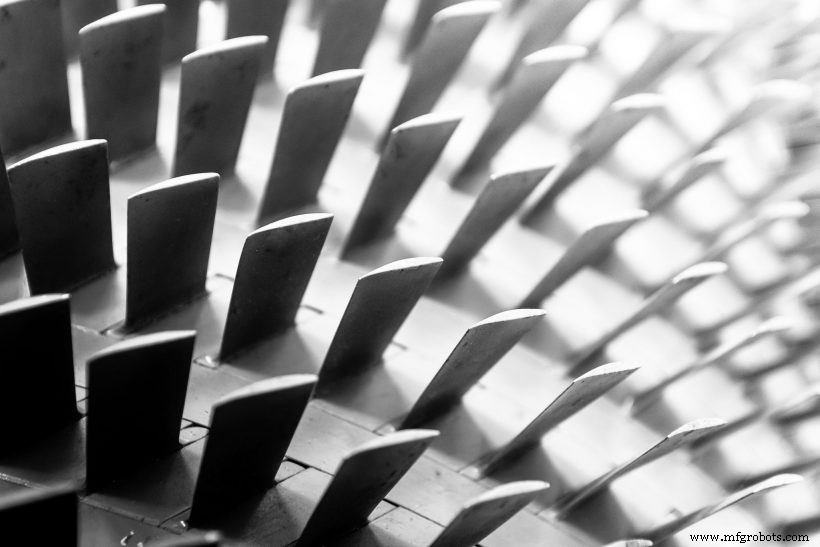
Titanium 3D printing is redefining manufacturing across aerospace, medical, automotive, and motorsports thanks to its lightweight, corrosion‑resistant, and high‑temperature capabilities.
The unique properties of titanium
| Sector | Key Properties | Typical Applications |
|---|---|---|
| Aerospace | Corrosion resistance, high strength‑to‑weight ratio, high‑temperature tolerance | Airframe and wing structures, compressor blades, turbine rotors |
| Medical | Excellent strength, biocompatibility, non‑allergenic | Orthopaedic implants – spine, hip, knee; dental prostheses |
| Automotive & Motorsports | Corrosion resistance, high strength‑to‑weight ratio, high‑temperature tolerance | Brake calipers, wheel rims, uprights, active spoiler brackets |
Titanium offers a strength comparable to steel while weighing only 60% of the material. Its excellent corrosion resistance, chemical stability, and ability to withstand temperatures above 600 °C make it indispensable for high‑performance sectors. Despite its benefits, titanium remains costly because of limited mining and complex processing requirements.
Why titanium excels in additive manufacturing
Traditional machining of titanium is hampered by its low thermal conductivity, which can rapidly wear CNC tools, and by high material waste. Additive manufacturing eliminates these drawbacks by building parts layer by layer, thereby preserving material and enabling intricate geometries that would be impossible to machine.
The benefits of 3D printing with titanium
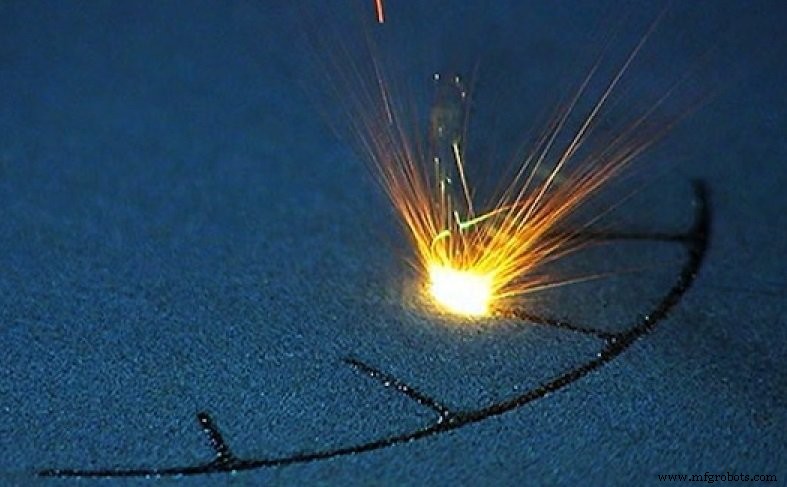
For aerospace, 3D printing can reduce the buy‑to‑fly ratio from the conventional 12:1–25:1 down to 3:1–12:1, cutting material waste by up to 90% and translating into significant cost savings for a high‑priced alloy. Additionally, topology optimisation software can design lattice structures that maintain load capacity while shedding unnecessary material, resulting in lighter yet stronger components.
Metal 3D‑printing technologies for titanium
Direct Energy Deposition (DED)
DED, first applied to titanium in 1997 by Aeromet, melts metal powder or wire with a laser or electron beam as it deposits material onto a substrate. It can build large components at deposition rates up to 320 cc/h. Variants such as WAAM and EBAM extend DED’s reach to thicker, high‑volume parts.
Electron Beam Melting (EBM)
Developed by Arcam, EBM fuses titanium powder in a vacuum at high temperature, producing parts with minimal residual stress and often eliminating the need for post‑heat treatment. Arcam’s Q10 and Q20 machines, as well as the Spectra H series, are widely used for orthopaedic implants and aerospace components, including new titanium aluminide alloys.
Selective Laser Melting (SLM)
SLM is a powder‑bed fusion process that uses a laser to melt successive layers of metal. Its layer thickness can reach 20 µm, offering superior resolution compared to DED and EBM. SLM is the preferred method for complex, high‑precision components such as custom implants and performance parts.
Key industrial applications
Aerospace
3D‑printed titanium is increasingly adopted to reduce weight in jet engines, gas turbines, and airframe components. Liebherr‑Aerospace & Transportation SAS launched serial production of 3D‑printed titanium nose landing‑gear brackets for the Airbus A350 XWB, the first titanium parts in that aircraft. Boeing has partnered with Norsk Titanium since 2015, using Rapid Plasma Deposition (RPD) to fabricate large structural components for the 787 Dreamliner, achieving 50–100× faster build times and 25–50% less material use than forging, potentially saving up to $3 million per aircraft.
Medical
Titanium’s biocompatibility and strength make it ideal for orthopaedic and dental implants. Osseus Fusion System prints its Aries‑L Interbody Fusion Devices using FDA‑validated SLM, featuring a multi‑axis mesh and micro‑topology that accelerate bone fusion. By 2020, 3D‑printed titanium was projected to account for ~274 kg of titanium in medical devices, underscoring rapid industry uptake.
Automotive & Motorsports
While cost remains a barrier for mass‑production vehicles, high‑performance and luxury cars benefit from titanium 3D printing. Bugatti 3D‑printed a brake caliper for the Chiron using SLM, reducing weight by 40% compared to machined aluminium and passing extreme strength, stiffness, and temperature tests. Bugatti also used titanium 3D printing for an active spoiler bracket, achieving 53% weight reduction and increased rigidity. HRE Wheels employed EBM to create a complex wheel rim, cutting material waste from 80% to under 5% and achieving a 19% weight reduction. In motorsports, Oxford Brookes Formula Student, with the UK MTC, redesigned uprights with EBM, saving 50% in weight.
Challenges and future outlook
Standardisation is critical; in 2018 Boeing and Oerlikon launched a five‑year partnership to align titanium additive manufacturing with FAA and DoD standards. The high cost of titanium powder (US $300–600/kg) remains a hurdle, but new production methods such as PyroGenesis’s NexGen™ Plasma Atomization (25 kg/h) and Metalysis’s electrolysis‑based process are reducing costs and improving sustainability. SmarTech forecasts a 17% price drop by 2024 if these technologies scale.
As material costs decline and more applications emerge, titanium 3D printing will transition from niche to mainstream, offering a compelling alternative for industries that demand lightweight, high‑strength, and complex parts.
3D printing
- Choosing the Right Plastic for 3D Printing: A Comprehensive Guide
- HP Multi Jet Fusion: Mastering 3D Printing for Speed, Quality, and Precision
- Binder Jetting 3D Printing: How It Works, Benefits, and Best Practices
- Material Jetting 3D Printing: The Ultimate Guide to Precision, Colour, and Innovation
- 3D Printing with Resins: A Comprehensive Guide to Technologies, Materials, and Applications
- Enhancing 3D Printing Accuracy with Onyx: Superior Dimensional Stability
- Mastering 3D Printing Supports: A Comprehensive Guide to Quality & Efficiency
- Beginner's Guide to Non-Planar 3D Printing: Master the Basics with Confidence
- Mastering HIPS Filament: A Comprehensive Guide to 3D Printing Success
- Comprehensive Guide to Selecting Plastic Materials for 3D Printing