



7 Cutting‑Edge 3D‑Printed Designs That Redefined Engineering
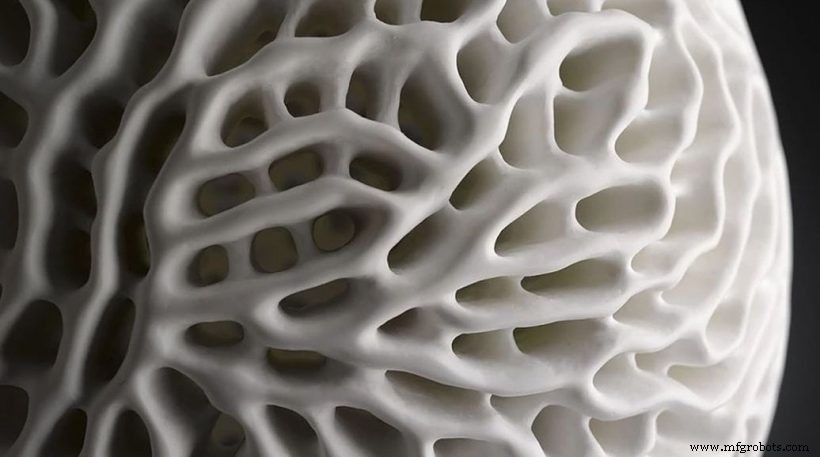
By harnessing the unprecedented design freedom of 3D printing, engineers are turning the most ambitious concepts into reality.
3D printing can create shapes and features that conventional manufacturing cannot. To illustrate its power, we highlight seven impressive designs that were only possible thanks to additive manufacturing.
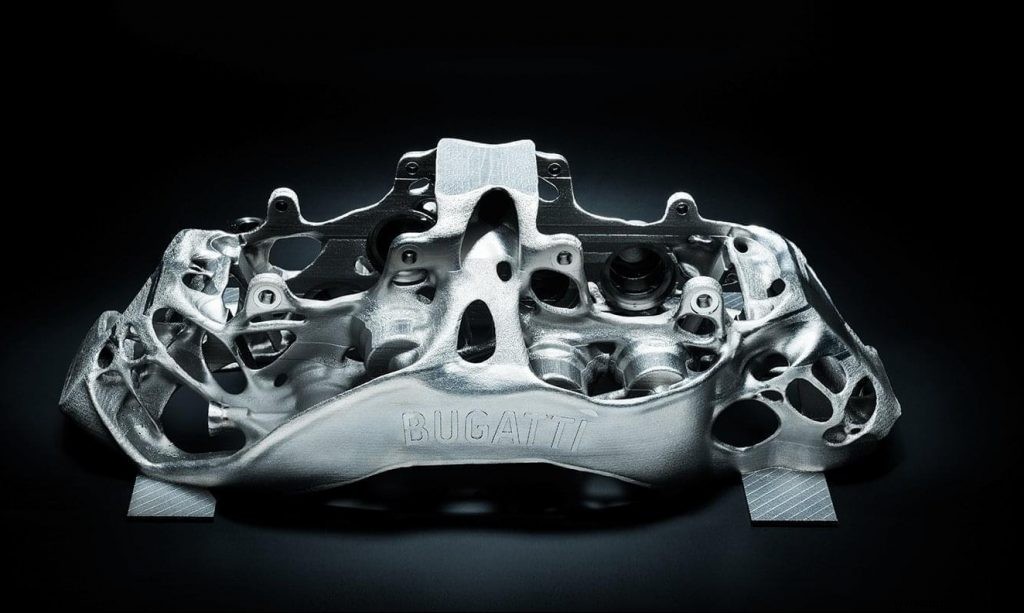
1. Bugatti’s 3D‑Printed Titanium Brake Caliper
Application: Automotive
Benefits: Lightweighting, greater strength
Bugatti’s latest Chiron supercar now features a titanium brake caliper produced via Selective Laser Melting (SLM). The part is roughly 40% lighter and considerably stronger than the aluminum alternative, thanks to complex geometries and wall thicknesses ranging from 1 mm to 4 mm that could not be machined traditionally. The caliper has already passed high‑load tests and is slated for production.
Other automakers, such as Carbon Performance, are also employing AI‑driven design tools to create lighter, more efficient brake calipers that reduce material waste and environmental impact.
2. General Motors’ Generatively Designed Seat Bracket
Application: Automotive
Benefit: Significant weight savings
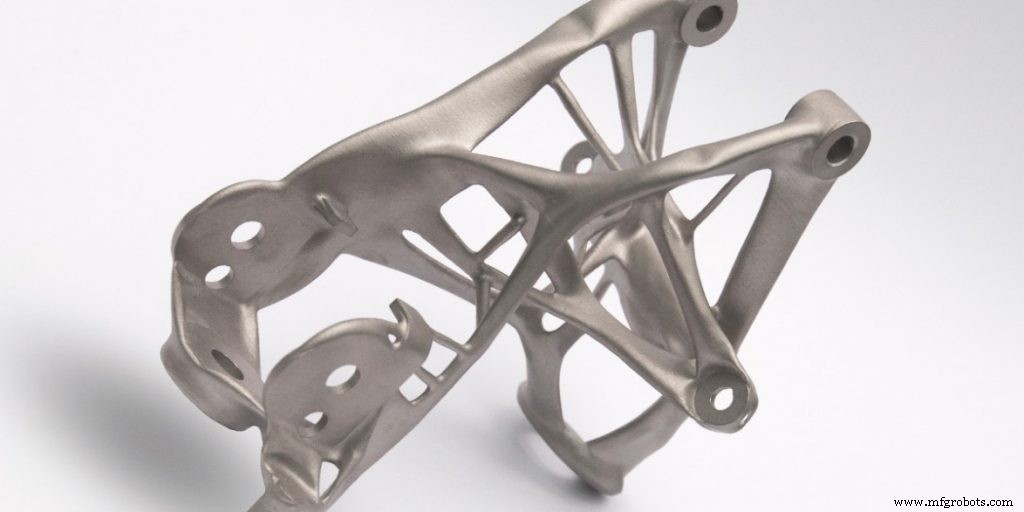
Using Autodesk Fusion 360’s generative design, GM produced 150 iterations of a seat bracket. The winning design, 3D‑printed in metal, is 40% lighter, 20% stronger, and consolidated from eight parts into a single component. This proof‑of‑concept demonstrates how additive manufacturing and generative algorithms can streamline assembly and cut costs.
3. Altair’s Topologically Optimised Hip Implant
Application: Medical
Benefit: Material optimisation
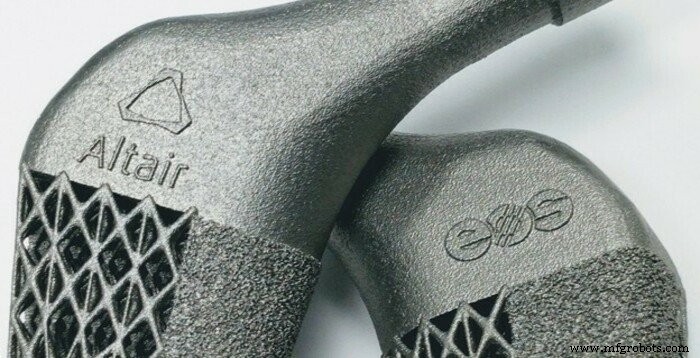
Altair combined topology optimisation with metal 3D printing to produce a hip stem implant that mirrors bone structure. The lattice‑filled design increases endurance to ~10 million cycles and reduces stress shielding by 57%, addressing a key complication in traditional titanium implants. While regulatory approval is forthcoming, the technology promises longer‑lasting, patient‑specific solutions.
4. MX3D’s 3D‑Printed Pedestrian Bridge
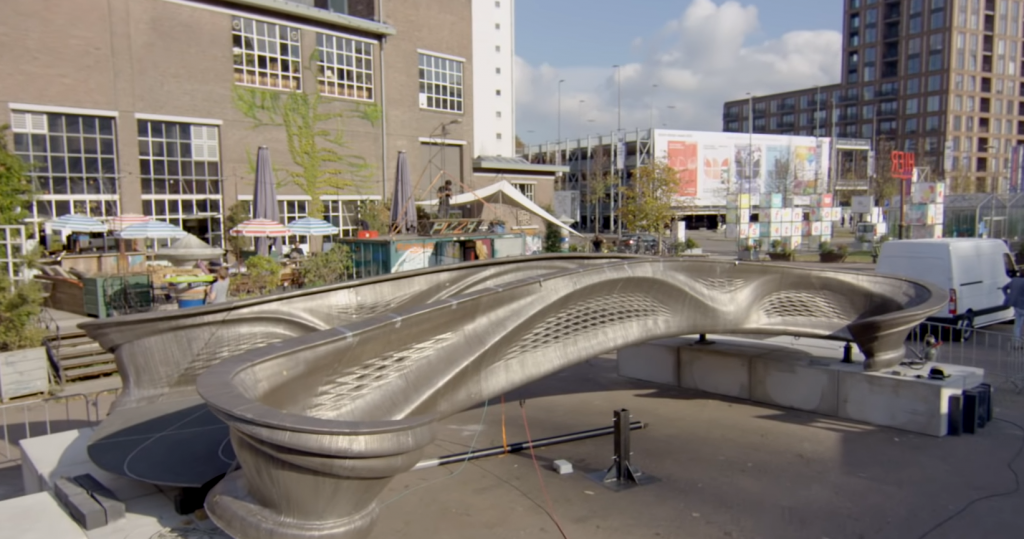
Application: Construction
Benefit: Innovative design
Unveiled at Dutch Design Week 2018, MX3D printed a 12‑metre stainless steel bridge using robotic arms fitted with welding machines. The organic, fabric‑like structure showcases unsmoothed layers for a unique aesthetic and incorporates sensors to monitor usage, weight distribution, and air quality. The four‑year project will be installed in Amsterdam later this year.
5. GE Research’s Bio‑Inspired Heat Exchanger
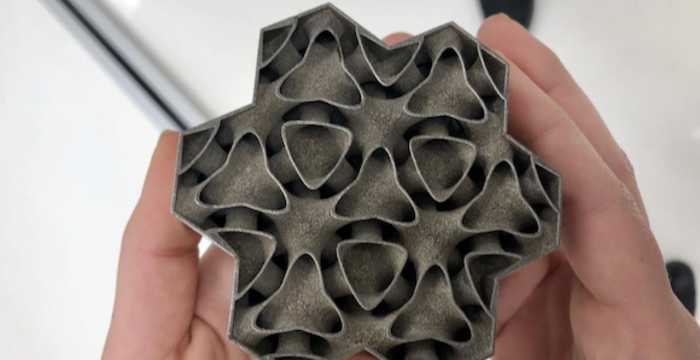
Application: Energy
Benefit: Enhanced performance
GE Research has engineered a heat exchanger modeled after human lungs, featuring a dual‑network of channels that separate hot turbine exhaust from cooler fluid. 3D printing made this intricate design possible, enabling the component to operate efficiently at temperatures 250 °C higher than current systems—ushering in a new generation of high‑temperature heat exchangers.
6. BMW’s Lightweight Roof Bracket
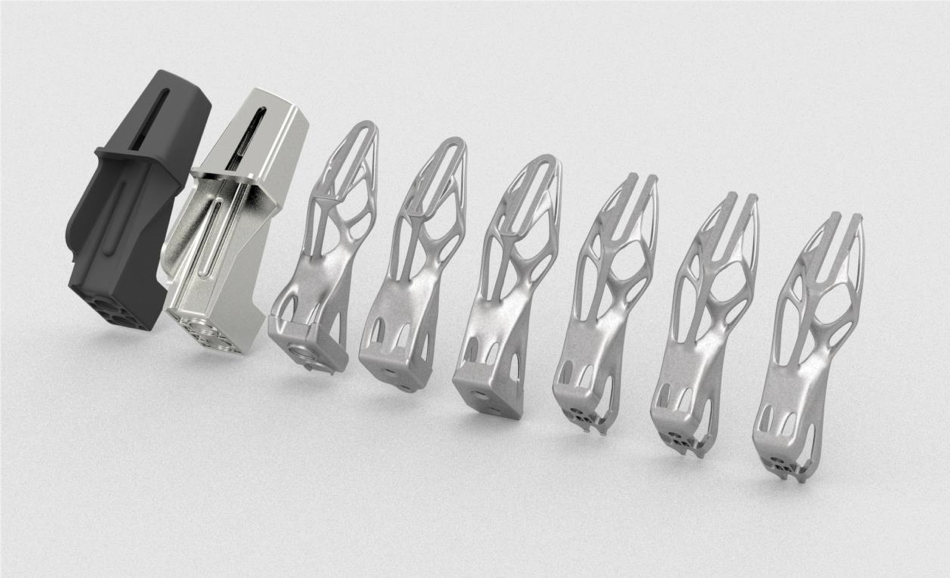
Application: Automotive
Benefit: Weight savings
BMW’s i8 Roadster features a metal roof bracket produced via Selective Laser Melting after topology optimisation. The part is 44% lighter and ten times stiffer than a cast alternative, illustrating how additive manufacturing unlocks designs impossible to manufacture by conventional means.
7. KW Micro Power & VELO3D’s Microturbine Component
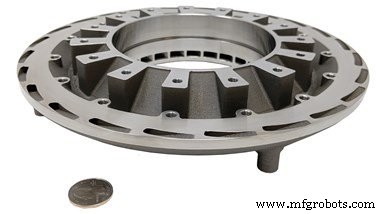
Application: Energy
Benefit: Complex internal features
KW Micro Power needed to produce a titanium disc with intricate internal channels for its microturbine generator. By partnering with VELO3D, which offers the Sapphire 3D printer and its Intelligent Fusion technology, the component was printed without supports, reducing weight by 37% and improving performance. The collaboration demonstrates how next‑generation metal 3D printing can realize previously non‑manufacturable designs.
Bringing the Most Complex Ideas to Life
3D printing delivers unmatched design flexibility, enabling engineers to experiment with topology‑optimised shapes, lattice structures, and lightweight geometries that are impossible with subtractive methods. Unlocking its full potential requires understanding both its possibilities and limitations, but the payoff—innovative, custom‑made products—has never been greater.
3D printing
- Choosing the Right Plastic for 3D Printing: A Comprehensive Guide
- A Practical Guide to Ceramic 3D Printing: Techniques, Materials, and Design Tips
- 3D Printing with Resins: A Comprehensive Guide to Technologies, Materials, and Applications
- Titanium 3D Printing: Applications, Benefits, and Emerging Technologies
- In‑House Production: The Fuse 1 Builds Its Own Parts
- Revealing History: How 3D Printing Transforms Archaeology and Paleontology
- High‑Performance 3D‑Printed Fixtures: Solving Skilled Labor Shortages and Boosting Quality
- High‑Speed 3D Printing with the AION500 MK3 – Unmatched Speed, Precision, and Strength
- Master 3D Printing with Wood Filament: Techniques & Benefits
- Enhancing 3D Printing: Mastering Support Structures for Complex Builds