



HP Multi Jet Fusion: Mastering 3D Printing for Speed, Quality, and Precision
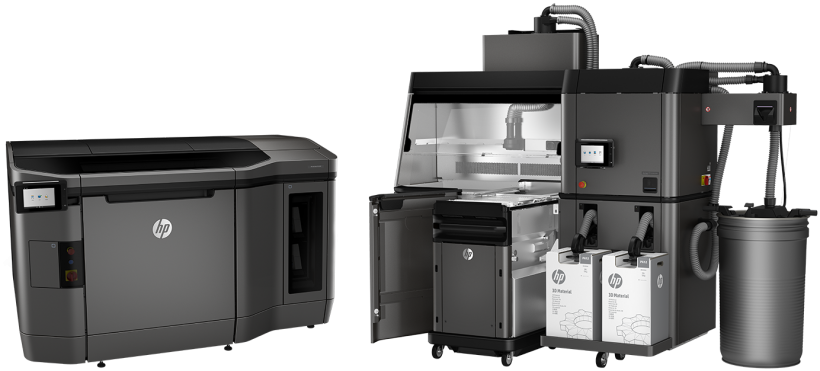
HP’s Multi‑Jet Fusion 3D Printing Solution Source: HP
HP’s Multi‑Jet Fusion (MJF) technology has transformed the manufacturing landscape since its 2016 debut. By fusing fine‑grained powder with a selective binding agent, MJF delivers functional parts and prototypes at commercial scale with unprecedented speed and quality.
As more companies adopt MJF, this guide breaks down the printing process, material options, key advantages, and current limitations to help you decide whether MJF is the right investment for your production needs.
The Printing Process
MJF is a powder‑bed fusion method that relies on a fusing agent rather than lasers. The process resembles binder jetting, where a binding agent selectively fuses powder layers.
Here’s how a typical MJF build proceeds:
- A uniform layer of powder is spread across the bed and preheated to optimize sintering.
- The print head deposits a fusing agent on the powder where melting is required, while a detailing agent surrounds part edges to improve resolution.
- Infrared lamps heat the fusing‑agent‑coated areas, fusing the powder into solid sections.
- Subsequent layers are added on top of the previous ones, repeating the cycle until the part is complete.
- After printing, the part remains encased in loose powder, which is removed. Optional bead‑blasting or dyeing can enhance surface aesthetics.
Watch MJF in action here.
Material Choices
When launched, MJF was limited to Polyamide 12 (PA12), a high‑strength nylon ideal for complex, functional parts. Today HP’s portfolio includes:
- Polyamide 11 (PA11) – low‑cost, ductile, and chemically resistant; suitable for prosthetics, insoles, sports gear, and living hinges.
- High‑Reusability PA12 Glass Beads – 40% glass‑filled nylon that offers superior stiffness and dimensional stability for enclosures, fixtures, and tooling.
- Polypropylene (PP) – lightweight, watertight, and chemically resistant, perfect for flexible or high‑impact applications.
HP’s Open Platform model partners with over 50 material developers, including Evonik, DSM, and Lubrizol, signaling upcoming expansions into new thermoplastics and even metals.
Benefits of Multi‑Jet Fusion
- Ultra‑thin layers (80 µm) produce low porosity, high‑density parts with exceptional resolution and dimensional accuracy.
- Fast lead times and an integrated post‑processing station accelerate the product life cycle compared to SLS.
- Isotropic, high‑strength parts with no need for support structures, enabling efficient nesting and reduced cycle times.
Limitations of Multi‑Jet Fusion
- Material selection remains limited; all parts start in a grey color due to the black fusing agent, and full‑color finish requires additional coating.
- Surface finish, while good, is rougher than SLA or PolyJet; bead‑blasting improves aesthetics but adds cost and time.
Key Takeaways
- Ideal for low‑ to medium‑batch production with tight deadlines, thanks to rapid printing.
- Best suited for parts demanding high mechanical performance, precision, and resolution.
- HP’s new Jet Fusion 300/500 series offers full‑color printing at a starting price of $50,000, a compelling option for SMEs and academia.
3D printing
- Choosing the Right Plastic for 3D Printing: A Comprehensive Guide
- HP Multi Jet Fusion: Mastering 3D Printing for Speed, Quality, and Precision
- Binder Jetting 3D Printing: How It Works, Benefits, and Best Practices
- Material Jetting 3D Printing: The Ultimate Guide to Precision, Colour, and Innovation
- 3D Printing with Resins: A Comprehensive Guide to Technologies, Materials, and Applications
- Titanium 3D Printing: Applications, Benefits, and Emerging Technologies
- Multi Jet Fusion (MJF) Demystified: HP’s Cutting‑Edge 3D Printing for Complex Industrial Parts
- Beginner's Guide to Non-Planar 3D Printing: Master the Basics with Confidence
- Mastering HIPS Filament: A Comprehensive Guide to 3D Printing Success
- Comprehensive Guide to Selecting Plastic Materials for 3D Printing