



Binder Jetting 3D Printing: How It Works, Benefits, and Best Practices
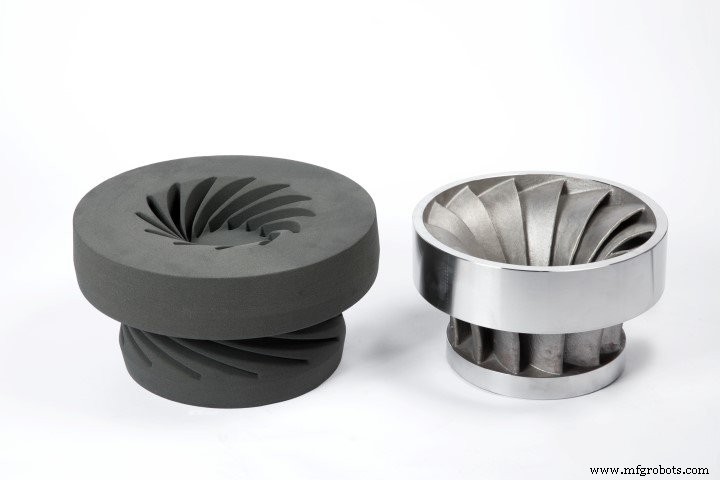
Since its debut in the mid‑1990s, binder jetting has matured into a versatile additive manufacturing method, enabling the creation of full‑colour prototypes, low‑cost metal parts, and high‑fidelity sand molds for casting across multiple sectors.
In this guide we explore the science behind binder jetting, its key strengths and drawbacks, and practical advice to help you harness this technology to its fullest.
How Binder Jetting Works
Binder jetting builds objects layer‑by‑layer by applying a liquid binder to a spread layer of powder. The process unfolds as follows:
- A thin sheet of powder is evenly distributed across the build platform.
- An inkjet print head deposits the binder—plus optional dye for full‑colour parts—binding powder particles together.
- The platform lowers, a new powder layer is spread, and the cycle repeats until the geometry is complete.
- After the final layer, the part cools and is removed from the platform; excess powder is cleaned away. Post‑processing—such as sintering, infiltration, or finishing—may follow depending on material and application.
Why Choose Binder Jetting?
- Fast build rates and low operational costs make it a budget‑friendly alternative to FDM, SLS, or DMLS, especially for large‑scale production.
- Because the process is non‑thermal, it eliminates warping and other heat‑related distortions that can plague other additive methods.
- Unbound powder acts as a natural support, allowing complex geometries without the need for removable supports and enabling batch printing of multiple parts.
- Large build volumes accommodate oversized components, while the option to embed colour expands design possibilities for aesthetic or marketing applications.
Typical Applications and Materials
Binder jetting is widely adopted in:
- Casting patterns, cores, and sand molds for the metal and ceramic industries.
- Aerospace structural parts where weight and thermal stability are critical.
- Prototyping and low‑volume tooling for rapid iteration.
- Full‑colour decorative objects, jewelry, and custom figurines.
- Emerging uses in the food sector for intricate, safe‑to‑consume molds.
Common feedstocks include:
- Silica sand and sandstone for molds and cores.
- Stainless steel, nickel alloys, and tungsten carbide for economical metal components.
- Ceramic and polymer powders for vibrant, paint‑ready parts.
Limitations of Binder Jetting
- Parts are typically porous and may exhibit reduced mechanical strength; post‑processing such as sintering or infiltration is often required.
- Debinding—removing excess powder—can be labor‑intensive and extend lead times.
- Metal parts emerge in a “green” state, with high porosity that necessitates additional treatments to achieve desired density and durability, adding both cost and schedule overhead.
Practical Tips for Success
- Use binder jetting for complex, low‑stress metal parts where cost efficiency outweighs peak strength.
- Leverage the full‑colour capability for marketing prototypes, decorative jewelry, or architectural models.
- Choose binder jetting for large casting molds or cores to take advantage of its high build volume and supportless architecture.
Why Traceability is Critical for Additive Manufacturing Success
Expert Insight: Dominic Parsonson on the Future of Additive Manufacturing at Fuji Xerox Australia
3D printing
- Silicone 3D Printing Explained: A Beginner’s Guide to Cutting‑Edge Production
- HP Multi Jet Fusion: Mastering 3D Printing for Speed, Quality, and Precision
- Choosing the Best Industrial Binder‑Jetting 3D Printers: Top 5 Picks
- Material Jetting 3D Printing: The Ultimate Guide to Precision, Colour, and Innovation
- Titanium 3D Printing: Applications, Benefits, and Emerging Technologies
- Mastering Material Jetting 3D Printing: Fundamentals & Applications
- Understanding Binder Jetting 3D Printing: A Comprehensive Overview
- Mastering 3D Printing Supports: A Comprehensive Guide to Quality & Efficiency
- Beginner's Guide to Non-Planar 3D Printing: Master the Basics with Confidence
- Mastering HIPS Filament: A Comprehensive Guide to 3D Printing Success