



Material Jetting 3D Printing: The Ultimate Guide to Precision, Colour, and Innovation
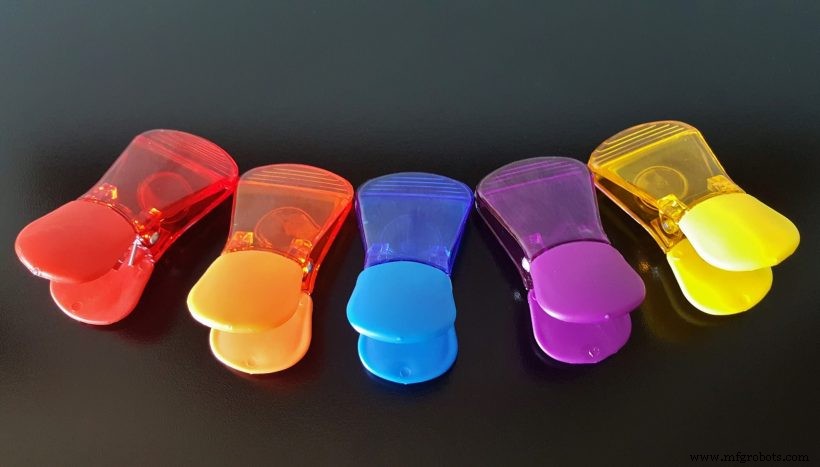
Material Jetting stands out among 3D printing technologies for its ability to produce highly accurate parts with a smooth surface finish. Since its emergence in the late 1990s, it has become the go‑to solution for full‑colour visual prototypes, injection moulds, and casting patterns.
In this guide we dive deep into the Material Jetting process, its strengths and challenges, and the latest applications and innovations shaping the future of this technology.
How Material Jetting Works
Material Jetting is an inkjet‑style process that deposits liquid, photoreactive resin onto a build platform layer by layer. Like stereolithography (SLA), the resin is cured with UV light, but instead of a single vat the printer uses multiple printheads to jet droplets precisely onto the part.
Key steps:
- Resin is preheated to optimize viscosity, then the printhead travels above the build platform, dispensing the first layer where needed.
- Support structures are printed simultaneously, ensuring the part stays stable throughout fabrication.
- After each deposition, a UV lamp cures the layer via photopolymerisation.
- Once the layer solidifies, the build platform lowers by one layer height and the cycle repeats until the part is complete.
- When finished, supports are removed, leaving a pristine surface ready for post‑processing.
The Advantages of Material Jetting
- Unmatched Accuracy – Droplet precision allows layers as thin as 0.013 mm, giving parts exceptional surface smoothness and the ability to capture fine details.
- Full‑Colour & Multi‑Material Capability – Dedicated printheads with multiple nozzles can lay down different colours or materials in a single build, producing parts that combine rigidity, flexibility, opacity, and translucency.
- Clean Support Removal – Supports dissolve cleanly in an ultrasonic bath, leaving no residue or marks on the finished part.
Limitations of Material Jetting
- Mechanical Properties – Parts tend to be weaker than those made with SLS or other techniques, so they are best suited for visual or low‑load functional prototypes.
- Printing Speed – The precision of droplet deposition means the process can be slower than other additive methods.
- Material Range – Currently limited to viscous photopolymers and waxes; research is expanding this library to include metals, ceramics, and silicones.
Materials Used in Material Jetting
Today, photopolymers (liquid) and casting wax dominate the market. Leading vendors such as Stratasys and 3D Systems offer photo‑curable plastics and composites. Stratasys’s “digital materials” blend multiple photopolymers to create hybrid properties—though they remain brittle, specialized grades exist for tooling and investment casting.
Innovations are broadening the palette: Xjet’s NanoParticle Jetting suspends metal or ceramic particles in a liquid that is removed during sintering; ACEO® (Wacker Chemie AG) introduced drop‑on‑demand silicone printing in 2016, enabling 100 % silicone and multi‑colour parts with varying hardness.
Common Applications
Material Jetting excels in prototyping and tooling. Designers use its multi‑material capability to produce highly accurate, full‑colour visual prototypes. For instance, Audi’s Pre‑Series Centre leverages Stratasys technology to build functional, multi‑material mock‑ups that accelerate design validation.
In medicine, full‑colour anatomical models aid education, pre‑surgical planning, and training. Surgeons can rehearse procedures on realistic replicas that match the patient’s anatomy.
Low‑volume tooling—inject moulds, casting patterns, and investment casting moulds—benefits from rapid, cost‑effective production and complex geometries that traditional methods cannot achieve.
Emerging uses include electronic device fabrication: Nano Dimension’s DragonFly 2020 Pro prints conductive silver inks to create multilayer circuits, PCB prototypes, and antennas.
Material Jetting 3D Printers
Build volumes vary from medium (380 × 250 × 200 mm) to large (1000 × 800 × 500 mm). Stratasys and 3D Systems remain the primary manufacturers.
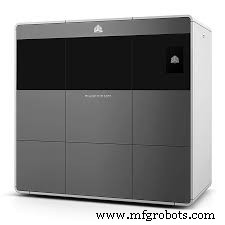
The ProJet MJP 5600 from 3D Systems uses proprietary MultiJet Printing to create multi‑colour, multi‑material parts for rapid prototyping and tooling. With a build volume of 518 × 381 × 300 mm, it’s ideal for medium‑sized components.
Stratasys’s J750, the latest in PolyJet technology, offers a 490 × 390 × 200 mm build envelope and can print six materials simultaneously, delivering true multi‑colour and multi‑material parts.
In Summary
Material Jetting delivers high‑dimensional accuracy, full‑colour, and multi‑material parts—making it the preferred choice for functional prototypes and tooling. Ongoing research into photopolymers and other materials hints at future applications in end‑part production, electronics, and even bioprinting, where drop‑on‑demand precision could transform regenerative medicine.
3D printing
- Choosing the Right Plastic for 3D Printing: A Comprehensive Guide
- Silicone 3D Printing Explained: A Beginner’s Guide to Cutting‑Edge Production
- HP Multi Jet Fusion: Mastering 3D Printing for Speed, Quality, and Precision
- Binder Jetting 3D Printing: How It Works, Benefits, and Best Practices
- Titanium 3D Printing: Applications, Benefits, and Emerging Technologies
- 3D Printing: The Future of Manufacturing and Medicine
- Mastering Material Jetting 3D Printing: Fundamentals & Applications
- Understanding Binder Jetting 3D Printing: A Comprehensive Overview
- Expert Guide to Choosing 3D Printing Materials for SLS, MJF, FDM, SLA & DLS™
- Comprehensive Guide to Selecting Plastic Materials for 3D Printing