



Master PCB Laminates: The Definitive Guide for Engineers
People often take for granted how complex the structure of printed circuit boards can be. Since we use PCBs for different application areas, each requires specific materials. Laminates are an essential material. Manufacturers use them to develop and fabricate PCBs. Thus, it’s necessary to understand the various laminates available to you. This guide will explore everything you need to know about PCB laminates.
What are PCB Laminates?
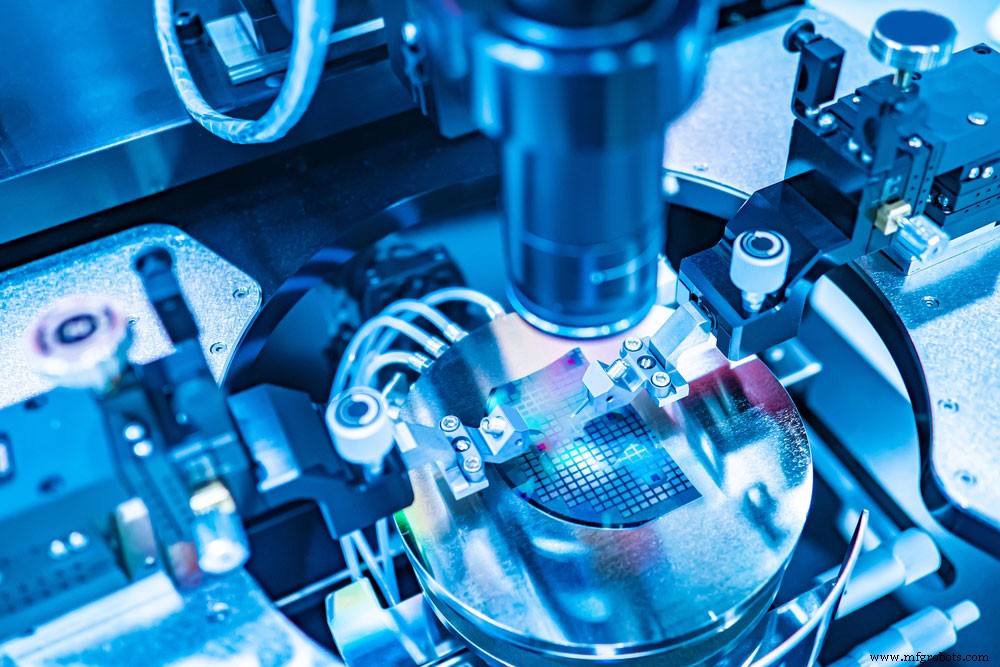
A robotic device that develops miniature PCBs holding a laminate
Generally, PCBs have four layers: silkscreen, solder mask, copper, and substrate (from top to bottom). Consequently, these layers must bind together to be a functional structure for the PCB. Thus, the purpose of the PCB laminate is to secure the PCB layers together.
Laminates are often copper-clad materials that typically consist of sheets of resin. The resin that manufacturers use to construct laminates is usually epoxy-based. However, it can consist of other fabrics. Nevertheless, the manufacturer first cures the sheets using thermoset resin to create the laminate. Next, we compress these resin sheets together by applying two copper sheets of foil on each flat side of the collection.
Lastly, the manufacturer applies heat and force till the sheets bind together. After laminate hardens, it resembles a plastic or hard glass-like material.
What Is The Difference Between Laminates and Prepregs?
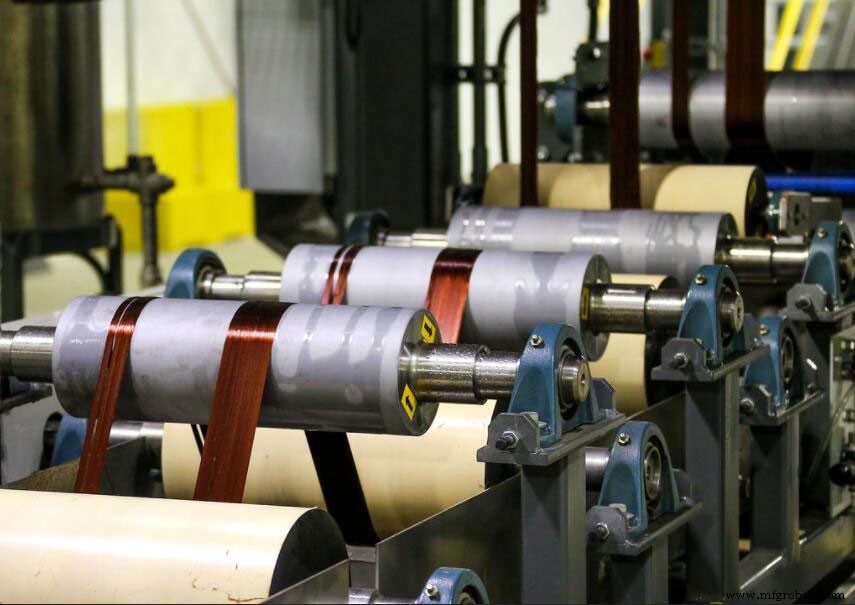
Carbon fiber technology facility producing prepreg material
Source: Flickr (CC – Generic)
Prepregs are typically sheets of reinforced fiberglass. Prepreg manufacturers develop them by applying or pre-impregnating these fiberglass sheets using curing agents such as epoxy resin. Accordingly, this is far different from the process of developing laminates. Laminates often consist of sheets of prepreg. Prepregs are just cured and impregnated fabrics. Contrastingly, laminates are pressurized and heated sheets of material.
Types of PCB Laminates
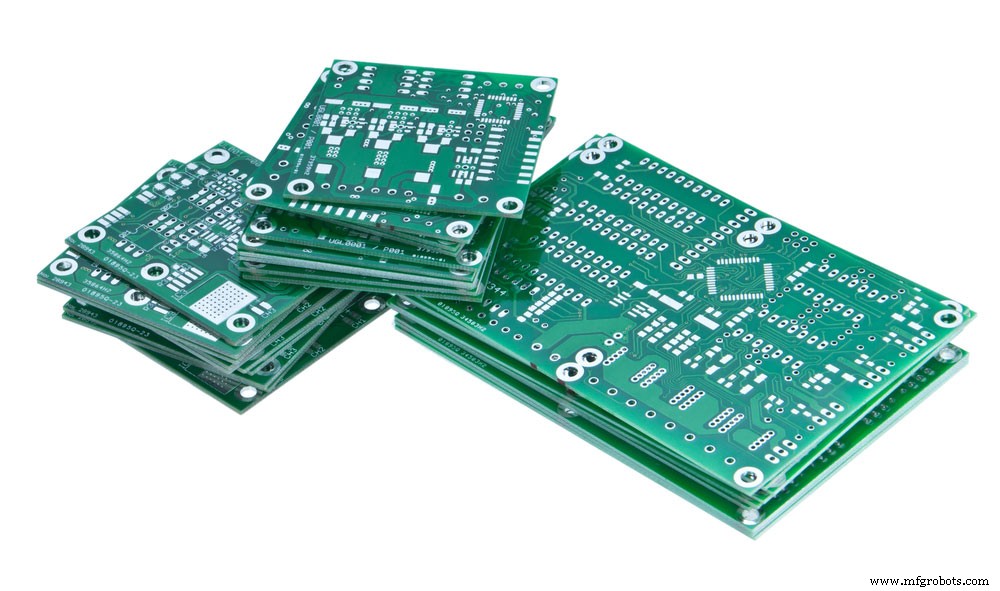
Collection of printed circuit boards
As mentioned earlier, we use different PCBs for different applications. For instance, device component manufacturers may use flexible PCBs in compact devices. The most common types of PCB laminates are:
FR-4 (FR4)
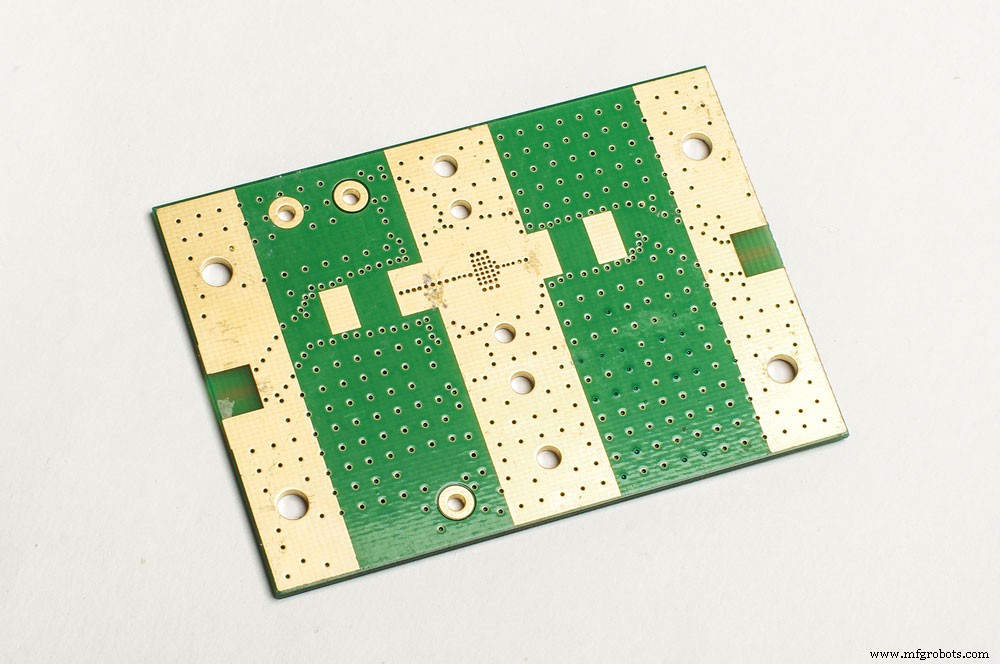
Copper-clad Fr-4 PCB
FR-4 refers to glass-reinforced epoxy resin laminates. It is a flame-retardant material. Hence the name FR-4 (FR = Flame Retardant). Nevertheless, FR-4 is the most popular material for PCB substrates. This fact is due to its high mechanical and electrical strength. Additionally, it features high thermal dissipation when manufacturers apply additives. Furthermore, these additives can increase the material’s stability, reliability, and power specifications.
Nevertheless, FR-4 can accommodate circuits with a high-layer count because of its constancy. As such, it’s suitable for high-frequency PCB fabrication.
Polyimide
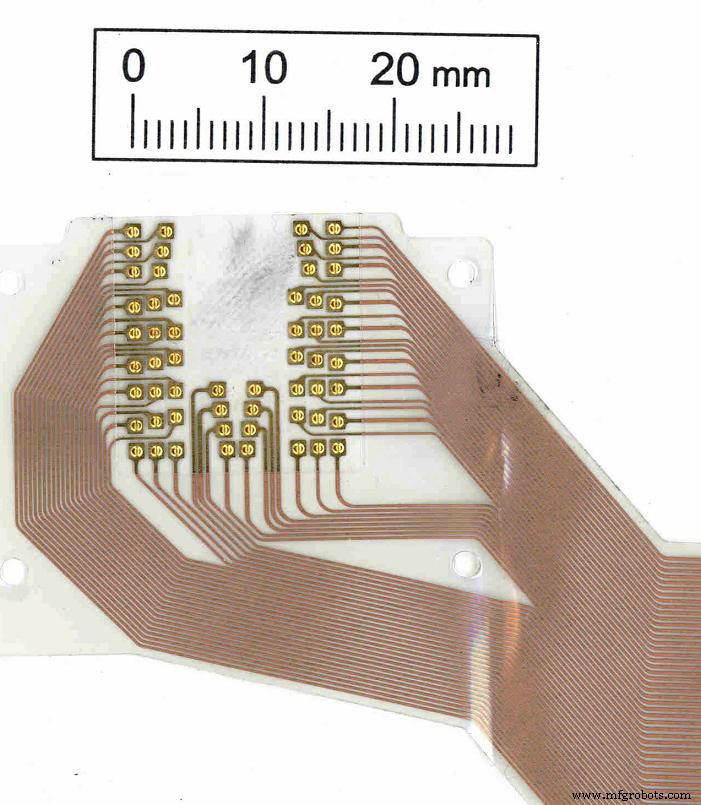
Flex PCB that uses polyimide material
Source: Wikimedia Commons
Manufacturers value polyimide laminates for their innate high thermal efficiency. Additionally, they tend to be more reliable than FR-4 materials. This fact is mainly due to their low heat expansion. Consequently, device manufacturers implement them in electronics that people use in harsh environments. Furthermore, it makes them highly fitting for PCB designs requiring multiple layers. However, manufacturers use this material for flexible PCB manufacturing.
Teflon
Manufacturers typically use Teflon laminates to develop high-speed PCBs. Incidentally, it’s because of their brilliant electric properties. Just as with FR-4, manufacturers can apply additives to Teflon to increase their mechanical stress.
Teflon is one of the most expensive laminate materials. As such, it’s one of the least popular materials in PCB fabrication and manufacturing. Additionally, it takes skill, high expertise, and specialized equipment to manufacture Teflon-based laminates.
High Tg Epoxy
High Tg Epoxy is a laminate material with a high glass transition temperature (AKA vitrification temperature). Because of this attribute, it features excellent heat tolerance. Consequently, it’s highly suitable for use in industrial applications and machinery. Additionally, High Tg Epoxy has brilliant chemical and moisture resistance. Manufacturers typically use it in the construction of multi-layer PCBs.
BT-Epoxy
BT-Epoxy is a combination of bismaleimide triazine and epoxy resin. Manufacturers value it because of its ability to maintain its structure under extreme temperatures. It has excellent electrical and mechanical properties. Therefore, it’s highly suitable for military and industrial applications. Nevertheless, lead-free and multi-layer PCBs are the most common PCBs that use BT-Epoxy laminates.
Other Materials
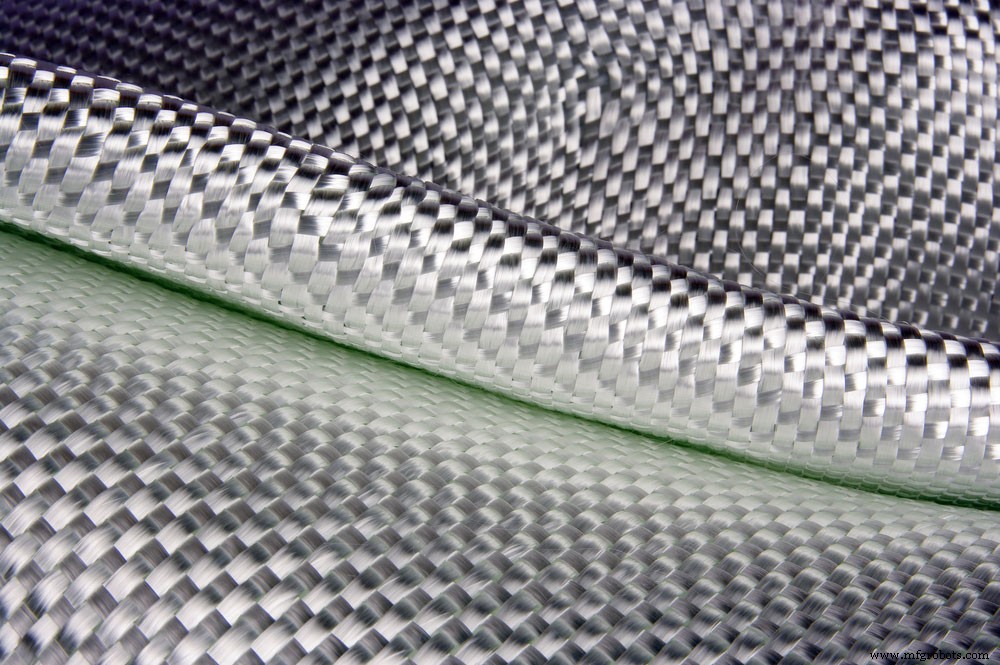
Fiberglass material
The materials listed above aren’t the only ones manufacturers use to produce laminates. For instance, we use copper-clad laminates for high-frequency PCBs. Additionally, we may use ceramic fabrics, cyanate esters, and other resin and chemical combinations.
However, these materials may not be worth mentioning because manufacturers do not implement them as much as the other materials in this guide. Furthermore, they may also be more expensive and harder to manipulate.
Properties of Laminates
When selecting the suitable material and laminate for your PCB, consider a few attributes. These properties can either be thermal, mechanical, or electrical. This section will explore these properties.
Thermal Properties
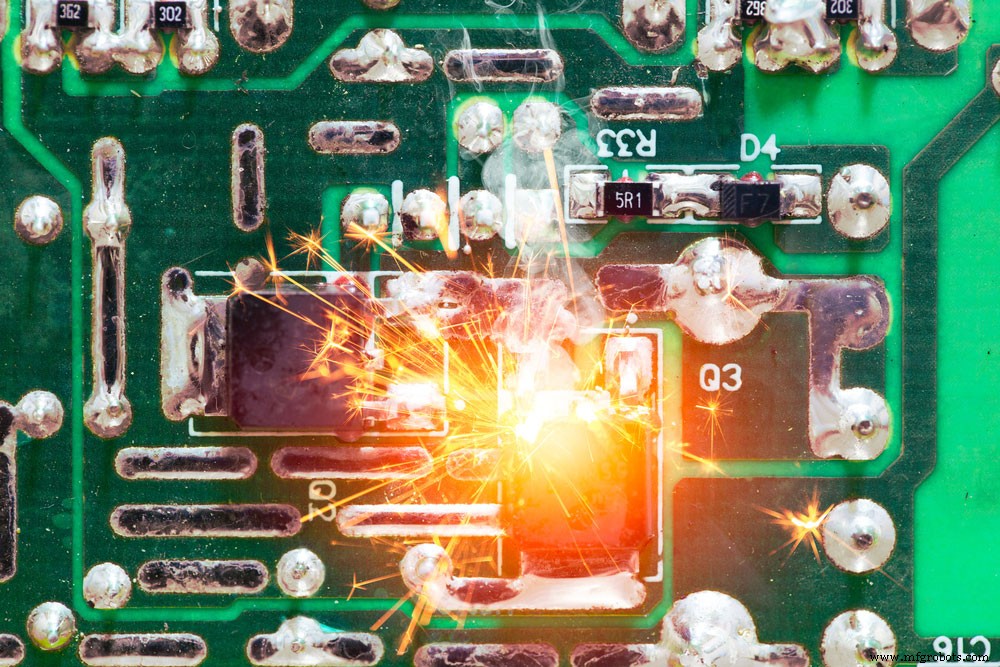
PCB suffering burns from a short circuit
- Glass Transition Temperatures (Tg): Laminates lose their structural integrity when they reach a certain temperature range. Thus, we use the glass transition temperature to help identify when the laminate softens and hardens.
- Decomposition Temperature (Td): Describes the temperature point when the laminate begins to suffer permanent damage (melt). Thus, it’s important to use PCB laminates whose operating temperatures are lower than decomposition ranges.
- Coefficient of Thermal Expansion(CTE): Describes the expansion rate of the laminate. If we introduce heat to the laminate that reaches past its CTE threshold, it will begin to expand. Therefore, it’s important to under the coefficient of thermal expansion when integrating a PCB into a device.
- Thermal Conductivity (k): A property that describes a laminate’s ability to transfer or conduct heat. It’s represented by Kelvins.
Electrical Properties
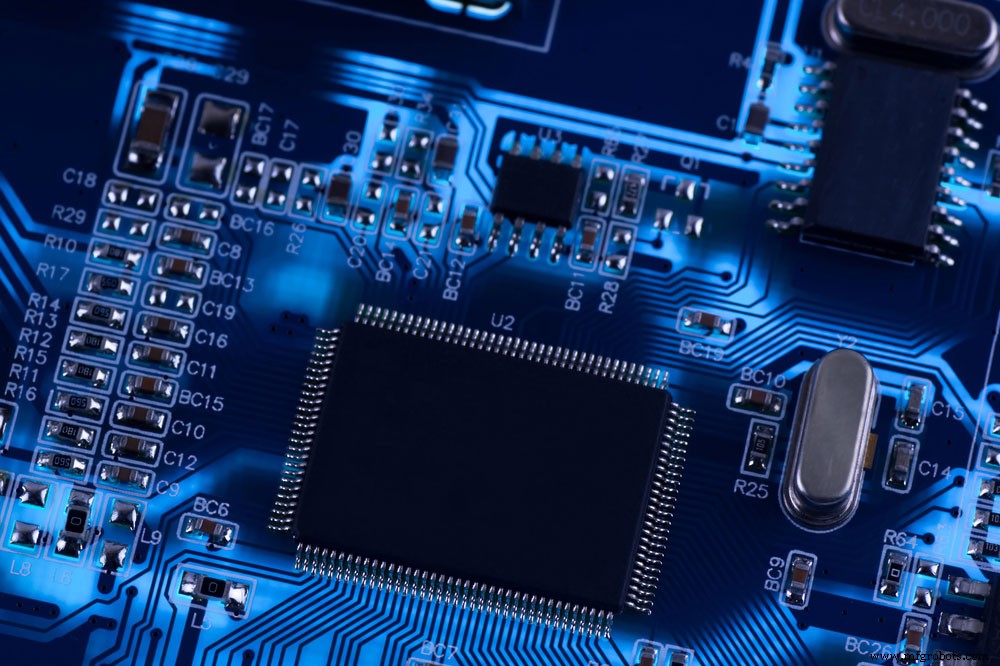
Macro photo of a printed circuit board
- Dielectric Constant (ϵr): Describe the electric and relative permeability of the laminate. Essentially, it can range between 3.5 and 5.5 ϵr.
- Dielectric Loss Tangent (tan δ): Represents the quantifiable diffusion of electrical energy in the laminate. Typically, PCB laminates have a tan δ between 0.02 and 0.0001.
- Electrical/Volume Resistivity (ρ): Represents the laminate’s ability to resist electrical current. Generally, laminates have an electrical resistivity between 103 and 1010 Ω⋅m (megaohms).
- Surface Resistivity (ρS): Denotes the external resistivity of the laminate. The moisture and temperature may affect it.
- Electrical Strength: Represents the laminate’s ability to resist an electrical breakdown. Incidentally, people also refer to it as dielectric strength. We use volts per meter to represent it.
Chemical Properties
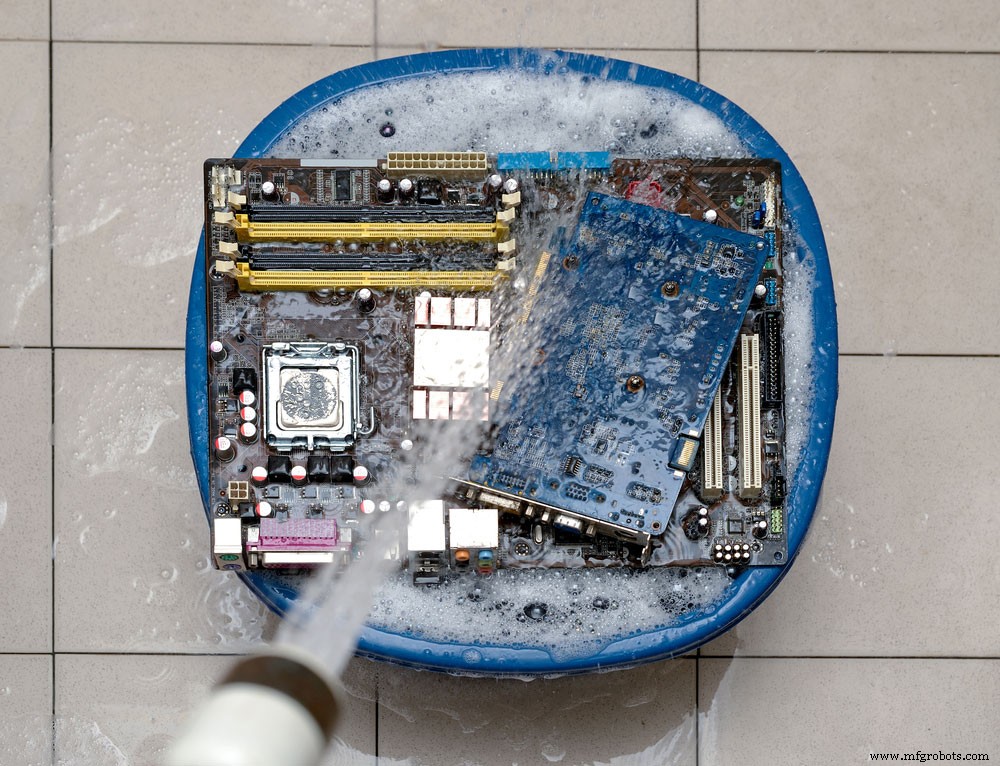
Printed circuit boards submerged in water and soap.
- Flammability: A property representing that laminate’s ability to resist flame ignitions. While most laminates tend to be inflammable, they may still suffer from external fires. Thus, this property denotes how long a laminate will burn while on fire.
- Moisture Absorption: Represents how much atmospheric dampness a laminate can resist. Especially when we submerge the laminate in water. Nevertheless, this value affects the laminate’s thermal and dielectric properties.
- Methylene Chloride Resistance: Denotes the laminate’s chemical resistance. Specifically to dichloromethane (or methylene chloride).
Mechanical Properties
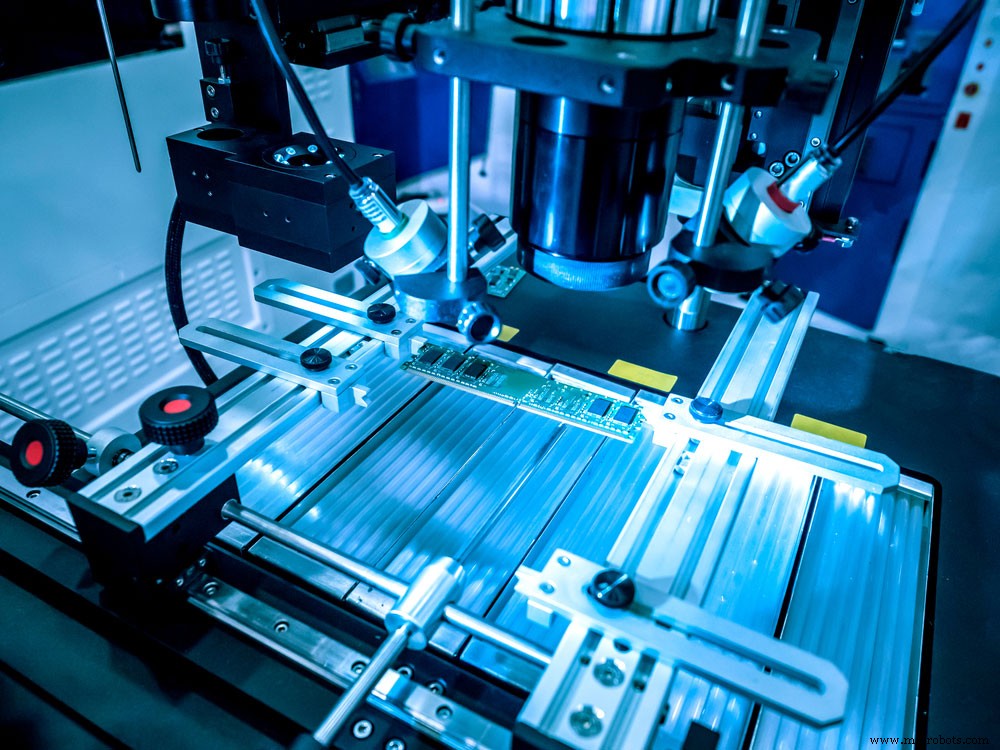
Automated production of a RAM module that uses a miniaturized PCB
- Peel Strength: Refers to the strength of the bond connecting the various layers of the laminate.
- Flexural Strength: Describes the laminate’s ability to resist physical strain. Basically, it’s tensile strength. Essentially, this property denotes how much you can apply pressure and bend a laminate before it finally breaks.
- Density: Refers to the mass or thickness of the laminate.
- Time of Delamination: Denotes the amount of time a laminate can withstand above threshold temperatures before it starts to deconstruct.
How to Select PCB Laminate Material
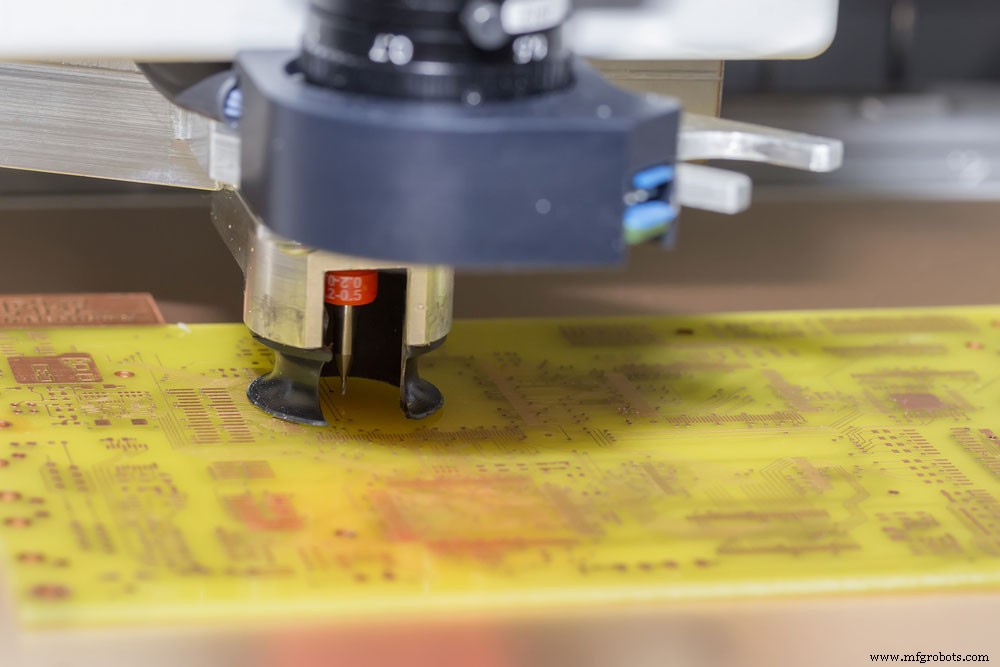
A machine drilling holes into a printed circuit board
When you consider the material for your electrical/PCB laminate, there are a few things to consider besides the technical specifications or properties. Other aspects you must contemplate include:
The Cost
When selecting PCB laminates, cost should always be examined first. While it may seem reasonable to source the most expensive materials, it may not be ideal for large productions. Again, FR-4 is the most popular PCB laminate material. As such, it’s the least costly to acquire. It has high reliability and is suitable for single-layer and multi-layer PCBs. While you can source and integrate more expensive materials into your designs (such as gold), you should consider a more pragmatic approach. We recommend purchasing fabric that does everything you need while saving you the most money.
The quality
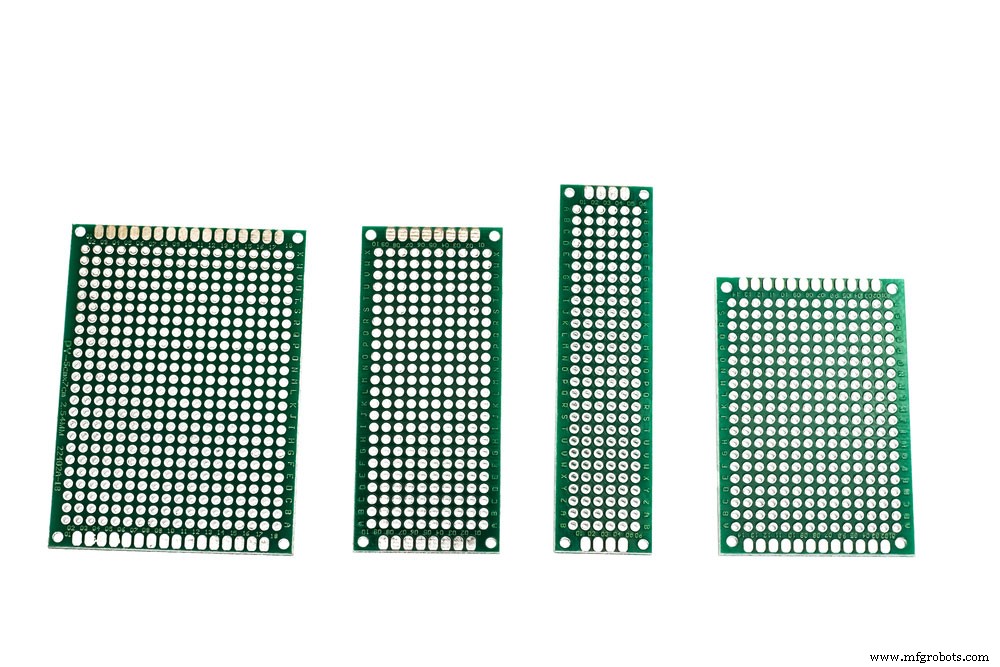
Collection of green prototyping boards
The quality slightly intersects with cost. High-quality materials tend to be more expensive. However, you can still strike a balance between these two aspects. Thus, you should source your materials from a wholesaler or producer with a reputation for selling top-quality fabrics at a reasonable price.
The PCB Manufacturer
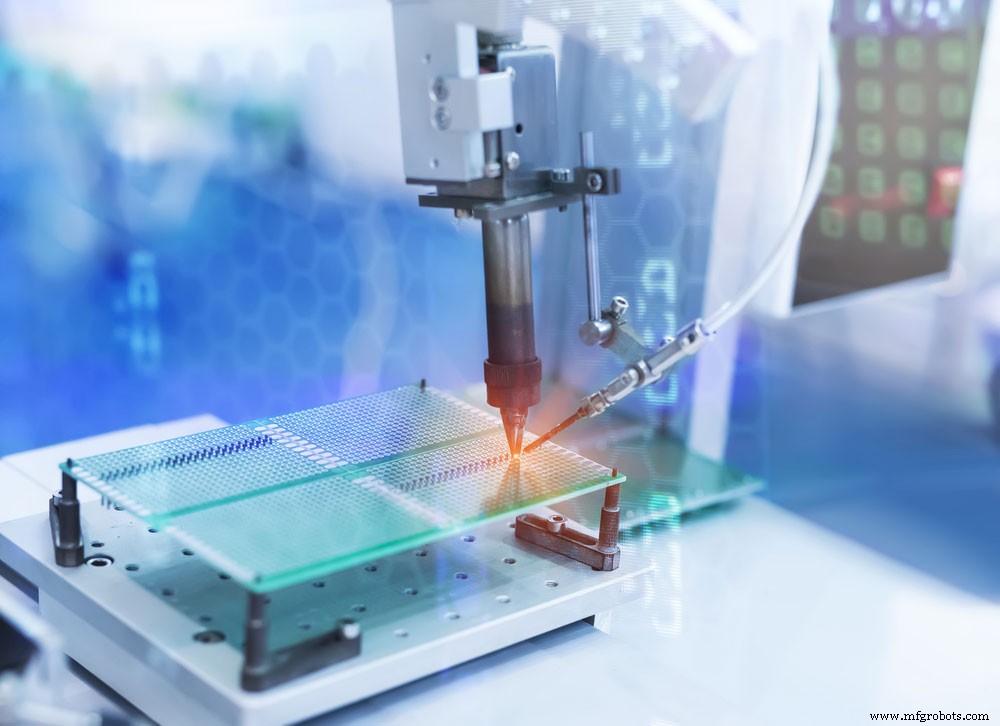
Automated iron soldering a PCB
When picking the materials for your laminates which will eventually become your PCB, it’s best to collaborate with a reputable PCB manufacturer. This manufacturer should be highly experienced with the materials you plan to integrate into your laminate. The manufacturer should be familiar with a variety of fiberglass and fabric styles.
Furthermore, they should be capable of validating your PCB designs and material choice. We have you covered with our modernly equipped factories from prototyping to mass production. Contact Wellpcb.com for all your PCB manufacturing needs.
Summary
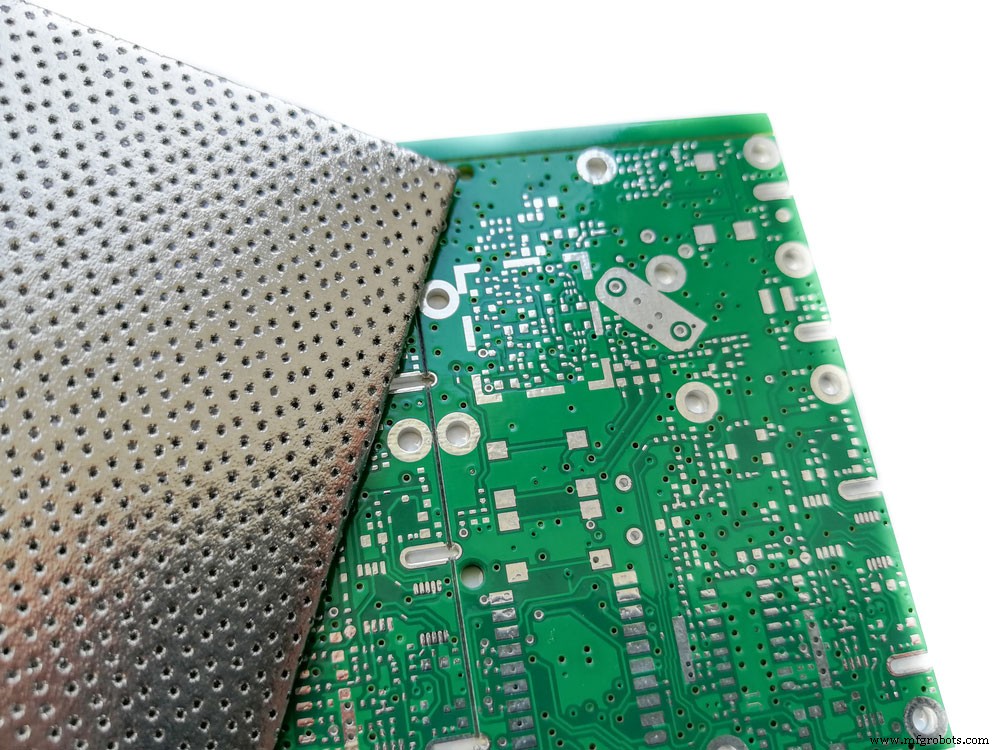
PCB with next to shielding material
Before the advent of PCBs, electronic device manufacturers had to rely on point-to-point constructions and wire wrap designs. It’s safe to say that modern PCBs make current electronics possible. The effectiveness of the printed circuit boards is highly dependent on the material it uses. As the above guide highlights, this is why laminates and laminate materials are so important. Nevertheless, we hope that you’ve found this guide to be helpful. As always, thank you for reading.
Industrial Technology
- Choosing the Right PCB Material: A Comprehensive Guide
- Mastering PCB Stiffeners: A Complete Guide for Flex PCBs
- Comprehensive Guide to PCB Testing Methods: Ensuring Quality & Reliability
- PCB Gold Fingers: Comprehensive Guide & Specifications
- Understanding Moisture Sensitivity in PCBs: Prevention, Detection, and Removal
- Comprehensive Guide to PCB Temperature Management
- Complete Guide to Printed Circuit Board Assembly (PCBA)
- Sark 110 Antenna Analyzer: Full Feature Guide
- Ceramic Substrate PCBs: Expert Insights and Design Best Practices
- Mastering High-Speed PCBs: A Complete Design Guide