



Digital PCBs: The Backbone of Modern Electronic Systems
Almost every part of the world economy and even our lives rely on digitized systems to make things work. Therefore, digital PCB is essential to meet the demands of the market.
If you are an electronics manufacturer or designer, you must have an in-depth understanding of these circuit boards to remain relevant in your field of operations. In this article, we will take a deep dive into the world of digital circuit boards, so read on to learn more!
What is Digital PCB?
Like analog PCBs, digital circuit boards contain tracks, conductive pads, and other features. Collectively, these attributes support and connect electronic components mechanically and respectively.
However, this PCB type is unique due to its digital manufacturing/assembly and design processes. As a result, it boasts of improved functioning, such as insertion loss control on the transmission lines and impedance matching.
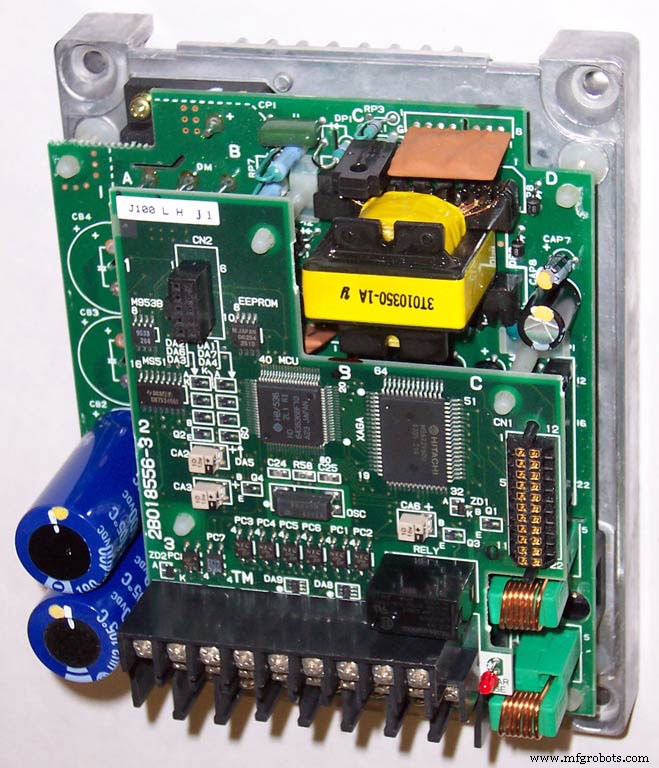
A digital controller (Hitachi J100A)
Source: Wikimedia Commons
Such PCBs contain multiple microprocessors and other high-performance board components with the ability to manage several billion tasks each second. Some examples include a digital clock PCB and a voltmeter PCB.
Similarities Between Analog and Digital Printed Circuit Boards
Analog and digital PCBs have many technical and design similarities, but you need to understand capacitance to understand this resemblance.
Parasitic capacitance develops when two wires are close to the PCB. In such a setup, a sudden voltage spike on one wire will induce a current pulse on the other.
Apart from separating the digital and analog circuit sections, you also have to distinguish the digital switch action from the analog board and low from high frequency.
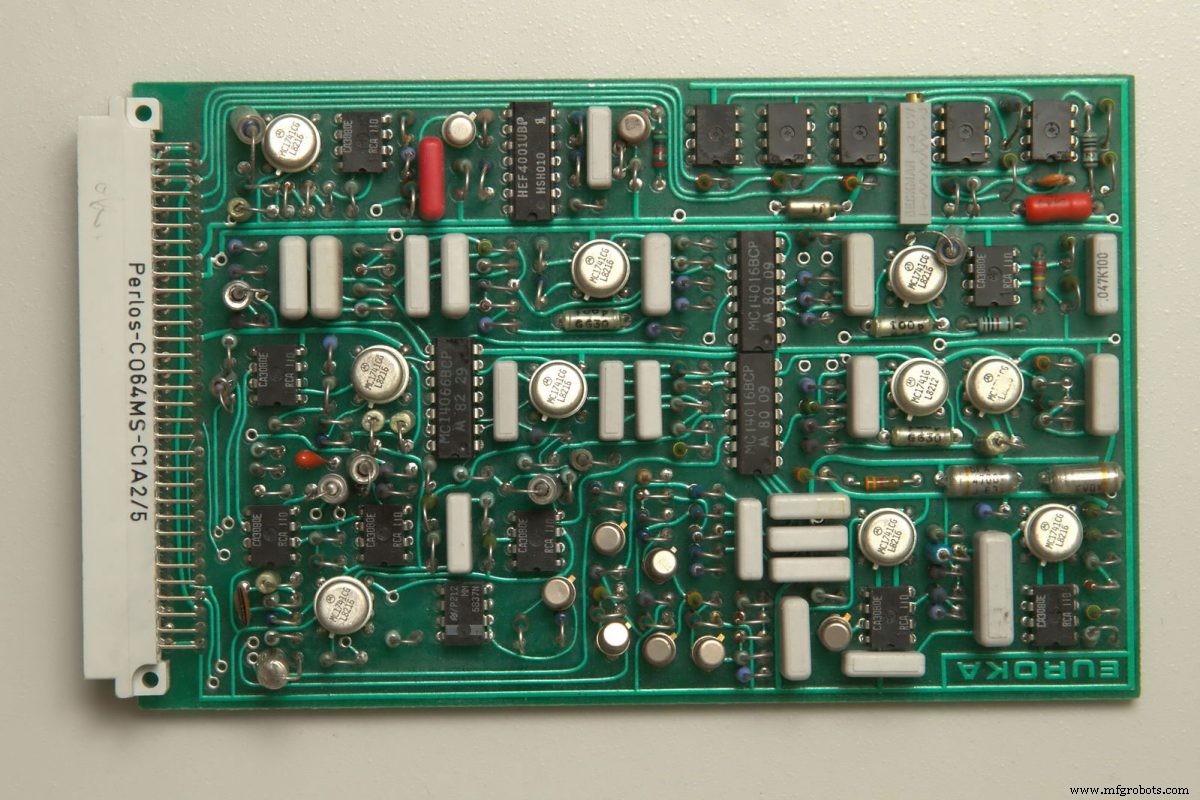
An analog speech synthesizer circuit board
Source: Wikimedia Commons
The two have several similarities and differences in cabling, and here is a close up look at these:
Cabling Strategy Similarities Between Analog and Digital PCBs
- Bypass/Decoupling capacitance.
- Simulators and digital devices require capacitors, especially when wiring. These get hooked up to the capacitor nearest to the power connection, usually 0.1uF. The supply side also needs a capacitance type (10uF).
- Both digital and analog boards need pins to be closest to the power input.
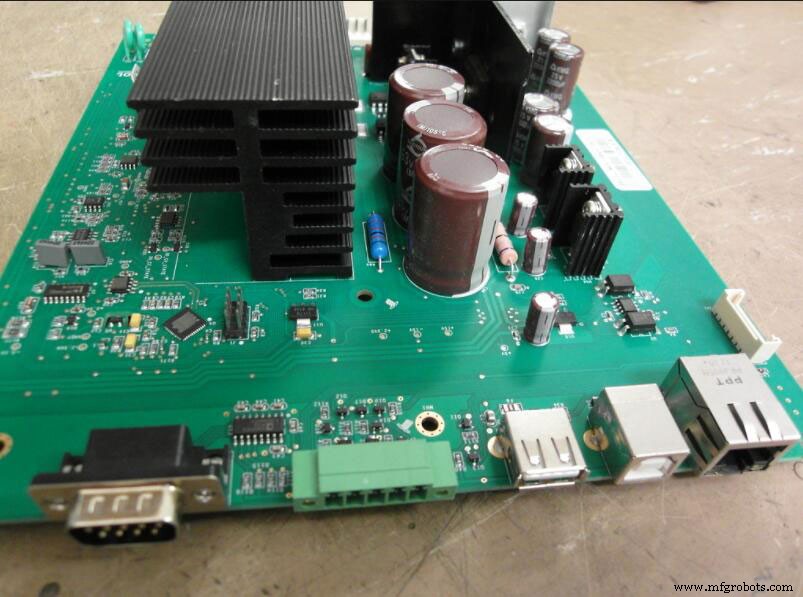
The power supply of a PCB
Source: Flickr
- The power and ground wires should be nearest to the PCB of a mono panel. If you mismatch the two, they will generate a system loop that produces noise, so such placement reduces the chances of experiencing electromagnetic interference.
Cabling Strategy Differences Between Analog and Digital PCBs
Challenging Ground Plane
The common practice in PCB wiring is to have an uninterrupted ground plane. However, this minimizes the dl/dt effect in digital circuits, causing changes in the ground potential, which creates noise in the analog section.
Thus, separating the digital circuitry from the analog side on the ground plane is essential to reducing noise on the analog signal side.
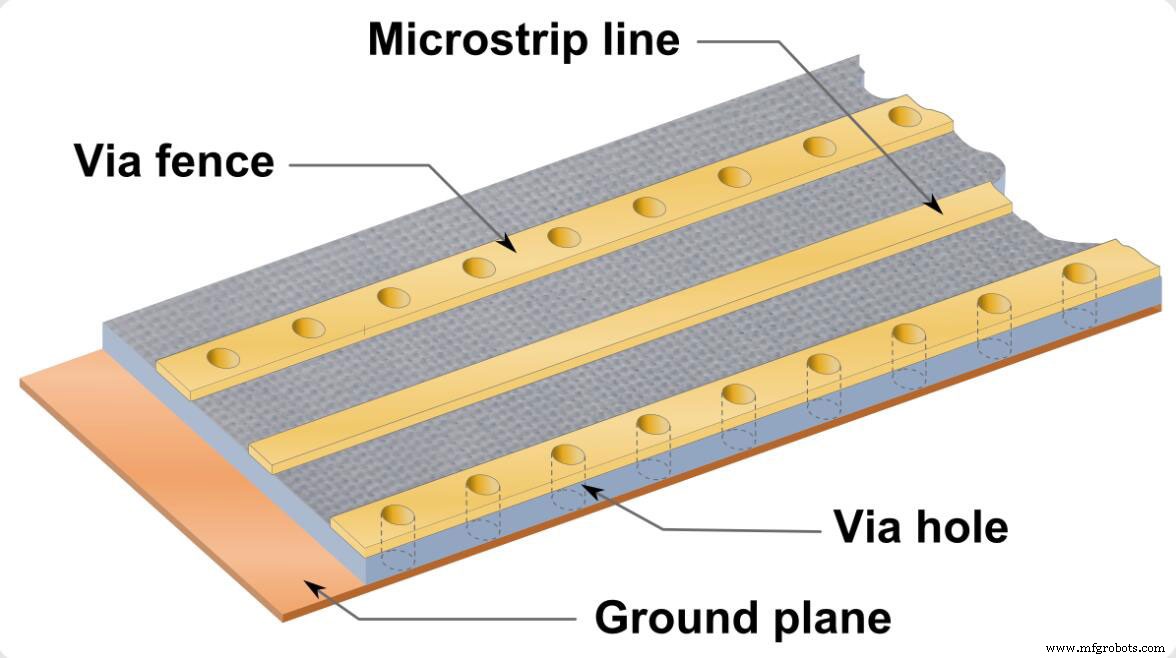
A PCB ground plane
Source: Wikimedia Commons
The best way to do this is by hooking up the analog ground plane separately from the ground connection.
Alternatively, place the analog components and circuitry on the furthest end. The goal is to minimize interruption to the analog signal as much as possible.
However, digital circuitry does not need such considerations because it can tolerate high noise levels.
Component Placement
As stated earlier, the digital section of the circuit is noise rich while the analog section is quiet. Thus, always separate the digital components from the analog components, especially if building a mixed-signal system.
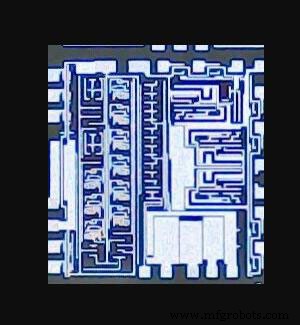
A mixed-signal integrated circuit
Source: Wikimedia Commons
PCB Design Creates Parasitic Components
When designing a PCB, it is easy to create two parasitic components that might cause parasitic inductance or capacitance. Since noise tolerance in analog boards is lower, the most effective solution is to change the size/distance between the lines.
Alternatively, you can ground the wires between the two lines to create a low impedance that weakens the electrical field responsible for producing the interference.
Digital PCB Benefits
- Contains noise generated by power distribution
- Helps in impedance control (matching)
- Preserves signal integrity
- Minimizes crosstalk between adjacent traces
- Reduces the effects created by the ground reference bounce
- Highly immune to electromagnetic interference
Applications of Digital Circuit Board
- Network communications
- 5G base stations & Internet switches
- IoT devices
- High-speed computing
- IC test systems
- Medical equipment
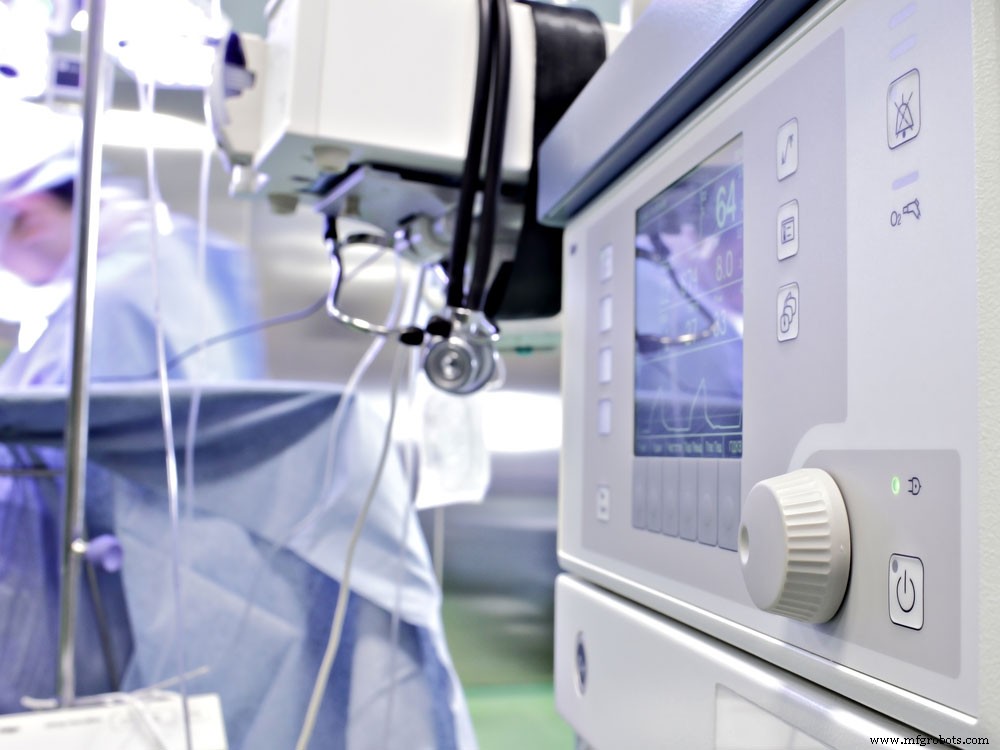
Medical equipment
- Consumer-facing installed electronics like ATMs
- Radios
Digital PCB Assembly
Before going to the assembly, it is vital to understand that a digital circuit board uses a binary system.
Also, it relies on a digital link for the transfer and data reception points during assembly. This thread enables real-time modifications to maintain or improve the assembly quality.
Even though the binary system looks simple, it can have multiple levels of complexity in digital PCBs. But the advantage is that digital devices are controllable and programmable.
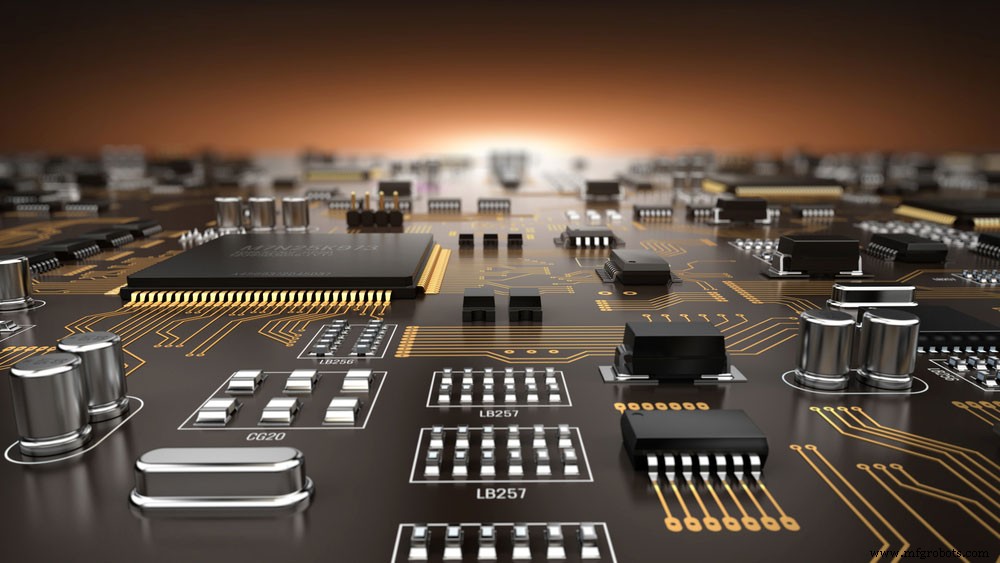
A high-tech digital PCB with microchips and a processor
Therefore, you can use the binary system, which will help you to control, turn, and drive other digital devices used in multiple applications globally.
This digital assembly process detailed description will help you understand digitization applications.
Assembly Process
PCBA Prototyping
Prototyping is critical for developing quality in the assembly process for complex, modern PCBs. It is especially vital to achieving high build quality and reliable operation. You can divide the PCB manufacturing process into two segments:
Efficient & Cost-Effective Production
Process quality (efficient production of high-quality boards) is crucial for high or low volume production.
Assembly consists of multiple steps, just like the board fabrication phase and the design process. These attributes explain the assembly steps in detail.
Digital PCB Assembly Attributes
Speed
Your order should get processed as quickly as possible, but this is not an issue because digital machines handle the entire circuit board assembly process.
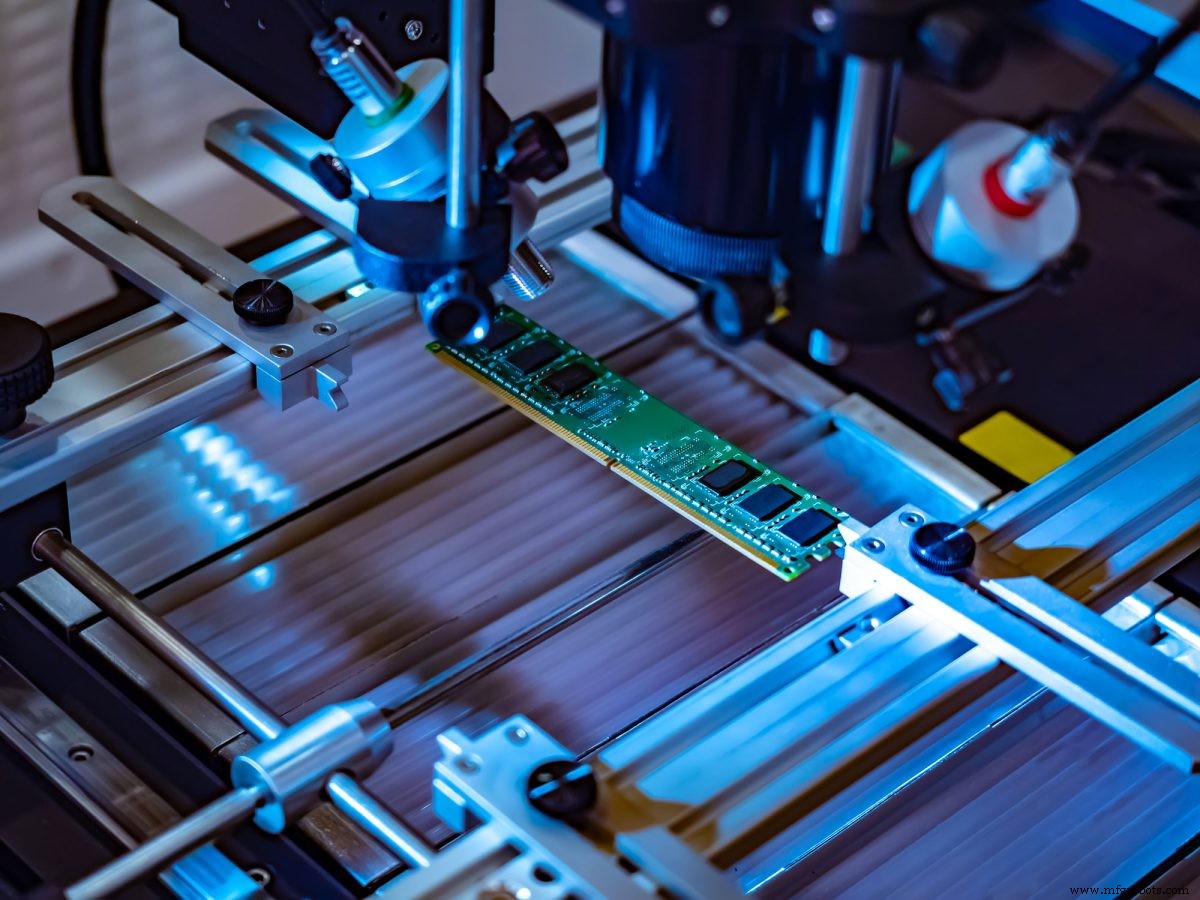
Automated production of PCBs
Precision
An assembly machine must be precise enough to place everything at the right spot to boost the efficiency and performance of a digitally printed circuit board.
Accuracy
Accuracy is a critical factor in the assembly process because it ensures the digital circuit board functions as intended.
Agility
Should errors occur during circuit board assembly, the process should be flexible enough to resume operations quickly.
Control
Control is a vital part of circuit board assembly because it ensures nothing is left undone.
Conventional or Digital PCB Assembly: Which Would You Pick?
The choice here depends on the developer and digital PCB manufacturer. Regarding the manufacturer, each one has specific Design For Assembly (DFA) guidelines that rely on their equipment and processes for quality control.
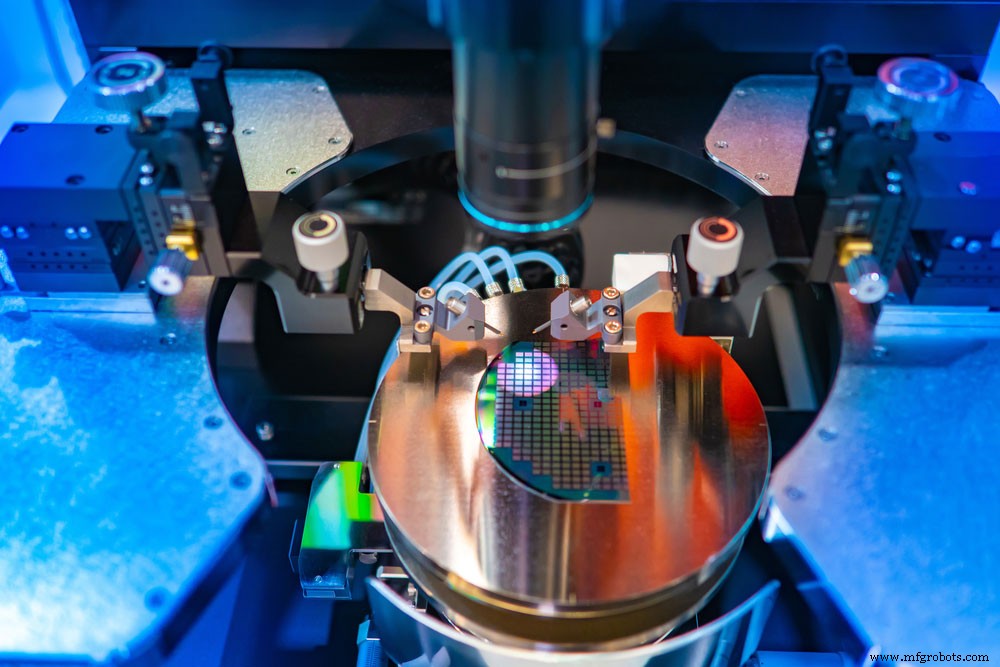
Equipment used in the production of miniature PCBs
Apart from undergoing an automated assembly process, your digital circuit board should meet all your requirements and specifications. However, some manufacturers need to do manual checks, which might ruin the quality and slow the turnaround time.
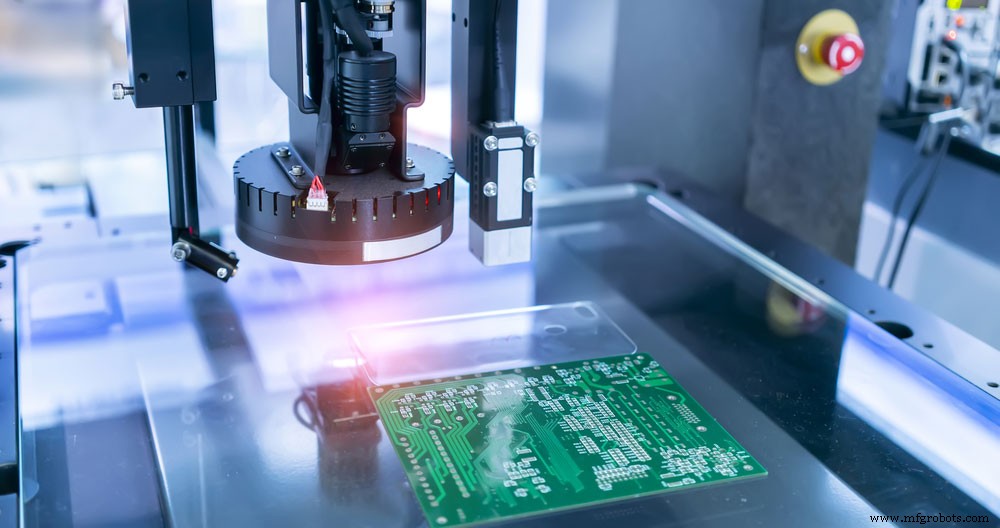
An automated vision measuring instrument inspecting a PCB
Therefore, you need to work with a reliable PCB manufacturer, such as WellPCB, to get the best results. We have been in the business of producing and assembling PCBs since 2005, so we combine experience and the best equipment to ensure you get high-quality digital circuit boards at reasonable prices.
Industrial Technology
- 3‑Bit Binary Counter with 555 Timer and 4027 Flip‑Flops
- Binary Signals and Logic Gates: Foundations of Digital Electronics
- Digital‑Analog Conversion: Fundamentals, ADCs, and DACs
- Analog and Digital Signals: Foundations of Industrial Instrumentation
- Tiny PCBs: Pushing the Limits of Compact Circuit Design
- Understanding and Fixing Pad Lift Problems on PCBs
- Choosing High‑Temperature PCB Laminates for Reliable Performance
- Understanding PCB Corrosion: Causes, Types, and Prevention
- Preventing PCB Outgassing: Protect Your Circuit Boards from Defects
- Mastering Impedance Control for High-Speed Digital PCBs