



Distance Sensors Explained: Types, Uses, and How to Choose the Right One
We have many distance sensors such as IR, Laser, ultrasonic, LED time-of-flight (TOF) sensors, etc. Therefore, selecting one for your project can be challenging.
Today’s article looks at various distance sensors, their applications, advantages, and disadvantages. Let’s get going.
What is a Distance Sensor?
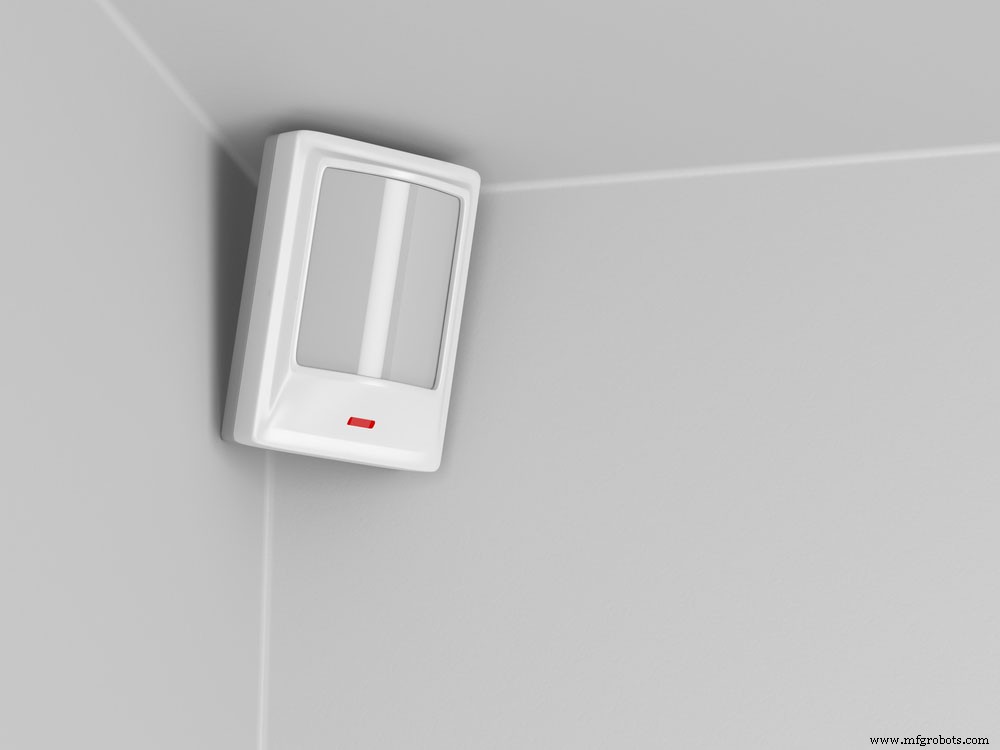
Fig 1: A Mounted Infrared Sensor
A distance sensor is an electronic device that measures the distance between two objects without physical contact.
Therefore, it offers a fast and accurate measurement, positioning, and range of objects.
How do Distance Sensors Work?
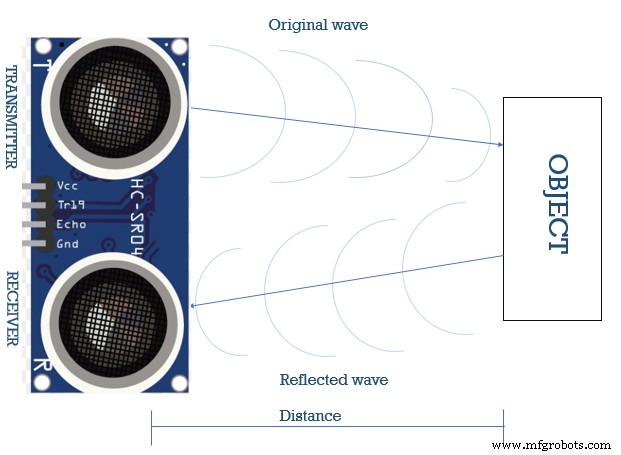
Fig 2: Working of an Ultrasonic Sensor
All distance sensors have the same principle of operation regardless of the technology involved.
If you want to measure the distance between two points, here’s how your distance sensor works:
- First, a distance sensor transmitter sends a signal towards the object.
- Consequently, the signal is reflected/ bounces back upon hitting the object.
- The sensor’s receiver gets the reflected signal.
- It then calculates the delay from when the call was transmitted and received.
- Finally, it uses the delay to calculate the distance between itself and the object.
The delay measured can be in the following forms:
- Change of phase of the returning signal
- Returning signal’s intensity
- Finally, the time delay between transmission and reception of the signal
What Are the Types of Distance Sensors?
Ultrasonic Distance Sensor
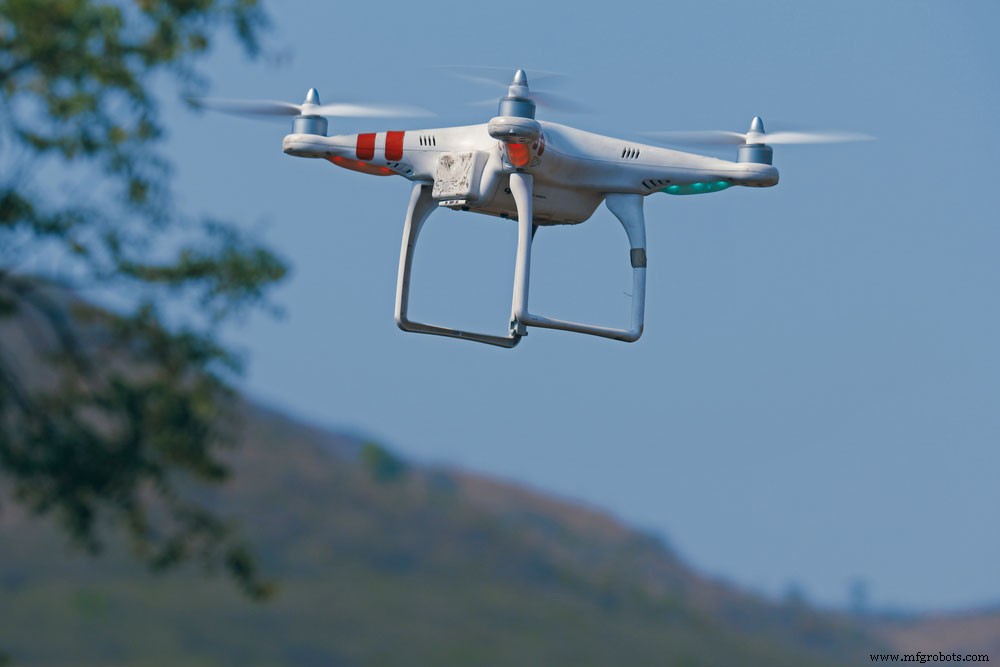
Fig 3: Close-Up of a Drone Helicopter
The ultrasonic distance sensor relies on high-frequency sonar/ sound waves to gauge the distance to an object.
Here’s how it works:
- The ultrasonic sensor sends high-frequency sound waves towards an object/ obstacle.
- At the same time, a timer is started, and like an echo, the waves bounce back to the sensor’s receiver.
- Consequently, the timer stops immediately after the sensor receives the reflected signal.
- Finally, it calculates the distance between the objects by contrasting the time of signal travel against the speed of sound.
Infrared Distance Sensors
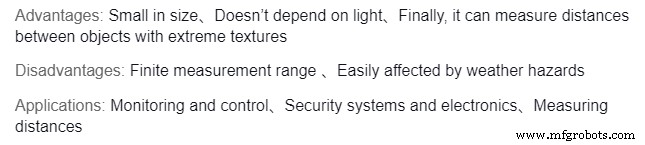
This sensor module uses the principle of triangulation or measuring the distance between two objects using the angle of reflection.
Here’s how it works:
- It emits an infrared light signal through an LED emitter and receives the reflected signal at its position-sensitive photodetector (PSD) lens.
- Finally, the PSD sensor determines the distance of the reflective object using the angle of reflection.
Laser Distance Sensors (LiDAR)
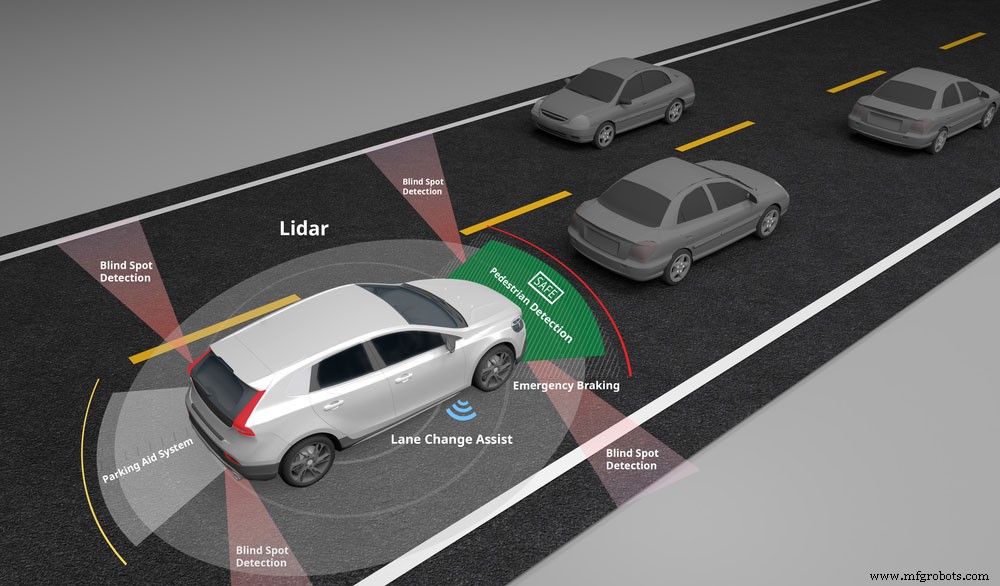
Fig 4: Autonomous Self-Driving Electric Car Showing Lidar and Safety Sensors Use
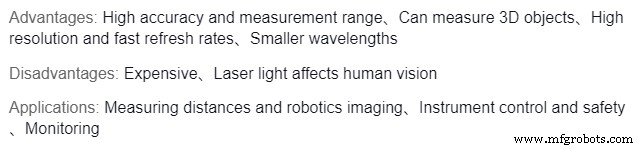
Light Detection and Ranging (LiDAR) is a laser distance sensor that works in the following way:
First, the transmitter emits laser light toward the object/ obstacle. The object reflects the signal/ pulse towards the LiDAR’s receiver.
And finally, the sensor calculates the distance between the two objects by using the relationship between the speed of light and time.
LED Time-Of-Flight Distance Sensors
Time-of-flight (TOF) sensors measure distances by determining the time taken by a wave to travel from the transmitter and back.
Consequently, it uses the relation between the light speed in the air and the signal’s flight time to get the distance.
Therefore, it can produce 3D X, Y, and Z images using data from a single snapshot.
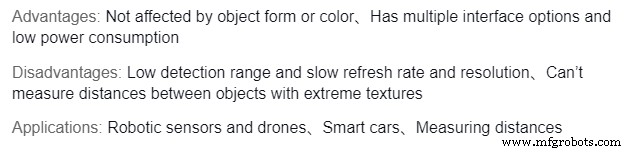
Advantages: High accuracy、 Can identify large objects、Supports 3D imaging
Disadvantages: Expensive、Poor Z-depth resolution
Applications: Robotics and drones、Machine vision、Industrial applications、Counting
Sonar Distance Sensor
Have the same working principle as the ultrasonic sensors but excel more underwater. For your information, there are two types of sonar sensors; passive and active.
- First, active sonar sensors emit a signal and determine distance upon receiving a reflected signal.
- On the other hand, passive sonars lack a transmitter and only receive a signal from another object.
Applications: Loop control、People detection and detection of submarines、Stack height control
Short-range Distance Sensor
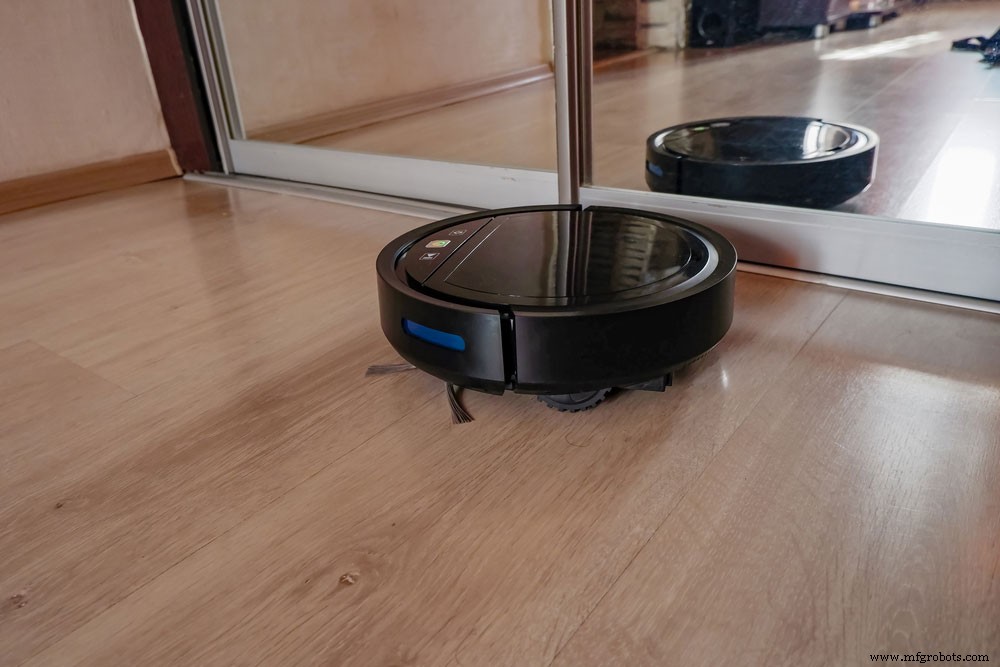
Fig 5: The Robot Vacuum Cleaner Vacuums the Floor in the Apartment
Short-range distance sensors measure distances between close objects. They are high-resolution sensors and can have a minimum range from 1 mm to 2,000 mm or more.
Advantages: Low operating voltage consumption, 、Low cost, and accurate
Applications: People detection and precision range finding、Controlling lights、Robotic vacuum cleaners
Long-range Distance Sensor
Long-range sensors use pulsed time-of-flight principles to measure distances of up to 300 meters.
Advantages: Has a longer reach, 、Highly versatile, and sampling rates
Disadvantages: Expensive
Applications: Load confirmation and lumber positioning, Crane monitoring, Measuring fill levels, velocity, and altitudes
Comparing the Distance Sensors
Suitability for Long Range Sensing
The LiDAR and TOF sensors have suitability for long-range sensing, whereas the Ultrasonic and IR sensors don’t.
High Reading Frequency
The LiDAR and TOF sensors have a high reading frequency. In contrast, the ultrasonic and IR sensors don’t.
Cost
Ultrasonic and IR sensors are cheap compared to LiDAR and TOF. Furthermore, LiDAR is the most expensive of the four distance sensors.
Suitability to Use for Complex Objects
The LiDAR, IR, and TOF sensors have excellent suitability to use for complex objects. However, you can only use ultrasonic sensors for simple things.
Sensitive to External Conditions
The LiDAR, IR, and TOF sensors are sensitive to external conditions, unlike the ultrasonic sensors, which aren’t.
3D Imaging Compatible
The LiDAR and TOF sensors are 3D imaging compatible, whereas the ultrasonic and IR sensors aren’t.
Conclusion
Generally, distance sensors have a ton of applications in our everyday lives. If you plan to use one in your project, consider cost, size, suitability, and durability.
Finally, if you have any gray area that needs clarification, please contact us. We’ll get back to you at the soonest time possible.
Industrial Technology
- Digital Sensors in Industrial Machinery: Function, Types, and Best Practices
- Mastering Digital Circuit Design: Your Complete Guide
- Essential Guide to Choosing the Right 9V Battery Holder
- Digital Buffers Explained: A Comprehensive Guide to Signal Isolation & Strength
- Mastering Ultrasonic Sensor Circuits: The Ultimate Guide
- How to Build a Touch‑Activated Lamp: A Complete Guide
- Comprehensive Guide to Voltage Sensors: Accuracy, Reliability, and Eco-Friendly Solutions
- Master PCB Laminates: The Definitive Guide for Engineers
- The Definitive Guide to Vibration Sensors: Types, Applications, and Integration
- Sark 110 Antenna Analyzer: Full Feature Guide