



3D Printing with Resins: A Comprehensive Guide to Technologies, Materials, and Applications

Resins play a pivotal role in 3D‑printing research, enabling rapid production of highly accurate parts. 3D‑printing resins are liquid photopolymers that are primarily used with Stereolithography (SLA) and Material Jetting technologies. This guide explores the key resin types, the core printing methods, and their most impactful applications.
What Are Photopolymers?
Photopolymers are light‑sensitive resins that undergo a chemical transformation when exposed to UV light. Unlike the thermoplastics used in Fused Deposition Modeling (FDM), photopolymers are thermosets. They harden permanently once cured, meaning they cannot be remelted or reheated. While they tend to be more brittle than FDM or SLS thermoplastics, they offer superior resolution and a smoother surface finish. With a broad palette of colors and tailored properties, resin‑printed parts are ideal for visual and functional prototypes, medical devices, and jewelry casting patterns.
Resin‑Based 3D Printing: SLA and Material Jetting
The two most prevalent resin‑printing technologies are SLA and Material Jetting. Both use UV light to cure liquid photopolymers and require support structures, but their processes diverge significantly.
The SLA Process
SLA builds a part by selectively curing a vat of liquid resin with a UV laser, layer by layer. After printing, the part undergoes post‑cure to enhance mechanical properties.
The Material Jetting Process
Material Jetting (or PolyJet) is an inkjet‑style process that deposits liquid photoreactive material onto a build platform in successive layers. Each layer is instantly hardened by UV light. Unlike SLA, minimal or no post‑cure is required. The ability to use multiple nozzles allows for full‑color, multi‑material prints and unique composite materials with hybrid properties. Benefits include high speed, high accuracy, and the capacity for complex, multi‑material parts.
SLA Resin Categories
SLA resins span a wide range of properties, allowing them to mimic traditional materials or create entirely new ones.
Standard Resins
Standard resins deliver high precision and a smooth finish, available in clear and opaque colors. Their brittleness limits them to prototyping and non‑structural parts.
Durable (Tough) Resins
Durable resins emulate the toughness of ABS or PP, making them suitable for functional prototypes, consumer products, and low‑friction mechanical parts. PP‑like variants offer semi‑flexible behavior, ideal for snap‑fit assemblies, though their thermal resistance is lower.
Rubber‑Like Resins
These flexible resins produce parts with a rubber‑like feel, perfect for squeezable models, wearables, grips, handles, fashion, and jewelry. They still require supports and are not a true rubber substitute.
High‑Temperature Resins
With heat resistance above 200 °C and high stiffness, high‑temperature resins are used for tooling in short‑run injection molding, thermoforming, jigs, and fixtures. Formlabs is a leading manufacturer of this class.
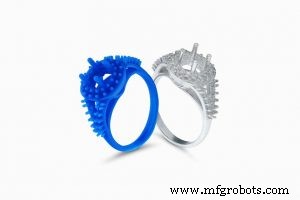
Castable Resins
Dental and Medical Resins
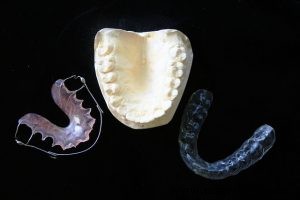
Biocompatible resins are essential for dental and medical applications, such as custom‑fitted hearing aids and surgical guides. They can be steam‑sterilized for operating‑room use, and long‑term biocompatible variants are suitable for orthodontic devices that contact the body for up to a year.
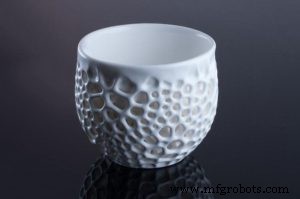
Ceramic‑Filled Resins
Material Jetting Resins
Material Jetting uses photopolymers similar to SLA but in a less viscous, ink‑like form. They can emulate FDM materials like PP and ABS and are available in a variety of colors and specialty grades (castable, high‑temperature, medical). While generally brittle and low in heat deflection, the cost per kilogram ranges from $300 to $1,000. Composite materials—combining rigid and elastomeric or translucent and opaque elements—enable multi‑material, full‑color prototypes that closely resemble final products. Engineering‑grade composites are also ideal for short‑run injection molds and jigs.
Emerging Technologies and Future Directions
Beyond traditional SLA and Material Jetting, newer photopolymerisation methods such as Carbon’s Continuous Liquid Interface Production (CLIP) offer faster printing speeds and engineering‑grade resins. Carbon’s Cyanite Ester (CE) delivers a heat deflection temperature of 231 °C and strength comparable to glass‑filled nylon. UK‑based Photocentric is pioneering “daylight resins” that cure via LCD screens instead of UV light, expanding accessibility and application scope.
The continuous evolution of resin chemistry promises even broader applications across industries. From high‑performance tooling to custom medical devices, resin‑based 3D printing remains at the forefront of additive manufacturing innovation.
3D printing
- Directed Energy Deposition (DED) 3D Printing: Process, Advantages, and Applications
- Choosing the Right Plastic for 3D Printing: A Comprehensive Guide
- HP Multi Jet Fusion: Mastering 3D Printing for Speed, Quality, and Precision
- Mastering Selective Laser Sintering: From Fundamentals to Real‑World Applications
- Titanium 3D Printing: Applications, Benefits, and Emerging Technologies
- 3D Printing: The Future of Manufacturing and Medicine
- Enhancing 3D Printing Accuracy with Onyx: Superior Dimensional Stability
- Harnessing 3D Printing in Higher Education: Benefits, Case Studies, and Resources
- Mastering Material Jetting 3D Printing: Fundamentals & Applications
- Mastering Metal 3D Printing: A Comprehensive Guide