



Enhancing 3D Printing Accuracy with Onyx: Superior Dimensional Stability
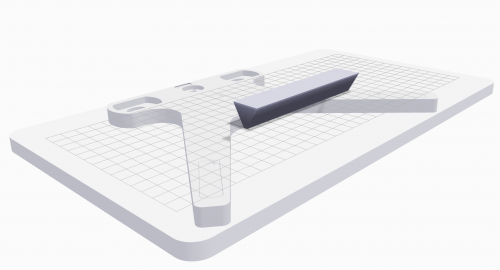
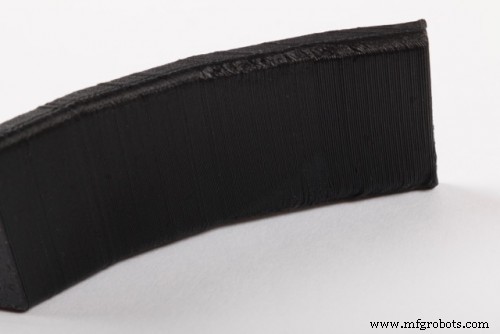
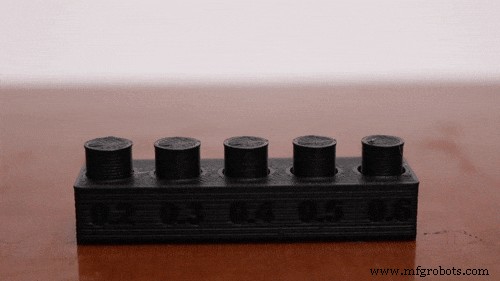
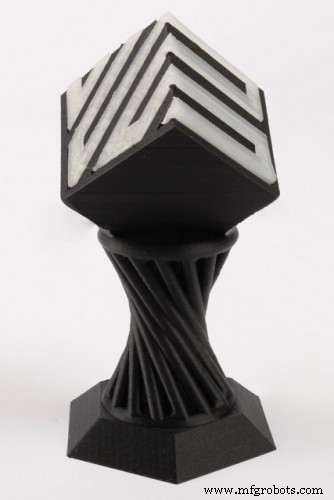
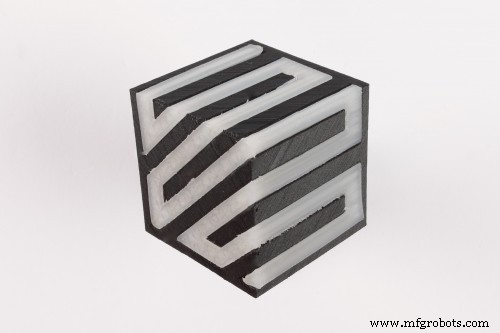
Earlier this year, we introduced Onyx, a stiff, micro‑carbon‑reinforced nylon filament designed for end‑use applications. While initially exclusive to Mark Two Enterprise users, Onyx is now readily available with our Onyx Series printers, offering a measurable boost in dimensional stability and print success compared to other commercial filaments. In 3D printing, dimensional stability refers to a part’s ability to retain its shape throughout the build. Warping, drooping, and uneven surface finishes are common when a filament contracts as it cools. These issues can cause parts to miss critical tolerances or fail entirely, necessitating redesigns. Onyx’s micro‑carbon reinforcement gives it a higher modulus and a distinct thermal profile—especially its heat deflection point—than most 3D‑printed plastics. The result is a filament that resists thermal deformation, minimizes warping, and holds its geometry more faithfully once extruded. As Alan Rencher of Media Blackout notes, “Onyx is stiffer; the edges are true…parts look better and they fit together better, so it’s been a huge help. We don’t have to redesign or print new parts.” To illustrate Onyx’s performance, I ran a series of targeted tests that push the material to its limits. While printer settings also influence results, these experiments demonstrate the high dimensional stability that Onyx delivers. Warping arises when the printed material contracts during cooling, creating a “thermal moment” that pulls the perimeter inward. As additional layers stack, the effect compounds, often causing corners to lift and the part to peel from the build plate. Typical countermeasures—rafts, heated beds, or enclosures—help but do not eliminate the root cause. Onyx’s stiffness and continuous fiber reinforcement counteract this tendency. The fiber’s strength keeps layers flat, and the material’s lower thermal expansion reduces the force that drives warping. In a challenging test, a 100 % infill triangular prism balanced on its edge peeled off a PLA build entirely. The same geometry printed in Onyx remained intact and true to its design, as shown below. Single‑extruder desktop printers often struggle with overhangs, especially without support material. On the Mark Two, support removal is straightforward, yet overhangs can still fail when large cross‑sections stack on smaller ones, creating additional thermal moments. Because Onyx warps less, it tolerates steeper angles—up to ~70°—without supports. In a Make Magazine test, overhangs printed in Onyx maintained a clean underside finish and stayed flat, confirming the material’s resilience. Combining Onyx with the Mark Two’s high‑resolution extrusion yields parts that match their CAD models with remarkable precision. A negative‑space tolerance test from Make Magazine achieved a 0.2 mm radial gap between pins and holes—proof of the material’s repeatable dimensional fidelity. With Onyx, you can print end‑use parts that meet specifications straight out of the printer, eliminating the need for post‑processing such as sanding or filler. Our “Part of the Week” award, crafted in Onyx, showcases the material’s versatility and quality.Warping
Overhangs
Dimensional Stability
3D printing
- Warping in 3D Printing: Causes, Prevention, and Solutions
- Choosing the Right Plastic for 3D Printing: A Comprehensive Guide
- HP Multi Jet Fusion: Mastering 3D Printing for Speed, Quality, and Precision
- 3D Printing with Resins: A Comprehensive Guide to Technologies, Materials, and Applications
- Titanium 3D Printing: Applications, Benefits, and Emerging Technologies
- High‑Strength 3D Printing with Carbon‑Fiber Nylon Composite
- 3D Printing: The Future of Manufacturing and Medicine
- Onyx: The Next Leap in Production‑Ready 3D Printing
- Mastering Material Jetting 3D Printing: Fundamentals & Applications
- Master 3D Printing with Wood Filament: Techniques & Benefits