



In‑Process Inspection: Elevating 3‑D‑Printed Part Quality
Writer’s Note: This is the first in a series of posts introducing the Mark X, our latest 3‑D printer. Today we explore its in‑process inspection capability—a breakthrough that lets users monitor print quality in real time, closing the loop on 3‑D manufacturing. In an ideal world, a CAD model would turn into a perfectly fitting part without trial and error. In reality, every fabrication method introduces small deviations, so designers specify tolerances—clear boundaries of acceptable variation—to keep parts functional and cost‑effective. While tolerances are a designer’s tool, they become a fabrication bottleneck. Machinists must measure each part after completion; if any dimension falls outside its limits, the part is scrapped. This post‑process measurement is a major pain point for additive manufacturing, where printers are inherently open‑loop—tolerances cannot be verified until the print finishes. In‑process inspection changes that. By integrating rapid, high‑resolution scanning during printing, the Mark X removes guesswork and gives users unprecedented transparency. The workflow is straightforward: Although the loop is still human‑closed, the real‑time data enables rapid CAD adjustments and repeatable, high‑quality prints—faster, cheaper, and more reliable. The Mark X is a pivotal step toward fully closed‑loop additive manufacturing. Future firmware updates will unlock even smarter laser control and deeper software integration, turning the printer into a self‑optimizing production system. Investing in the Mark X is not just buying hardware; it’s an investment in the future of automated, high‑precision manufacturing. Stay tuned as we continue to refine the technology and push the boundaries of what's possible with 3‑D printing. Want to learn more? Explore the Mark X. Follow us on Facebook, Twitter, Instagram, and LinkedIn for updates.Why Closing the Loop Matters
How It Works
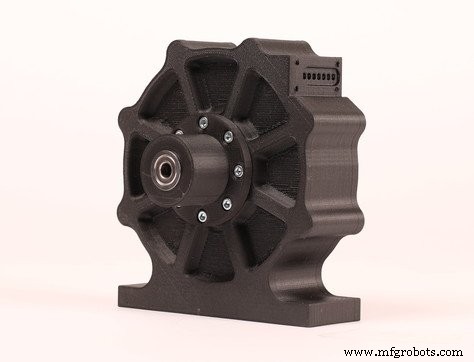
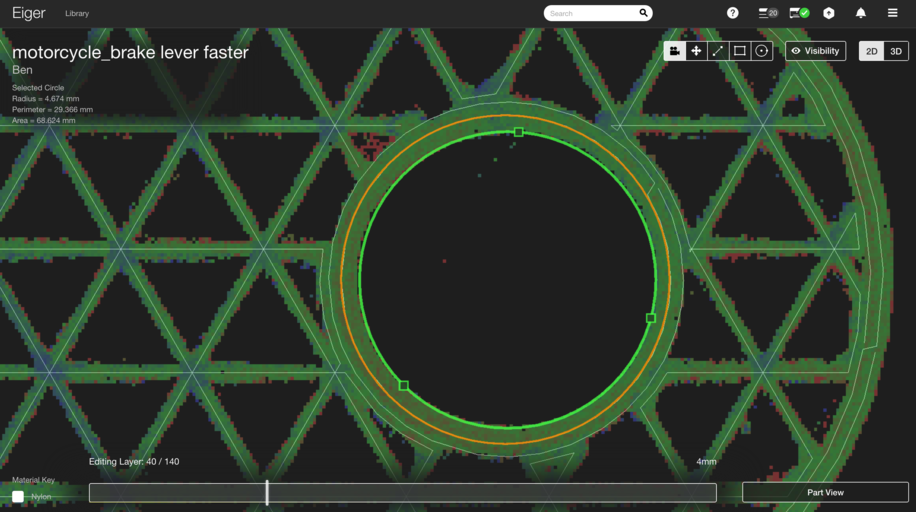
Looking Ahead
3D printing
- Metal 3D Printing Applications: Prototyping & Tooling – Part 1
- 3D‑Printed Drone Enables Rapid, Cost‑Effective Data Collection in Antarctica
- Skateboard Part 1: Building Durable 3D‑Printed Wheels
- Professional Guide to Finishing and Painting 3D Printed Parts
- MMF #5: Mastering Component Embedding in 3D‑Printed Parts with Markforged Printers
- Optimizing 3D Printed Part Strength with Efficient Fiber Routing – Part 1
- Guaranteeing Dimensional Accuracy in 3D Printed Parts
- Are 3D Printed Parts Really Strong?
- Enhancing the Strength of 3D Printed Parts: Proven Techniques
- Advanced Inspection Strategies for 3D Printed Engine Parts – Part 3