



Silicone 3D Printing: The Next Frontier in Additive Manufacturing
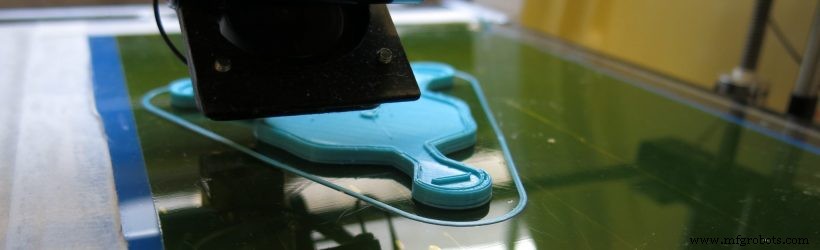
Material science in additive manufacturing is evolving rapidly to meet the increasingly sophisticated demands of AM specialists and their clients. One especially intriguing development is the fulfillment of a long‑held dream: 3D printing with silicone. While the potential benefits of this approach have been obvious for many years, it is only recently that the technology has matured enough to become viable.
Why silicone?
Silicone is a versatile, well‑established material used across industries where flexibility must be paired with strength and durability. In mechanical engineering it powers components that bend without breaking; in fashion it creates intricate adornments and functional accessories such as shoe inserts; in healthcare and food‑grade manufacturing it guarantees biocompatibility and safety.
So why has it not become a standard tool for additive manufacturing?
Historically, silicone’s natural viscosity has made clean extrusion difficult, limiting the geometries that could be printed accurately. Recent advances in chemistry and printing technology are now overcoming these hurdles.
The evolving technology
The Picsima process, launched by Fripp Design and Research in Sheffield in 2012 and patented in 2016, was one of the first viable silicone‑printing methods. It extrudes a catalyst through a needle‑thin nozzle into a bath of silicone oil, instantly solidifying the material and eliminating the need for support structures. Although the method shows promise for high‑quality medical prostheses, it remains outside large‑scale production.
ACEO®, a division of Wacker Chemie, recently unveiled a new silicone‑printing technology tested at its Open Print Lab in Germany. The system deposits droplets of silicone onto a build platform and cures them with UV light, producing parts with mechanical properties comparable to injection‑moulded components. Like Picsima, ACEO requires specialized printers (ACEO® Imagine models) and bespoke software to manage the material’s unique chemistry. The company has also developed a soluble support resin that can be removed automatically, simplifying post‑processing for complex geometries.
Shortly after, Keyence introduced its own silicone‑based “rubbery elastomers” designed for use with its Agilista inkjet printers. Due to patent restrictions, the technology is currently limited to Germany and Japan.
In June 2017, North Carolina State University presented a novel approach that blends liquid silicone rubber with water, forming tiny silicone beads that can be arranged into flexible structures. The researchers see immediate potential for medical applications, such as 3D‑printed bandages that conform to a patient’s body.
What’s next for silicone in additive manufacturing?
All of these methods show promise, but the real test will be their integration into production workflows. Hybrid processes that leverage silicone’s unique properties are already being explored—for example, Fripp Design envisions using Picsima to create flexible prosthesis prototypes that fit a patient, then using the prototype as a mold for a final, fully cured part.
We will continue to monitor these emerging technologies and look forward to seeing how manufacturers and AM specialists harness silicone’s capabilities to push the boundaries of what can be built.
3D printing
- Choosing the Right Plastic for 3D Printing: A Comprehensive Guide
- ACEO® Unveils Breakthrough Silicone 3D Printing Technology
- A Practical Guide to Ceramic 3D Printing: Techniques, Materials, and Design Tips
- Silicone 3D Printing Explained: A Beginner’s Guide to Cutting‑Edge Production
- 3D Printing with Resins: A Comprehensive Guide to Technologies, Materials, and Applications
- Titanium 3D Printing: Applications, Benefits, and Emerging Technologies
- 7 Cutting‑Edge 3D‑Printed Designs That Redefined Engineering
- In‑House Production: The Fuse 1 Builds Its Own Parts
- Master 3D Printing with Wood Filament: Techniques & Benefits
- Enhancing 3D Printing: Mastering Support Structures for Complex Builds