



Warping in 3D Printing: Causes, Prevention, and Solutions
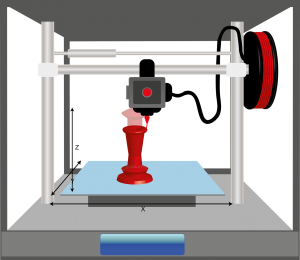
3D printers can produce highly detailed objects when operated correctly, but they are susceptible to a common flaw: warping. Warping manifests as uneven, curved surfaces that detract from both aesthetics and dimensional accuracy. Fortunately, this issue is largely preventable with proper settings and environmental control.
What Is Warping?
Warping, also referred to as curling, occurs when a freshly extruded layer contracts unevenly, causing the edges of a print to lift or tilt. The effect is most noticeable in larger or open‑ended parts where the bottom layer is exposed to cooling air for extended periods.
Key Causes of Warping
- Uneven Cooling – When one portion of a layer cools faster than another, differential shrinkage forces the print to deform.
- Excessive Extruder Temperature – Material that remains too hot after extrusion can contract abruptly, pulling the print inward.
- Ambient Airflow – Drafts or fans blowing across the print bed accelerate cooling in localized spots.
How to Prevent Warping
Minimizing warping starts with the correct temperature settings for your filament. Each material has a recommended range; for example, PLA typically prints best between 190–210 °C, while ABS requires 220–250 °C. Setting the extruder within this range reduces the likelihood of post‑extrusion contraction.
Using a heated build platform is one of the most effective countermeasures. A bed temperature that matches or slightly exceeds the filament’s glass transition temperature (e.g., 60 °C for PLA, 110 °C for ABS) keeps the bottom layer uniformly warm, thereby ensuring even cooling.
Additional best practices include:
- Applying a brim or raft to increase the base area and provide a stable anchor.
- Ensuring the print environment is free from drafts and that the printer sits on a level surface.
- Using adhesive aids such as a glue stick, hairspray, or a specialized printing surface.
Ready to eliminate warping and produce flawless prints?
Contact Monroe’s Additive Printing Service today to learn how our state‑of‑the‑art equipment and experienced technicians can help you achieve perfect, warping‑free results.
Get your parts printed now!
Industrial equipment
- 5 Leading Additive Manufacturing Processes Explained
- Electron Beam Melting (EBM): Rapid, Precise 3D Printing for Metals
- Debunking 5 Myths About 3D Printing: What You Need to Know
- How Extrusion Drives Precision in 3D Printing
- Photopolymerization in 3D Printing: How UV Curing Shapes Solid Parts
- Directed Energy Deposition (DED) 3D Printing: Process, Advantages, and Applications
- Understanding the ‘Road’ in FFF 3D Printing
- 3D Printing: The Future of Manufacturing and Medicine
- Enhancing 3D Printing Accuracy with Onyx: Superior Dimensional Stability
- Mastering Material Jetting 3D Printing: Fundamentals & Applications