



How Extrusion Drives Precision in 3D Printing
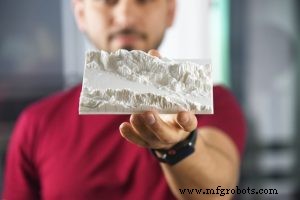
Extrusion is the cornerstone of modern 3D printing. While printers come in many shapes—Fused Filament Fabrication (FFF), Stereolithography (SLA), Selective Laser Sintering (SLS)—most rely on the extrusion of material through a fine nozzle to build objects layer by layer. This process guarantees uniformity, dimensional accuracy, and surface finish that are critical for both prototyping and final production.
What Is Extrusion?
Extrusion is the mechanical act of forcing a material through a die or nozzle, shaping it to the die’s cross‑section. The material is typically heated to increase its flowability before it is pushed through the opening. Once expelled, it takes on the geometry of the die, allowing complex geometries to be produced from a single continuous stream.
There are three primary extrusion regimes:
- Hot extrusion: Material is heated above its recrystallization temperature, making it highly deformable.
- Warm extrusion: The material is heated below its melting point, balancing workability and structural integrity.
- Cold extrusion: Material is extruded near room temperature, useful for metals and composites that require minimal heat input.
Extrusion in Fused Filament Fabrication (FFF)
In FFF, the printer’s hotend heats a thermoplastic filament (e.g., ABS, PLA, PETG) to its extrusion temperature. The heated filament is then fed through a micro‑nozzle, where the extrusion nozzle’s geometry controls the cross‑section of the deposited filament. By maintaining a steady extrusion rate, the printer ensures that each layer is deposited with the same volumetric flow, preserving dimensional fidelity and surface quality.
Why is consistency essential? Even a slight variation in extrusion volume can lead to layer thickness irregularities, warping, or weak inter‑layer adhesion. Consistent extrusion guarantees that the printed part’s mechanical properties match design specifications.
Beyond FFF: Extrusion in Other 3D Printing Modalities
Other additive manufacturing technologies also employ extrusion principles. For example, Direct Ink Writing (DIW) extrudes viscoelastic inks through a syringe‑like nozzle to create scaffolds for tissue engineering, while some SLS systems extrude a powdered feedstock into a confined zone before laser sintering. In each case, controlled extrusion is vital for achieving the desired microstructure and mechanical performance.
Conclusion
Extrusion is a universal manufacturing technique that underpins the success of 3D printing. By forcing material through a precise die, printers can deposit consistent, high‑quality layers that translate into accurate, robust final parts. Whether you’re prototyping a concept or producing an end‑use component, understanding extrusion’s role can help you optimize print settings, reduce defects, and achieve the performance your design demands.
Have a concept that’s stuck in your mind? Our 3D printing portal can turn that idea into a tangible prototype—contact us today to get started.
Industrial equipment
- The Crucial Role of Slicing in 3D Printing
- The Three Essential Steps of 3D Printing: From CAD Design to Final Finish
- How Computer‑Aided Design (CAD) Powers Modern 3D Printing
- Cutting 3D Printing Material Costs: Unlocking ROI and Sustainability
- Maximizing Efficiency: How Nesting Boosts Polymer 3D Printing Performance
- Optical Sensors in Electronics: How They Work, Types, and Applications
- Mastering Plastic Extrusion: Process, Materials & Key Applications
- Explore the 7 Main 3D Printing Methods: A Clear Guide for Beginners
- 10 Revolutionary 3D Printing Applications Transforming Our World
- ASA in 3D Printing: A Durable, Weather‑Resistant Thermoplastic