



Explore the 7 Main 3D Printing Methods: A Clear Guide for Beginners
3D Printing has been in development for many years and the processes used in 3D printing have varied widely. However in the last 25 years the processes of been honed and refined to usable workable systems with advanced CNC controllers, easy to use software systems and a range of materials that present finished usable parts directly off the printing machine. Here below we have defined the most popular types of 3D printing and broken it down in a simple to understand verbiage for the novice user looking at getting into 3D Printing for the very first time, whether you're an engineer or a home hobbyist, you will find this article very informative and useful letting you know what processes are best suited for your specific application.
Material Extrusion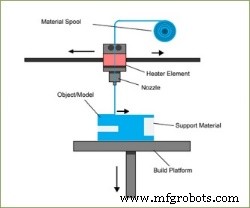
By far the most popular form of 3D printing extrusion type printers are found everywhere from home hobbyists to engineering and production labs. The process is defined as an additive manufacturing process in which material is selectively dispensed through a nozzle or orifice. Raw material is usually fed from a coil directly into a heated nozzle whereas molten material is laid in a pre-programmed “slice” programmed via the CNC Circuitry.
- Applicable Materials: Thermoplastics
- Print Type: FFM ore FFF (Fused Filament Modeling or Fused Filament Fabrication)
- Application: Concept Models, Functional Prototypes, Manufacturing Tools, End Use Parts
- Advantages: Low Cost, Can Create Complex Geometries, Provided Useable Strong Parts.
- Disadvantages: Rough surface finishes, Support Structures Required
Powder Bed Fusion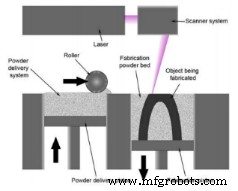
The Powder Bed Fusion process is an additive manufacturing process in which thermal energy selectively fuses regions of a powder metal or thermoplastics laying on a heated bed which is lowered very lightly for each new printed “layer” of fused material.
- Applicable Materials: Powdered Metals & Thermoplastics
- Print Type: SLS, DMLS, EBM, SHS, SLM
- Application:Low-Volume, Geometrically Complex Powdered Metal Objects, Prototypes, End-Use Components
- Advantages: Strong Parts, Minimal Support Structures Required (not recommended), Complex Geometries Capable
- Disadvantages: High System Cost, Poor Accuracy, Rough Surface Finish, Thermal Distortion, Post-Processing/Machining Required
VAT Polymerization (Stereolithography)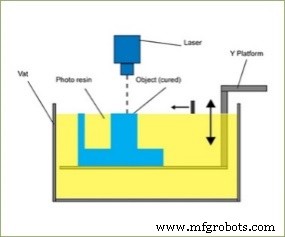
The VAT Polymerization process is an additive manufacturing process in which liquid photopolymer in a vat is selectively cured by the light-activated polymerization method producing a solid from the polymer liquid once exposed to intense heat from a laser. Lowering the platform allows the system to “Build” layers of this polymer.
- Applicable Materials: Photopolymers
- Print Type: SLA, DLP
- Application:Concept Models, Prototypes, Molds/Castings
- Advantages: Complex Geometries, Fine Details, Smooth Finish
- Disadvantages: High-Cost, Support Structures Required, Post-Curing (~24 hours) Required
Direct Energy Deposition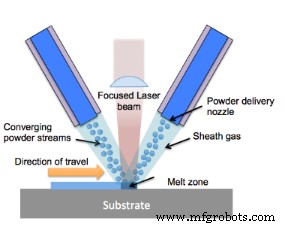
The Direct Energy Deposition process is an additive manufacturing process in which focused thermal energy is used to fuse materials by melting/bonding them as they are being deposited on a layer of material.
- Applicable Materials: Metals and Metal Alloys
- Print Type: EBAM, Laser Metal Deposition
- Application:Low-Volume, Geometrically Complex Objects, Prototypes, End-Use Components
- Advantages: Strong and Durable Components
- Disadvantages: Very High Equipment Cost
Material Jetting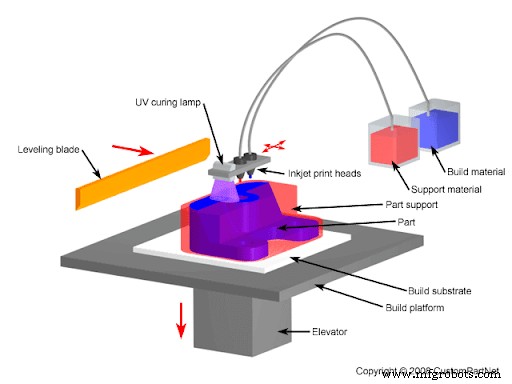
Material Jet Printing is an additive manufacturing process in which droplets of build material are selectively deposited dot by dot onto a layer until a full layer/structure is built..
- Applicable Materials: Photopolymers
- Print Type: Polyjet
- Application:Concept Models and Prototypes
- Advantages: High Accuracy, Fine Details & Smooth Surfaces
- Disadvantages: Poor Mechanical Strength, Parts Degrade in Light/Heat
Binder Jetting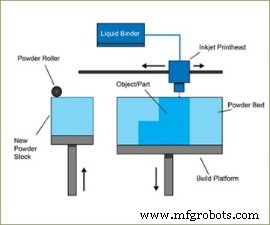
The Binder Jetting process is an additive manufacturing process in which a liquid bonding agent is selectively deposited to join powder into a solid structure.
- Applicable Materials: Metals, Ceramics
- Print Type: Powder Bed Inkjet
- Application:Concept Models
- Advantages: Full Color
- Disadvantages: Poor Accuracy, Rough Surface Finish, Poor Mechanical Strength
Sheet Lamination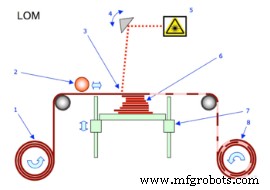
The Sheet Lamination process is a process of 3D Printing in which thin sheets of material are layered, bonded and cut in a specific manner to form an object.
- Applicable Materials:Paper, Plastic, Metal
- Print Type: Laminated Object Manufacturing (LOM)
- Application: Concept models
- Advantages: Speed; Quickly make big parts
- Disadvantages: Limited accuracy, Non-homogeneous parts
The variety of processes available in 3D printing allows for the selection of the right process for your specific needs, application and budget. With systems starting under a few hundred dollars for the home hobbyist on up to over a million for the scientific labs and manufacturing engineering facilities there is a perfect 3D Printing process for any need. Contact the experts at Southern Fabricating Machinery Sales for more information on 3D printing and how we can help you take that first step into creating your designs right on your desktop. Visit www.southernfabsales.com today or call us directly at 813-444-4555 for more info.
If You Enjoyed This Article You'll Also Like:
8 Reasons Why Every Machine Shop Needs a 3D Printer
The Top 9 Reasons Every Fab Shop Needs a 3D Printer
How 3D Printing Went Mainstream
Industrial equipment
- Expert Shaft Manufacturing: Precision Processes & Custom Solutions
- How Extrusion Drives Precision in 3D Printing
- How to Choose the Ideal 3D Printing Process for Your Projects
- Choosing the Right Brake Lining Material: A Comprehensive Guide
- Understanding Robot Programming: Methods Explained
- Expert Guide to the Most Effective Land Clearing Methods
- How Selective Laser Sintering (SLS) Converts 3D CAD Designs into Solid Parts
- Mastering Fluid Flow: Types, Behaviors, and Applications
- Exploring Material Flexibility: How Elasticity Determines Performance
- ASA in 3D Printing: A Durable, Weather‑Resistant Thermoplastic