



5 Leading Additive Manufacturing Processes Explained
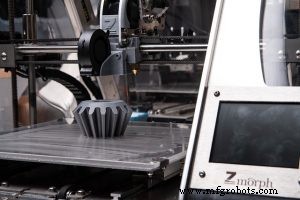
Additive manufacturing, commonly known as 3D printing, has revolutionized how companies produce custom parts. By adding material layer‑by‑layer, manufacturers can create complex shapes that would be impossible or prohibitively expensive with traditional subtractive methods. Below we outline five of the most widely adopted additive techniques, highlighting how each works and where it shines.
#1) Vat Photopolymerization
Vat photopolymerization builds objects from light‑sensitive resin. A laser or projected light source selectively cures the resin in a vat, hardening it layer by layer. The process is prized for its high resolution and smooth surface finish, making it ideal for detailed prototypes, dental models, and jewelry.
#2) Material Jetting
Also called inkjet or polyjet printing, material jetting deposits fine droplets of liquid photopolymer onto a build plate. Each droplet is instantly cured by UV light, allowing for rapid production of highly accurate parts with excellent dimensional stability. Its speed and precision make it a favorite for quick-turn prototypes and multi‑material builds.
#3) Binder Jetting
Binder jetting resembles material jetting but uses a liquid binder to fuse powdered material—often metal, ceramic, or sand—into a solid form. After each layer is laid down, a binder is sprayed, bonding the powder particles. This method excels in producing full‑size metal parts and complex ceramic components at a lower cost than some laser‑based processes.
#4) Powder Bed Fusion
Powder Bed Fusion, commonly referred to as selective laser melting (SLM) or selective laser sintering (SLS), employs a high‑energy laser to melt or sinter powdered material. The laser scans each layer, solidifying the powder into a dense, fully fused part. This technique is widely used for functional metal components, high‑strength polymers, and intricate lattice structures.
#5) Sheet Lamination
Sheet lamination builds parts by bonding successive layers of sheet material—such as paper, cardboard, or metal foil—using adhesive or heat. A roller system feeds the sheets into a stack, and a cutting or embossing head shapes the layers into the desired geometry. Sheet lamination is cost‑effective, fast, and suitable for large‑scale or low‑volume production runs.
See Monroe’s Additive Manufacturing Capabilities.
Industrial equipment
- Additive vs Subtractive Manufacturing: How They Differ & Why 3D Printing Is Growing
- Why Additive Manufacturing Transforms MRO Operations
- Additive vs. Subtractive Manufacturing: Key Differences Explained
- Mastering Additive Manufacturing: Technologies, Processes, and Applications
- Additive Manufacturing vs 3D Printing: Understanding the Difference
- Choosing the Right Plastics for Automotive Manufacturing: A Comprehensive Guide
- Additive Manufacturing: Driving Innovation and Cost Efficiency in Aerospace
- Exploring the Core Additive Manufacturing Methods
- Additive vs. Subtractive Manufacturing: Unlocking the Future of Production
- Additive vs. Subtractive Manufacturing: Choosing the Best Process for Your Production Needs