



Industrial 3D Printing: Eight Ways It Revolutionizes Manufacturing
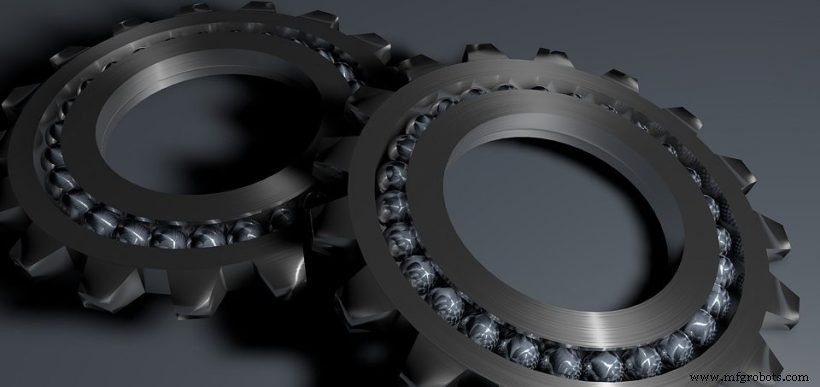
As the industrial 3D‑printing market expands, manufacturers are unlocking new efficiencies—from rapid prototyping to on‑demand spare parts—driving faster product launches and cost reductions.
Key Benefits of Industrial 3D Printing
1. Cost‑Efficiency and Faster Time‑to‑Market
 Additive manufacturing eliminates expensive tooling, making prototypes and low‑volume parts cheaper to produce. Production can shift from days or weeks to hours, allowing companies to release products to market sooner and gain a competitive edge.
2. Design Freedom and Optimization
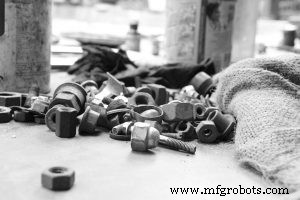 3D printing enables intricate geometries impossible with traditional methods. Tools like topology optimization and generative design produce lightweight yet robust parts—often featuring lattice or honeycomb structures—and allow multi‑piece assemblies to be printed as single components, simplifying manufacturing.
3. On‑Demand Manufacturing
On‑demand production is a game changer for spare‑part management. By printing parts only when needed, OEMs eliminate excess inventory, reduce warehousing costs, and improve supply‑chain agility. Digital part libraries replace physical warehouses, bringing production closer to end‑users.
4. Customization
Mass customization becomes viable with additive manufacturing. Customized laboratory hardware, for instance, can be produced at up to 97% lower cost than traditional machining, accelerating development and deployment of niche equipment.
Industrial Applications of Additive Manufacturing
5. Cores and Moulds
3D printing offers a cost‑effective alternative for creating cores and moulds used in casting and injection moulding. Voxeljet reports up to 75% savings in sand‑casting costs when cores are printed as single units, dramatically cutting lead times.
6. Manufacturing Tools
Jigs, gauges, and fixtures fabricated via 3D printing can reduce tooling costs by 40–90% and lead times by the same margin, according to Stratasys research. This translates to faster changeovers and smoother production flows.
7. Spare Parts
On‑demand printing of spare parts eliminates costly inventory while ensuring rapid delivery. Volvo Construction Equipment, for example, has adopted 3D‑printed spares to enhance operational agility and cut storage expenses.
8. End Parts
Conclusion
With benefits ranging from cost savings to accelerated innovation, industrial 3D printing is poised to reshape manufacturing. Companies that embrace additive manufacturing can unlock new levels of efficiency, responsiveness, and design excellence.
Explore related insights:
- How 3D printing transforms the spare‑parts industry
- The impact of 3D printing on automotive manufacturing
3D printing
- 5 Key Advantages of 3D Printing for Modern Manufacturing
- How 3D Printing Is Revolutionizing the Medical Field: 4 Key Applications & Future Trends
- How 3D Printing Is Revolutionizing Defence – Benefits, Challenges, and Future Applications
- How 3D Printing Reduces Manufacturing Costs: 6 Proven Strategies
- How 3D Printing Enhances Traditional Manufacturing: Five Proven Applications
- Assessing the Sustainability of Industrial 3D Printing
- Agile Manufacturing & 3D Printing: A Guide to Rapid, Custom Production
- How 3D Printing Is Revolutionizing Manufacturing: 3 Key Transformations
- How 3D Printing Accelerates Agile Manufacturing: 3 Key Benefits
- Industrial 3D Printing Drives Mass Manufacturing Toward Additive Technologies