



Why Design for Additive Manufacturing Matters: Six Key Benefits

As additive manufacturing (AM) continues to evolve, optimizing designs specifically for the technology becomes essential to fully harness its capabilities.
While AM unlocks complex geometries, lightweight structures, and tailored material distribution, this freedom demands a new design mindset. Relying on conventional subtractive methods can be impractical because the constraints and possibilities of AM differ markedly. Understanding key AM considerations—such as support structures, post‑processing, and the expanding range of materials—is therefore crucial for successful implementation.
What can you achieve by embedding design for additive manufacturing (DfAM) into your strategy?
1. Greater Design Complexity
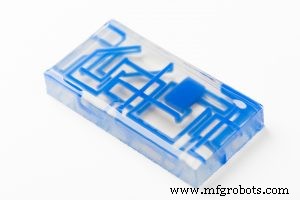
AM overcomes traditional manufacturing limits, enabling the creation of highly intricate parts that deliver superior performance. For instance, conventional injection moulds often feature straight cooling channels, which can result in uneven heat distribution. By contrast, 3D printing allows designers to craft curved, optimised cooling channels that enhance heat transfer, improving part quality and extending mould life.
2. Minimal Material Waste
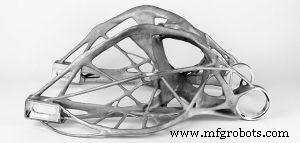
Thanks to AM’s precise deposition, engineers can produce lightweight parts by optimising material placement, resulting in substantial savings. Topology optimisation and generative design tools analyse a part’s geometry mathematically to remove unnecessary material while preserving structural integrity. Companies such as Siemens and General Motors already employ these techniques: Siemens used generative design to develop 3D‑printed gas‑turbine blades, and GM is exploring material distribution strategies to reduce vehicle weight.
3. Simplified Assembly
Part consolidation is a transformative benefit of AM. Instead of fabricating multiple components and assembling them, designers can integrate several sub‑assemblies into a single part. This streamlines production, eliminates assembly steps, and reduces inventory and maintenance costs.
4. Material Innovation
Ongoing material research has yielded specialised 3D‑printing filaments and powders—such as TPU, high‑performance thermoplastics, and metal superalloys—that would be difficult or impossible to machine. These materials can replace traditional metal parts, offering lighter, cost‑effective alternatives. DfAM also opens the door to multi‑material designs that combine rigidity with flexibility or embed insulating and conductive properties.
5. Cost‑Effective Customisation
AM’s digital workflow accelerates prototyping and iteration, making customisation rapid and inexpensive. Industries ranging from consumer goods to medical devices are already leveraging this capability. In healthcare, 3D‑printed devices—from bespoke braces and prosthetics to surgical guides and hearing aids—are tailored to individual anatomy, improving patient outcomes.
6. Reduced Support Structures
Part orientation is a key advantage of DfAM. By selecting optimal orientations early, designers can minimise the need for support material, cutting printing and post‑processing time. While no universal rule exists, thoughtful design often enables parts to self‑support or require minimal supports, saving material and effort. Future AM software is expected to automate orientation and support generation, further streamlining production.
The Future

Many designers still default to traditional manufacturing paradigms, limiting AM’s potential. As the technology matures, developing new DfAM approaches will be essential. Educational institutions and industry partners are responding: Loughborough University offers a Master’s programme in additive manufacturing, and numerous courses aim to deepen DfAM expertise.
With more universities offering AM degrees, the next generation of professionals will pioneer advances in digitisation and automation. We anticipate that design optimisation, validation, process simulation, and even support generation will become automated, enabling designers to focus on innovation.
Mastering DfAM unlocks AM’s full promise, allowing it to reshape product development and manufacturing workflows.
More like this:
The Top 4 Design Considerations for 3D Printing
6 Key Design Considerations for Metal 3D Printing
Designing for FDM? Here are the Top 10 Things You Should ConsiderACEO
3D printing
- Optimizing Fixtures and Tooling for Additive Manufacturing
- Design for Additive Manufacturing (DfAM): 3D Printing Strategies That Cut Costs and Boost Efficiency
- Discover 5 Key Advantages of Additive Manufacturing for Your Business
- Metal Additive Manufacturing: Key Insights for Modern Production
- 7 Compelling Reasons to Adopt Fusion 360’s Additive Manufacturing Workspace
- Design for Manufacturing: Essential to Optimize Cost and Quality in Injection Molding
- Why Every Machine Shop Needs a CNC Turning Center: 4 Key Benefits
- Master Additive Manufacturing: 5 Essential Design Tips
- Additive Manufacturing & 3D Printing Explained: Key Insights & Applications
- The Critical Role of Design for Manufacturing (DFM) in Hardware Success