



Four Critical Questions Facing Additive Manufacturing in 2019

2018 was a landmark year for additive manufacturing. Breakthroughs in technology and software moved the industry closer to delivering on its promise of a truly industrial manufacturing solution.
Despite these encouraging developments, several critical questions remain as the industry looks ahead.
#1 Can additive manufacturing scale to high‑volume production?
Short answer: Yes and no.
Mass production has already taken root in niche sectors. Hearing aid manufacturers, for example, now use additive manufacturing for more than 90% of their parts. Consumer products such as eyewear frames and shoe insoles have been produced additively, and companies like Adidas have set a target of 100,000 parts annually.
To enable mass production on a broader scale, challenges around repeatability, speed, part quality and cost‑effectiveness must be addressed.
HP’s Metal Jet system, introduced last year, uses binder‑jet technology on metal‑injection‑moulding (MIM) powder to produce up to 50,000 parts per batch more cost‑effectively than injection moulding.
Related: Interview: HP’s Global Head of Metals on the Impact of HP Metal Jet
Similarly, Evolve Additive Solutions has developed the STEP (Selective Toner Electrophotographic Process) technology for polymers, aiming to provide a high‑volume alternative to conventional methods.
Both solutions are slated for full commercialisation in 2020. While 2019 will not see additive manufacturing replace mass production outright, we can expect it to become a valuable complement to existing methods.

#2 Will more AM‑specific materials become available?
Short answer: Yes.
Material diversity is key to industrialising 3D printing, yet many applications still lack dedicated feedstocks. The automotive sector is a prime example.
The rising use of additive manufacturing has spurred suppliers like BASF and Solvay to launch new polymers and metal alloys in 2018. In 2019, the trend will continue with more application‑specific materials, especially high‑performance polymers and composites.
New materials will also introduce fresh challenges, including material certification and tighter machine‑control requirements.
#3 Will we see more automated post‑processing solutions?
Short answer: Yes.
The post‑processing stage remains a bottleneck, largely because it is still performed manually. However, 2019 will witness advances across three key areas:
1) Design optimisation. Software like Materialise’s e‑Stage for Metal generates thin, easy‑to‑remove supports, cutting support‑removal time by up to 50%.
2) Minimising the need for post‑processing. Velo3D’s “Intelligent Fusion” system combines software and hardware to produce parts that require almost no supports.
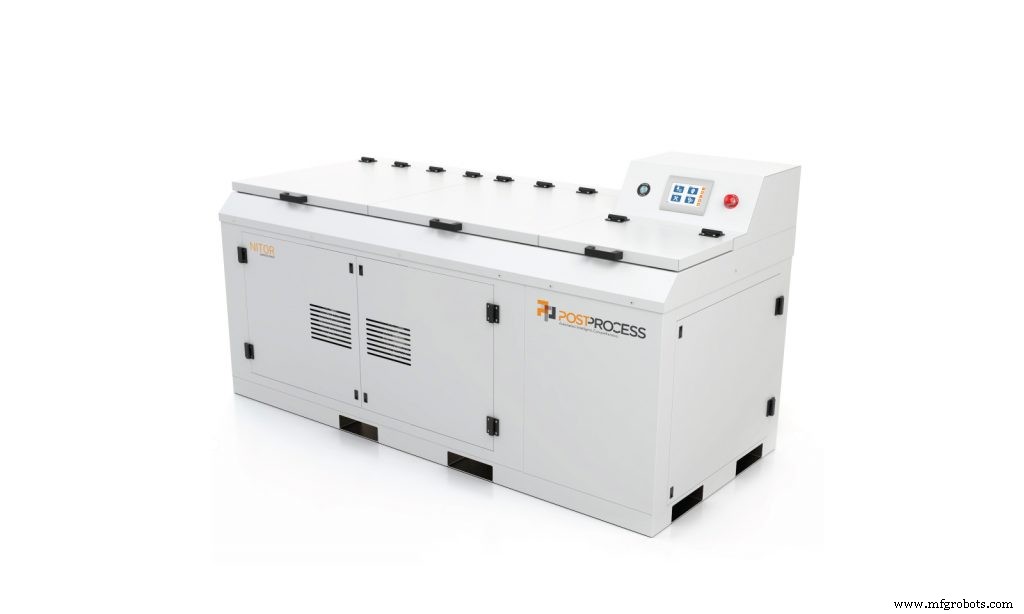
3) Automated support removal and surface finishing. PostProcess Technologies has released a line of automated hardware, while America Makes announced a $1.6 million grant to accelerate post‑processing technology for selective laser melting.
With these developments, 2019 may finally resolve many of the most pressing post‑processing challenges, enabling broader AM adoption.
#4 Will software become essential to scaling up AM production?
Short answer: Yes.
Software is already integral to additive manufacturing, and its role will only grow as the industry seeks higher efficiency, reliability and quality. Both design and workflow management rely on sophisticated tools.
In design, initiatives like Design for Additive Manufacturing (DfAM), generative design and topology optimisation enable the creation of lightweight, complex parts that were previously impossible or cost‑prohibitive. Start‑ups such as nTopology, Frustum and ParaMatters, alongside established players like Autodesk, are reshaping AM design workflows.
On the management side, workflow platforms such as AMFG automate and coordinate every stage—from request to post‑processing—ensuring seamless integration with existing production lines.
By 2019, companies will increasingly factor software into their AM strategies, securing scalable and efficient production.
New Year, New Opportunities
2019 is poised to deliver further progress across additive manufacturing, yet it will also require decisive answers to the questions that define the industry’s future. As we navigate this evolving landscape, we can expect the year to bring clarity—and new opportunities—to the AM community.
3D printing
- 25 Pivotal Milestones Shaping Additive Manufacturing in 2019
- AI in Manufacturing: Three Key Trends Shaping 2019
- Practical Design Strategies for Additive Manufacturing and Rapid Prototyping
- Optimizing Fixtures and Tooling for Additive Manufacturing
- Design for Additive Manufacturing (DfAM): 3D Printing Strategies That Cut Costs and Boost Efficiency
- Additive Manufacturing in Aerospace: How 3D Printing Transforms Aircraft Design
- Why 3D Printing Is Revolutionizing Modern Manufacturing
- Manufacturing Marketing: Proven Best Practices for 2019 Success
- Additive Manufacturing: Driving Innovation and Cost Efficiency in Aerospace
- Additive vs. Subtractive Manufacturing: Unlocking the Future of Production