



How 3D Printing Is Revolutionizing the Medical Field: 4 Key Applications & Future Trends
The medical sector is one of the fastest‑growing arenas in additive manufacturing, with applications ranging from patient‑specific implants to realistic functional prototypes and advanced surgical tools. A 2017 SME survey found that more than 97% of medical AM professionals expect additive manufacturing to rise further, underscoring its transformative potential in bioprinting and beyond.
In this installment of our industry series, we examine how 3D printing is reshaping healthcare today and what the next decade could hold.
How the medical industry is using 3D printing
Customisation
Demand for faster, cost‑effective custom solutions drives 3D printing adoption in medicine. The technology’s design freedom and ability to produce highly complex parts enable the creation of bespoke devices that were once impossible—or prohibitively expensive—to manufacture with traditional tooling.
Custom prosthetics, implants, and anatomical models can now be designed and fabricated in a matter of hours, reducing lead times and tailoring each device to an individual patient’s unique anatomy.
Faster speed‑to‑market
Design iterations that once took weeks can now be completed in hours, dramatically shortening the product development cycle. AM systems also support a broad palette of biocompatible materials that endure sterilisation by gamma radiation or ethylene oxide, making them ideal for dental implants, orthopaedic devices, and other applications where tissue compatibility is critical.
Multi‑material printing is emerging as a powerful tool for producing realistic human models, with distinct materials representing bones, cartilage, and soft tissues.
4 use cases for medical 3D printing
1. Medical research and development
High‑fidelity anatomical models accelerate biomedical research, allowing engineers to study disease progression and test new therapies more efficiently. For example, 3D‑printed tumour replicas help clinicians understand cancer spread and evaluate drug responses—capabilities that traditional manufacturing cannot match in speed or complexity.
2. Pre‑clinical testing and planning
Surgeons now use detailed, patient‑specific models to visualise complex pathologies, plan procedures, and rehearse operations. Multi‑material replicas that mimic the mechanical properties of bone and soft tissue enhance surgical precision and improve postoperative outcomes.
3. Medical devices
The global market for 3D‑printed medical devices is projected to exceed $1 billion by 2026 (Future Market Insights). Additive manufacturing delivers significant value for customised products—including complex implants, personalized prosthetics, hearing aids, and specialised tools—without the constraints of traditional manufacturing.
Implants
Rapid‑growth in patient‑specific implants stems from advances in biocompatible alloys like titanium and cobalt‑chrome, which can be engineered with surface roughness that promotes osseointegration and reduces rejection rates. Topologically optimised designs further reduce weight while maintaining strength.
Prosthetics
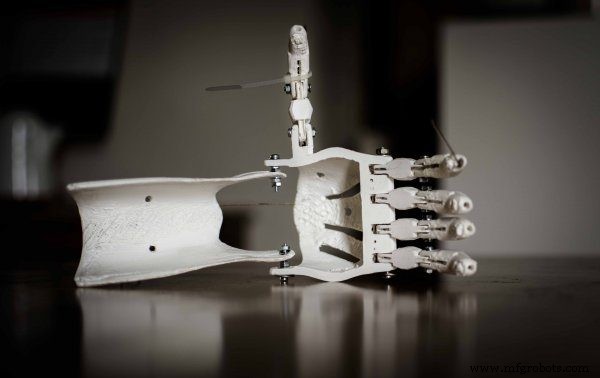
3D printing offers affordable, highly accurate prosthetic limbs and facial prostheses, cutting production times from weeks to days and reducing costs dramatically.
Hearing aids
More than 90% of hearing aids are now produced via stereolithography (SLA), which delivers rapid, precise, organic shapes tailored to each patient.
Dental
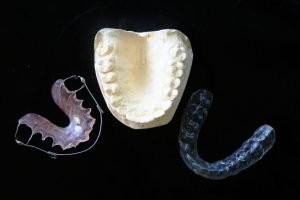
The dental market is poised to reach $9.5 billion by 2027 (SmartTech Publishing). Labs now fabricate bridges, aligners, crowns, and stone models additively, ensuring a perfect fit for every patient.
Medical instruments
Additive manufacturing also produces jigs, fixtures, and ancillary tools on demand, streamlining workflow and supporting advanced patient care.
4. Medical marketing and education
3D‑printed models help clinicians demonstrate new devices and allow medical students to practice procedures on realistic replicas, improving training outcomes and reducing the cost of low‑volume production.
Looking to the future
Bioprinting stands at the forefront of medical innovation, enabling the creation of living tissues for drug testing and regenerative therapies. Researchers at Harrisburg University and Oxford University are pioneering skin grafts and living tissue constructs that replicate natural cellular architecture, paving the way for future transplantable organs.
Time‑release drug delivery is another exciting frontier. MIT researchers have demonstrated a method to print pills that release multiple medications at predetermined intervals, potentially simplifying complex treatment regimens.
Challenges ahead
Despite rapid progress, regulatory compliance remains a major hurdle. Manufacturers must navigate stringent standards for safety, efficacy, and quality control. Continued collaboration between clinicians, regulators, and technologists will be essential to overcome these barriers.
As additive manufacturing matures, we can expect further cost reductions and the advent of fully printed organs and tissues—transforming healthcare as we know it.
This is the second article in our Industry and AM series—check out our previous piece on how AM is impacting the construction industry.
3D printing
- 5 Ways 3D Printing Will Revolutionize Electronics
- How 3D Printing Is Revolutionizing Defence – Benefits, Challenges, and Future Applications
- How 3D Printing is Revolutionizing Automotive Production – 2021 Insights
- Industrial 3D Printing: Eight Ways It Revolutionizes Manufacturing
- How 3D Printing Is Revolutionizing the Toy Industry: 5 Key Benefits
- How 3D Printing Is Revolutionizing Manufacturing: 3 Key Transformations
- Unlocking Innovation: The Key Advantages of 3D Printing in Modern Manufacturing
- 5 Proven Ways 3D Printing Is Transforming Automotive Design & Production
- Revolutionizing Construction: 3D Printing Accelerates and Lowers Costs
- How 3D Printing Will Transform Manufacturing in the Next Decade