



5 Ways 3D Printing Will Revolutionize Electronics
3D printing is moving beyond a novelty to become a game‑changer for electronics. While it remains most popular for rapid prototyping, the technology’s speed, design freedom and custom‑tailoring potential are reshaping the industry’s production paradigms. Material jetting is the core process. Conductive and insulating inks are deposited in lines only a few microns wide. UV light then solidifies the inks, creating fine traces and layers. Because the same printer can jet multiple materials, a single build can produce both the circuit and its enclosure, dramatically simplifying assembly. 1. In‑house Prototyping Designing a Printed Circuit Board (PCB) can be outsourced, prolonging lead times and raising IP risks. With 3D printing, companies can fabricate PCB prototypes internally, cutting costs and protecting intellectual property. 2. Faster Time‑to‑Market In‑house printing shortens the design‑validation cycle, allowing rapid iteration and quicker product launches. Faster time‑to‑market translates into a competitive edge. 3. Design Flexibility Complex, non‑planar geometries are now feasible—multilayer circuits can be printed on flexible, curved surfaces. Engineers can prioritize functionality over manufacturability, embedding sensors, antennas and other electronics directly into structures. 4. Customisation Research teams, such as those at the University of Minnesota, are exploring skin‑mounted sensors printed on demand. In the commercial arena, 3D printing already delivers personalized enclosures, USB stick cases, and custom keyboards. 5. Simplified Supply Chain On‑demand, in‑house production reduces outsourcing, shipping, and warehousing costs. Digital inventory eliminates the need for physical stock, streamlining logistics. Nano Dimension’s DragonFly Pro System Specialising in multi‑layer PCBs, the DragonFly Pro uses material jetting to print functional circuits and antennas on rigid or flexible substrates. Optomec’s Aerosol Jet Technology Optomec offers Aerosol Jet systems that print micron‑scale electronics, including flexible PCBs, conformal antennas and sensors, using commercially available inks. Neotech AMT’s PJ 15X This hybrid platform combines CNC motion with 3D‑capable print heads, enabling rapid prototyping of conductors, semiconductors, heaters, resistors and more. BotFactory PCB 3D Printers These desktop, inkjet‑based systems provide a cost‑effective entry point for low‑volume PCB prototyping. While prototyping remains the dominant use today, 3D printing is poised to enable wearable sensors for real‑time health monitoring, AR lenses with embedded electronics, and lighter, more functional components in smartphones and automobiles. Challenges remain: design software must evolve to map electronic components onto printed geometries, and new nanoscale materials are needed for the tiniest devices. Nonetheless, as the technology matures, 3D‑printed electronics could shift from prototyping to mass production, mirroring the early adoption curves seen in automotive and aerospace.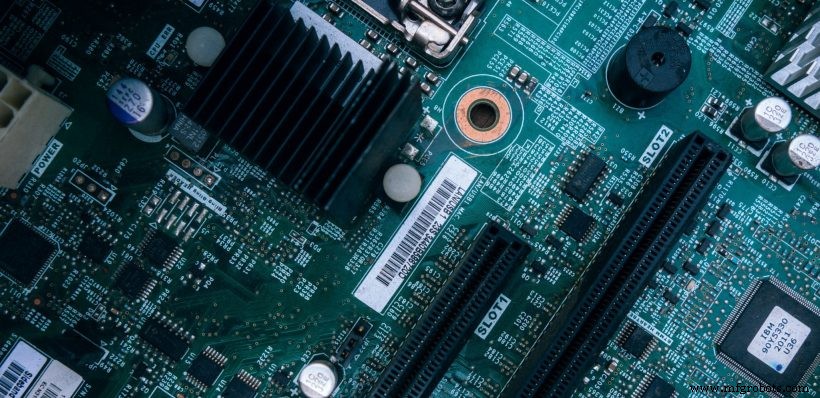
How 3D Printing Works with Electronics
Top 5 Benefits of 3D Printed Electronics
Key Systems Driving the Shift
Looking Ahead
3D printing
- How 3D Printing Is Revolutionizing the Medical Field: 4 Key Applications & Future Trends
- How 3D Printing Is Transforming Consumer Goods: 5 Key Benefits & Real‑World Examples (2021 Update)
- 6 Proven Strategies to Cut 3D Printing Costs
- How 3D Printing Is Revolutionizing the Toy Industry: 5 Key Benefits
- How 3D Printing Is Revolutionizing Consumer Goods: 10 Cutting‑Edge Applications
- Printing the Future: Flexible Electronics Powering the Internet of Things
- How 3D Printing Is Revolutionizing Construction: 10 Key Transformations
- How IoT is Revolutionizing Healthcare: 10 Proven Applications
- 5 Proven Ways 3D Printing Is Transforming Automotive Design & Production
- How CNC Machining Drives Innovation in the Electronics Industry: 5 Key Applications