



Is 3D Printing Ready for the Construction Industry? 2020 Update
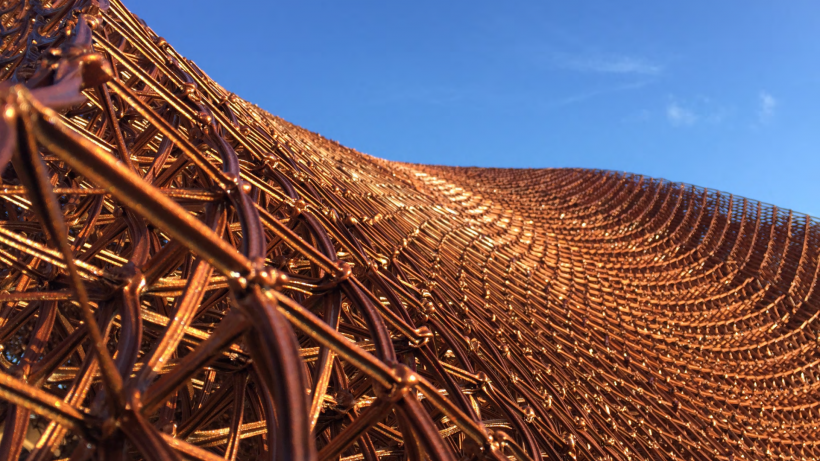
Photo credit: Branch Technology
3D printing is emerging as a transformative force in construction, promising faster builds, lower costs, and unprecedented design freedom. While still in its early stages, the technology offers a clear path toward more sustainable, efficient, and resilient infrastructure.
How 3D Printing Can Benefit Construction
Today’s construction sector faces pressing challenges: waste, limited design flexibility, labor shortages, and logistical hurdles. 3D printing addresses these by:
Design Flexibility
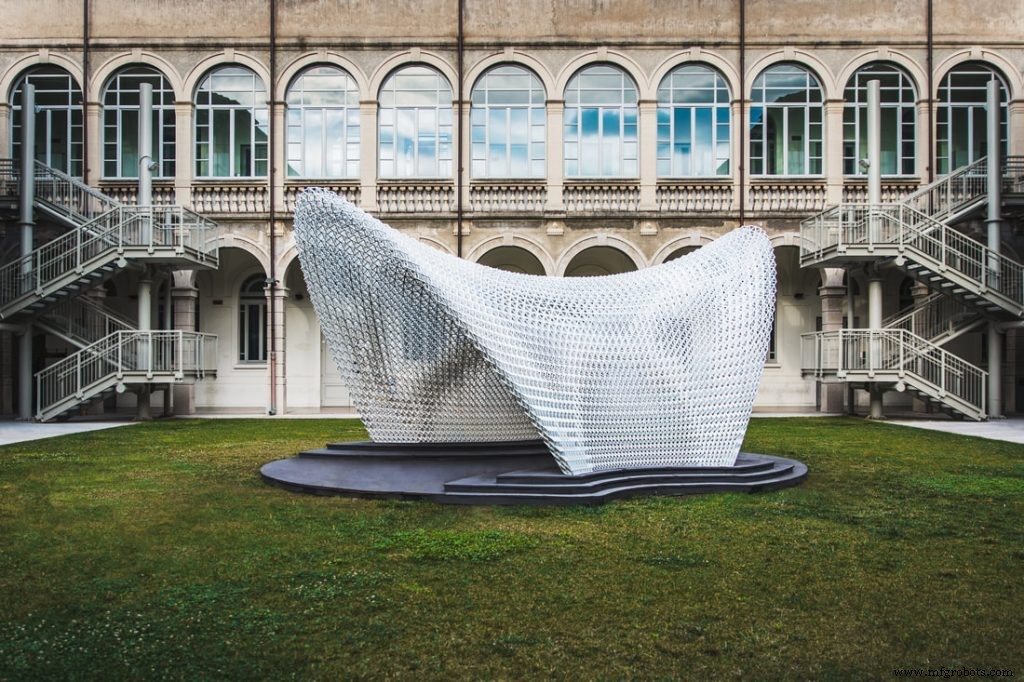
Unlike conventional methods, additive manufacturing builds layer‑by‑layer, enabling complex geometries, organic curves, and customized façades that were previously impossible.
Reduced Material Waste
By depositing only the material needed for each layer, 3D printing minimizes excess. Combined with recycled or locally sourced feedstock, this significantly lowers the environmental footprint.
Labor‑Intensive Work Reduction
Autonomous or semi‑autonomous printers shift routine tasks from humans to machines, cutting labor hours and reducing on‑site accidents.
Accelerated Construction
On‑site 3D printers eliminate the need for precast formwork, shortening schedules and cutting transportation costs. The process speeds up from weeks to days for many components.
Key 3D Printing Technologies in Construction
Different additive methods cater to specific construction needs:
Concrete Extrusion
Paste extrusion, pioneered by Bherokh Khoshnevis of Contour Crafting, uses robotic arms or cranes to extrude concrete, ceramics, or polymers. Leading players—ICON, CyBE, Apis Cor—continue to refine the process, delivering robust, cast‑like structures.
Wire Arc Additive Manufacturing (WAAM)
WAAM melts metal wire with an electric arc, depositing bead‑by‑bead layers on a substrate. It handles aluminium, steel, and titanium, making it suitable for large, load‑bearing parts such as bridges (e.g., MX3D’s steel bridge).
Binder Jetting for Formwork
Binder jetting fuses powdered material with a liquid binder, creating intricate molds for concrete casting. This method allows for complex undercuts and detailed facades while drastically reducing fabrication time.
Showcasing 3D Printing in Real Projects
3D‑Printed Walls
Winsun in China produced a five‑story apartment block and a 12,000‑sq‑ft villa using a 100‑metre‑long printer that fabricated hollow cement‑sand‑fiber walls. These walls were then transported, reinforced, and assembled on site, cutting labor and material use.
Dubai’s Bold Vision
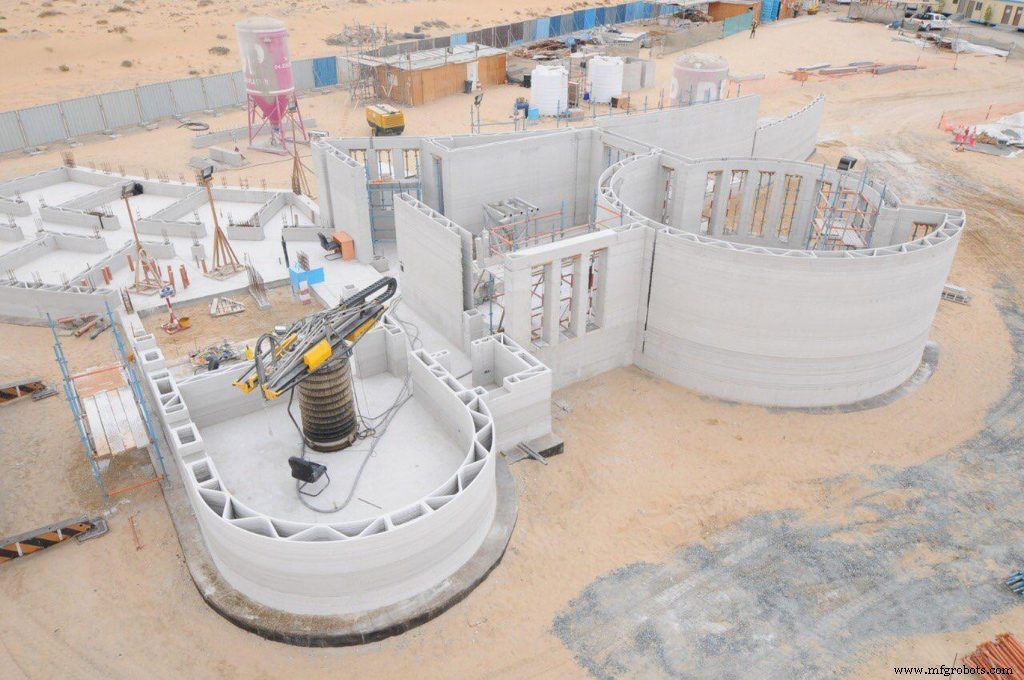
Dubai aims for 25% of new buildings to be 3D‑printed. In 2019, Apis Cor partnered with the Dubai Municipality to construct a two‑story, architecturally complex building on site, using a locally sourced gypsum‑based mix. The open‑air print demonstrated resilience to harsh climates.
Bridges
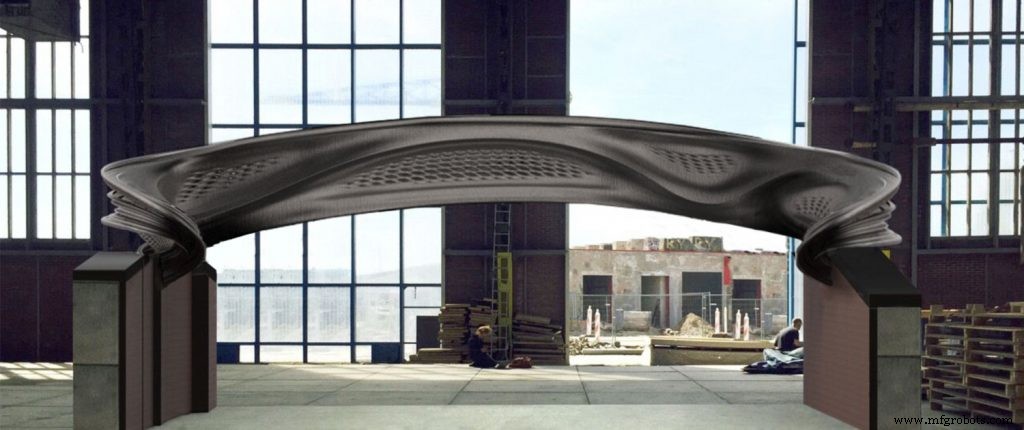
Madrid hosted the world’s first 3D‑printed concrete bridge. The Netherlands added an 8‑metre cyclist bridge, assembled from 800 printed blocks over three months. MX3D’s steel bridge, equipped with sensors, underwent a 20‑ton test before being slated for an Amsterdam canal.
Interior Design
London’s Bottlepot store showcases a fully 3D‑printed interior using sustainable polymers, illustrating how additive manufacturing can reduce waste while enabling artistic expression.
Architectural Models
3D printing revolutionizes model creation, delivering rapid, cost‑effective prototypes that accelerate design iterations and cut development time.
Building Components
UK contractor Skanska produced polymer cladding nodes for the 6 Bevis Marks business centre, proving 3D printing’s viability for large‑scale façade elements.
3D‑Printed Formwork
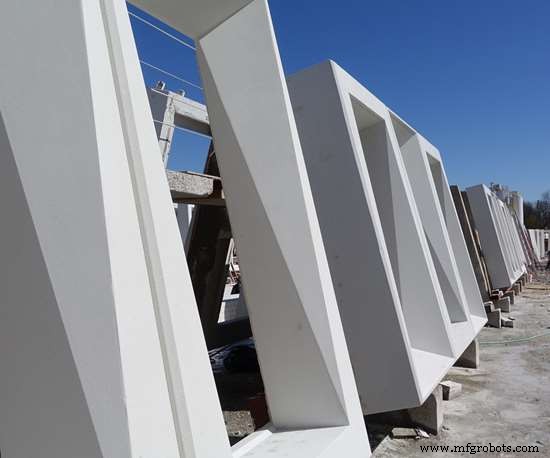
Gate Precast, collaborating with Oak Ridge National Laboratory, used BAAM technology to print carbon‑fiber‑reinforced ABS molds for a 42‑story New York building. Each mold printed in 8–11 hours and machined in 8 hours, supporting up to 200 concrete pours—an 10‑fold increase over wooden molds.
Barriers to Wider Adoption
Despite its promise, 3D printing faces hurdles:
- Quality Assurance – Are printed homes as durable as traditionally built ones? Ongoing testing is essential to meet fire, seismic, and longevity standards.
- Regulatory Gaps – Building codes must evolve to accommodate new materials and processes.
- Skill Requirements – Operators and designers need specialized training, increasing upfront investment.
- Material Limitations – Current feedstocks are limited; research is expanding concrete formulations and bio‑based composites.
The Future of 3D Printing in Construction
Full‑scale, all‑printed buildings remain a long‑term goal. In the near term, additive manufacturing will excel in fabricating complex components—joints, facades, and formworks—leveraging its design freedom while cutting waste. On‑site printing will gradually shift the industry toward greater sustainability, flexibility, and automation.
3D printing
- How 3D Printing Is Transforming Consumer Goods: 5 Key Benefits & Real‑World Examples (2021 Update)
- 3D Printing: From Rapid Prototyping to Full‑Scale End‑Part Production
- Standards for 3D Printing (2020 Update): Current Landscape and Road Ahead
- 10 Key 3D Printing Trends Driving 2020 Innovation
- How 3D Printing Is Transforming Toy Design, Safety, and Production
- How 3D Printing Is Revolutionizing Construction: 10 Key Transformations
- Revolutionizing Sports Gear: How 3D Printing Transforms Athletic Equipment
- Revolutionizing Construction: 3D Printing Accelerates and Lowers Costs
- The Construction Industry Explained: Scope, Roles, and Global Impact
- Understanding the Printing Industry: Key Roles and Services