



How 3D Printing Enhances Traditional Manufacturing: Five Proven Applications
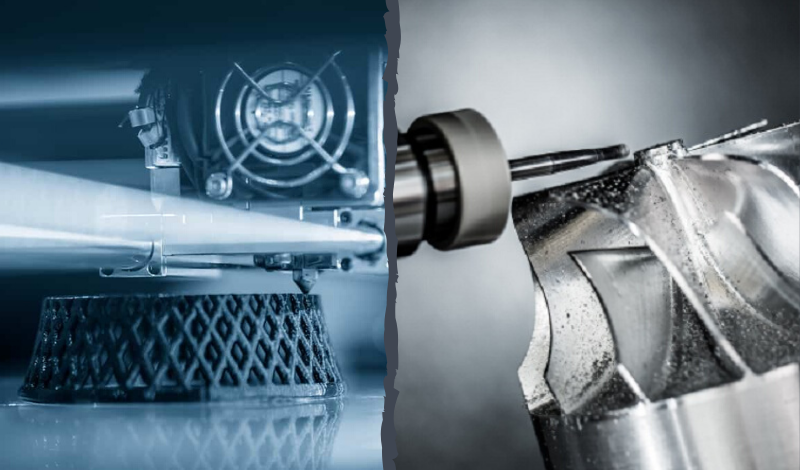
3D printing is not just a replacement for conventional manufacturing—it is a powerful ally that boosts efficiency, quality, and flexibility.
Below are five key ways 3D printing supports traditional production processes, backed by real-world examples and measurable gains.
1. Conformal Cooling for Injection Moulds
Injection moulding remains the gold standard for mass‑producing complex parts, but uneven cooling can lead to defects and longer cycle times. Traditional moulds use straight cooling channels, which often create hot spots. Conformal cooling channels—designed to follow the part geometry—eliminate these hotspots, improving temperature uniformity.
3D printing enables rapid creation of these complex channels, dramatically reducing cooling times. For example, Kärcher GmbH & Co. KG increased the productivity of its K2 high‑pressure washer casings by redesigning the mould with 3D‑printed cores. The new channels lowered mould wall temperatures from 100 °C to 70 °C, cutting cooling time from 22 to 10 seconds—a 55 % reduction. Combined with feed‑system tweaks, the overall cycle time dropped from 52 to 37 seconds.
Industry specialist Pat Zaffino founded Conformal Cooling Solutions Inc. to help manufacturers adopt the technology. “Conformal channels yield shorter cycle times, higher part quality, and lower costs,” he told canplastics.com.
As the cost of additive manufacturing continues to fall, conformal‑cooling moulds are poised to become an industry standard.
2. 3D‑Printed Patterns for Investment Casting
Investment casting traditionally relies on expensive, time‑consuming wax patterns produced by injection moulding. 3D printing offers a low‑cost alternative: specialized wax, castable resins, or thermoplastics can be printed with high accuracy and excellent burnout characteristics.
With desktop printers under $5,000, firms can produce complex patterns in a fraction of the time. Canadian jeweller Vowsmith cut production and delivery times by 50 % by integrating 3D Systems’ wax printers. Likewise, Invest Cast Inc. now uses the ProJet MJP 2500 IC to move from model to metal in 2–5 days—versus the typical 6–12 weeks for traditional moulds.
3. Cutting‑Tool Enhancement Through Additive Manufacturing
3D printing can create cutting‑tool inserts with custom geometries and built‑in coolant channels. These features extend tool life and improve performance, especially when machining difficult materials such as titanium or high‑strength steels.
LMT Tools Inc. incorporated curved coolant passages into a milling tool, achieving a 50 % increase in tool life during titanium machining. Komet Group used Renishaw’s aluminium‑alloy printing to add multiple cutting edges and dedicated coolant channels, cutting machining time by up to 50 % and reducing part weight.
Sandvik Coromant’s Lightweight CoroMill 390, a metal‑printed milling head, tackles vibration issues in deep‑cavity machining. When paired with Silent Tools adaptors, the tool raises productivity by 50 % in aerospace and oil‑and‑gas applications.
4. Repairing Tooling with Direct Energy Deposition
Direct Energy Deposition (DED), or laser cladding, adds material layer by layer to restore worn or damaged tooling. This process avoids the long, costly repairs of traditional welding.
A consortium of seven UK companies launched the £1.2 million DigiTool project to develop low‑cost repair solutions. HWF, a German mould‑maker, reduced repair time from 60–80 hours to 24 hours by applying 250 µm layers at 5,000 mm³ per hour, preserving the base material and minimizing cracks.
5. Hybrid Manufacturing: Combining Additive and Subtractive Techniques
Hybrid machines integrate 3D printing with CNC machining, delivering parts in a single operation. This approach marries the design freedom of AM with the precision of subtractive methods, speeding up production and enabling complex geometries.
Commercial systems include DMG MORI’s DED‑plus‑five‑axis CNC platform, and PBF‑CNC hybrids from Matsuura, Sodick, and DMG MORI. Existing CNC centres can be retrofitted with the Ambit powder‑feed laser deposition head or 3D Hybrid’s combined powder‑ and wire‑feed modules, offering a cost‑effective path to hybrid capability.
While hybrid manufacturing is still evolving, early adopters report significant time savings and design flexibility.
Embracing 3D Printing as a Complementary Tool
Rather than viewing additive manufacturing as a competitor, manufacturers should see it as an extension of their traditional toolbox. From conformal cooling and investment‑casting patterns to tool life extension and hybrid production, 3D printing delivers measurable benefits across the value chain.
3D printing
- How 3D Printing Is Revolutionizing the Medical Field: 4 Key Applications & Future Trends
- Industrial 3D Printing: Eight Ways It Revolutionizes Manufacturing
- How 3D Printing Reduces Manufacturing Costs: 6 Proven Strategies
- Can 3D Printing Disrupt Traditional Manufacturing? Expert Insights
- Agile Manufacturing & 3D Printing: A Guide to Rapid, Custom Production
- How 3D Printing Is Revolutionizing Manufacturing: 3 Key Transformations
- How 3D Printing Accelerates Agile Manufacturing: 3 Key Benefits
- 3D Printing: The Future of Manufacturing and Medicine
- Metal 3D Printing 101: How Additive Manufacturing Transforms Production
- 5 Proven Ways 3D Printing Is Transforming Automotive Design & Production