



Can 3D Printing Disrupt Traditional Manufacturing? Expert Insights
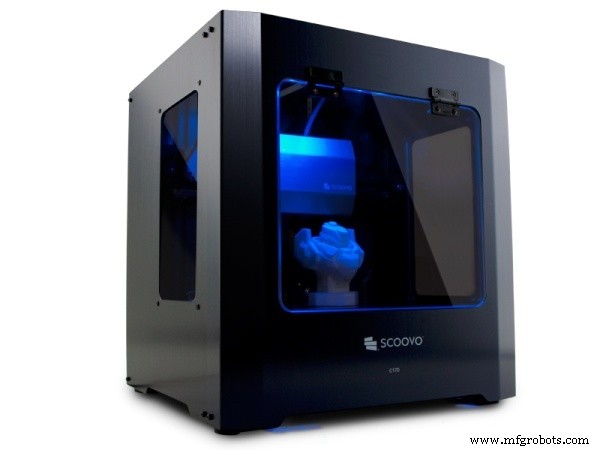 3D printing has sparked significant interest over the past year, yet its long‑term role in industrial production remains debated. While the technology has advanced rapidly and now accommodates a wide range of materials, it has not yet displaced traditional subtractive machining or injection molding. Below are key factors that explain why.
1) Aesthetic Quality
3D‑printed parts often exhibit visible layer lines that can compromise a flawless finish. Because the process builds objects layer by layer, the resulting surface shows thin horizontal slices. Processes such as injection molding, stamping, and CNC machining create a smoother, more uniform finish, making them preferable for high‑gloss or precision surfaces.
2) Strength
The laminate nature of additive manufacturing can introduce weak points along the Z‑axis, limiting overall strength compared with traditionally fabricated parts. Injection‑molded components benefit from a homogeneous material structure, delivering consistent tensile properties. Moreover, only a subset of high‑performance plastics—such as G‑10/FR4 (≈45 000 PSI) or FRP (≈30 000 PSI)—can be used with conventional 3D printers, whereas many industries rely on the full spectrum of engineering resins and composites.
3) Precision
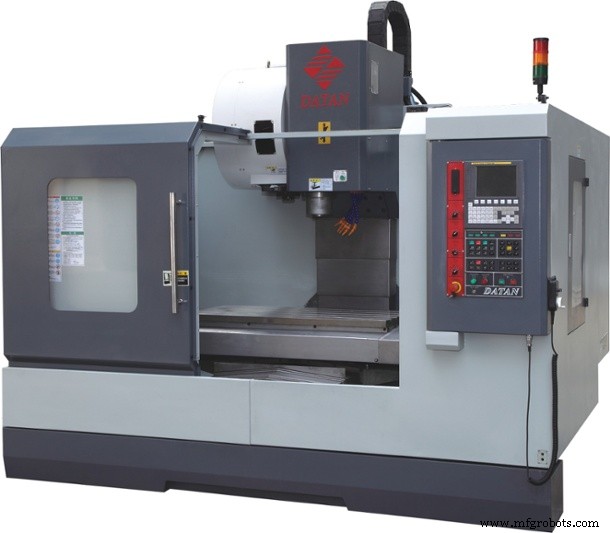 Industrial parts often require tight tolerances. CNC machining routinely achieves ±0.005″ (≈0.127 mm) or tighter, while most 3D‑printed parts fall within ±0.009–0.020″ (≈0.23–0.51 mm). For assemblies that demand critical fit, CNC remains the gold standard.
4) Production Speed
Mass production depends on both volume and cycle time. Stamping can produce up to 22 000 parts per hour, and injection molding can exceed 1 440 pieces per hour for complex shapes. In contrast, a single 3D‑printed part may take hours to days to complete, making it unsuitable for large‑scale manufacturing of standard hardware.
5) Cost
3D printing eliminates tooling costs—inject mold designs can run into thousands of dollars—making it attractive for short runs or custom prototypes. The initial investment for a desktop printer, such as a Makerbot®, is roughly one‑tenth the price of a new CNC machine. However, material costs remain high: the cheapest filament is about $25 per pound, while specialty resins can reach $250 per pound. Because the cost per part does not decrease with volume, 3D printing is inefficient for large production runs.
While 3D printing’s future in mainstream manufacturing is still unfolding, many companies already employ the technology for rapid prototyping and, in some cases, for creating injection molds themselves.
What do you think the next decade holds for 3D printing in manufacturing? Share your thoughts in the comments below.
Curious about plastics? Download our free guide!

Resin
- 5 Key Advantages of 3D Printing for Modern Manufacturing
- How 3D Printing Enhances Traditional Manufacturing: Five Proven Applications
- Agile Manufacturing & 3D Printing: A Guide to Rapid, Custom Production
- How 3D Printing Is Revolutionizing Manufacturing: 3 Key Transformations
- 3D Printing: The Future of Manufacturing and Medicine
- Metal 3D Printing: Revolutionizing Production with Speed, Cost Savings, and Design Freedom
- Enhancing Manufacturing Efficiency with Voice Recognition Technology
- Fishbowl Manufacturing: Mastering 5 Essential Production Processes
- Additive Manufacturing vs 3D Printing: Understanding the Difference
- Additive vs. Traditional Manufacturing: How They Complement Each Other