



Plastic Wear: Causes, Mechanisms, and How to Design for Durability
Plastic wear—an intricate friction phenomenon—occurs when two surfaces slide or roll together, gradually eroding material. As the surfaces move relative to one another, forces remove microscopic layers. Two principal mechanisms drive this process: adhesion and abrasion. Adhesive wear happens when contact points break apart and fragments from one surface cling to the other. In lubricated conditions, these fragments create a fine powder on the mating surface, making adhesive wear the dominant failure mode in thermoplastic sliding contacts.
Abrasive wear arises when a harder material scratches its counterpart, leaving grooves or gouges. Particles such as glass fibers can become trapped between surfaces and accelerate wear. Polymers with inherent toughness—like high‑impact HDPE or PET—can mitigate abrasive damage.
Even minimal material loss can compromise precision or introduce unwanted play, leading to system failure. While no tribological system can eliminate wear entirely, careful design can reduce it to negligible levels.
Wear performance varies dramatically among lubricious thermoplastics. Plastic‑on‑metal pairings typically deliver the best results. When plastic‑on‑plastic contact is unavoidable, selecting dissimilar polymers and incorporating wear‑resistant additives such as PTFE can substantially improve longevity.
Designing for Plastic Wear
After establishing the system layout, engineers assess whether significant wear is likely. If so, the wear rate must be brought down to acceptable limits.
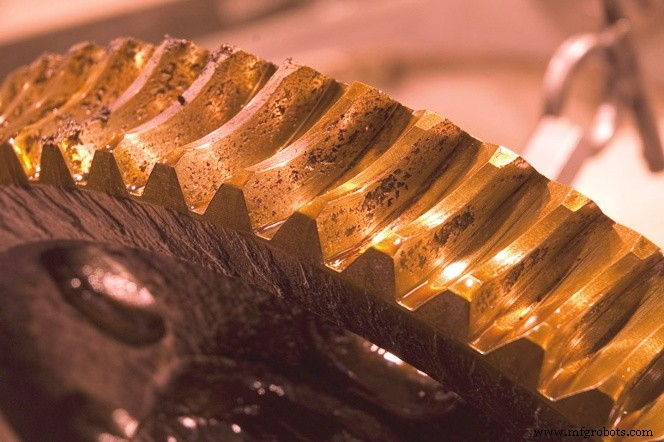
Key variables controlling wear are largely within engineering control: material selection, surface finish, lubricants, and the presence of abrasive particles. The type of motion—reciprocating, continuous, or geometrical (sliding vs. rolling)—also influences wear. Operating parameters such as speed, load, and temperature further modulate the outcome.
Often, bearing, bushing, seal, and gear choices hinge on cost, weight, chemical resistance, or mechanical performance rather than wear resistance alone. Nevertheless, optimal friction and wear behavior can be achieved even with a limited palette of materials.
If a thermoplastic compound underperforms, engineers can tweak additive concentrations, introduce new fillers, or switch to a more wear‑resistant polymer. Adjusting the mating surface material—or both—often yields the best results.
The hidden cost of inadequate wear design far exceeds the initial material price. Standardized tests, such as ASTM D‑3702, provide comparative wear data. Prototyping and real‑world testing remain indispensable whenever wear is a concern.
Calculating Wear Rates
Wear is quantified as the specific wear rate—the volumetric loss per unit time. It scales with the load applied to the specimen and the distance it travels. The fundamental relationship is:
W = K × F × V × T
Where K = wear factor (in³ min⁻¹ ft⁻¹ lb⁻¹, typically 10⁻¹⁰), W = wear volume (in³), F = force (lb), V = velocity (ft/min), and T = time (hr). A lower K indicates a more wear‑resistant material; use K as a relative metric when comparing alternatives.
Contact pressure (P) and sliding speed (V) jointly dictate material wear. The product PV, called the PV capability, defines a material’s limit. Exceeding this limit leads to failure. Higher PV values denote a material’s ability to sustain heavier loads at faster speeds. Increasing pressure raises wear but can reduce friction, whereas higher sliding speeds amplify both wear and friction.
Questions? Let me know in the comments section below.
Looking to learn more about wear‑resistant plastic? Download our free material guide.
Resin
- How Engineers Assess Plastic Material Strength: Key Mechanical Properties Explained
- Understanding Plastic-to-Plastic Wear: Design Principles & Lubrication Strategies
- Exploring 6G: The Future of Ultra-Fast Connectivity
- Top 4 Switchgear Failure Causes & Proven Prevention Strategies
- Prevent Pump Cavitation: Causes, Symptoms, and How to Avoid It
- Expert Guide: Inspecting Used Equipment to Avoid Hidden Costs
- Copper Brazing Explained: Techniques & Tips for Strong, Reliable Connections
- Understanding Weld Lines in Plastic Parts: Causes, Defects, and Prevention Strategies
- Master Copper Brazing: A Complete Guide to Joining Tubes & Fittings
- Ultrasonic Welding of Plastics: Process, Benefits, and Applications