



America Makes Executive Director John Wilczynski on Advancing 3D Printing: Standards, Workforce, and Future Outlook
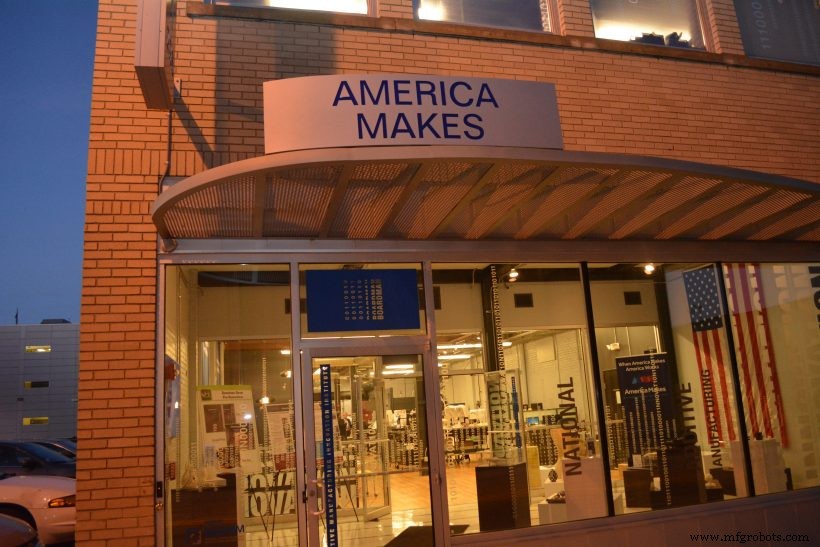

America Makes is the United States’ national accelerator for additive manufacturing (AM), driving research, development, commercialization, and widespread adoption of 3‑D printing technologies. Founded in 2012, the institute has completed 88 R&D projects and expanded from 65 founding members to more than 225 partners across government, academia, and industry.
In this expert interview, America Makes Executive Director John Wilczynski discusses the institute’s recent $322 million cooperative agreement with the U.S. Air Force Research Laboratory, the evolving landscape of AM standards, and the critical role of workforce development in accelerating adoption.
America Makes: Mission & Structure
America Makes is a non‑profit program managed by the National Center for Defense Manufacturing and Machining (NCDMM). Its mission is to advance the industrial base of additive manufacturing through technology development, technology transition, and workforce training. The institute is not a government agency, but it receives funding from federal agencies to accelerate AM adoption across the U.S. economy.
Significance of the Air Force Agreement

The $322 million cooperative agreement with the U.S. Air Force Research Laboratory (AFRL) confirms America Makes’ reputation as a trusted partner for government innovation. While the figure represents total contract value, the agreement unlocks a cost‑share framework that enables the institute and its partners to bid on future federal R&D projects, streamlining funding flow into the AM community. To date, America Makes has already executed over $200 million in AM R&D.
Core Initiatives & Roadmap
America Makes’ work is organized around a five‑area technology roadmap—design, materials, processes, value chain, and the AM genome. The institute focuses on applied research that drives technologies from laboratory validation to commercial viability. It also coordinates industry‑driven workshops, surveys, and road‑mapping sessions to align member priorities and accelerate innovation.
Education and workforce development are integral. America Makes partners with K‑12, higher‑education, and industry training providers to develop industry‑recognised credentials and upskill designers, material scientists, and technicians for the evolving AM job market.
Standards Landscape & Future Outlook
Standardization has become essential as AM shifts from prototyping to production of end‑use parts. The Additive Manufacturing Standardization Collaborative (AMSC) roadmap, co‑led by America Makes and the American National Standards Institute (ANSI), identifies 80–92 gaps across ISO, ASTM, ASME, and SAE. The dynamic, publicly accessible roadmap allows standards bodies to update gaps in real time, fostering consensus‑driven progress.
Current efforts include drafting and peer‑reviewing new standards that will feed into federal guidelines within the next one to two years. America Makes also advises acquisition professionals on best practices for incorporating AM parts into procurement processes.
Top Challenges to Adoption
- Industry‑recognised material design data – many materials lack publicly available, validated data sets.
- Qualification and certification – establishing robust processes for component and process certification remains a hurdle.
- Design for additive manufacturing – widespread adoption requires training designers to exploit the full design freedom of AM.
Industry Excitement & Emerging Trends
Rapid advances in manufacturing processes, from new metal alloys to novel polymer systems, are attracting both established manufacturers and startup innovators. Software integration—advanced modeling, simulation, and digital twin capabilities—reduces reliance on empirical testing, driving down development costs and speeding time‑to‑market.
Vision for the Next Five Years
America Makes expects continued momentum in production‑scale AM, with a shift toward part consolidation and design‑for‑additive‑manufacturing principles. The institute anticipates breakthroughs in materials data sharing and next‑generation alloy development, enabling broader, more reliable use of AM across industries such as aerospace, defense, and automotive.
2025 Outlook & Strategic Priorities
Looking ahead, America Makes will focus on expanding material data initiatives, deepening collaboration with the automotive sector, and refining supplier road‑maps. Workforce development will remain a priority, with efforts to align curricula across government, industry, and academia to produce a skilled, adaptable AM workforce.
Final Thoughts
“We must train a workforce that can seamlessly transition across organizations—whether from military service to OEM roles—by building curricula around industry‑recognised competencies.”
To learn more, visit America Makes.
3D printing
- Inside 3D Printing: Professor Neil Hopkinson on Innovation, Scale, and the Future
- Interview with Philip Cotton, Founder of 3Dfilemarket.com, UK 3D Printing Education Expert
- Dr. Alvaro Goyanes of FabRx on 3D‑Printed Medicines: From Innovation to Personalised Care
- Nanoe CEO Guillaume de Calan Discusses the Future of Ceramic 3D Printing
- John Kawola on Ultimaker’s Transition to Enterprise 3D Printing
- Ford Drives 3D Printing Innovation: Insights from Additive Manufacturing Leader Harold Sears
- Inside Nexa3D: How LSPc Technology Accelerates Industrial SLA 3D Printing
- Interview with VELO3D’s VP of Technology Partnerships: Advancing Metal 3D Printing Capabilities
- Interview with Photocentric MD Paul Holt: Inside Daylight Polymer Printing and the Future of Affordable 3D Manufacturing
- Interview with Jan Tremel: How Bosch Leverages 3D Printing in Its Powertrain Center of Competence