



Roboze CEO Alessio Lorusso Discusses Cutting‑Edge Composite 3D Printing and Industry Outlook
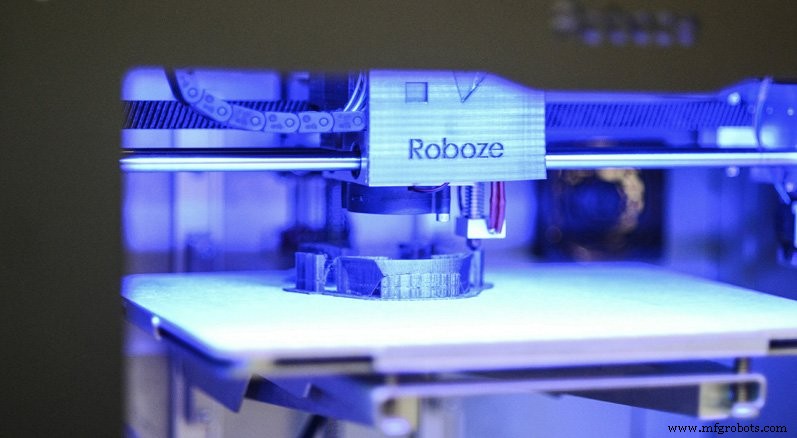
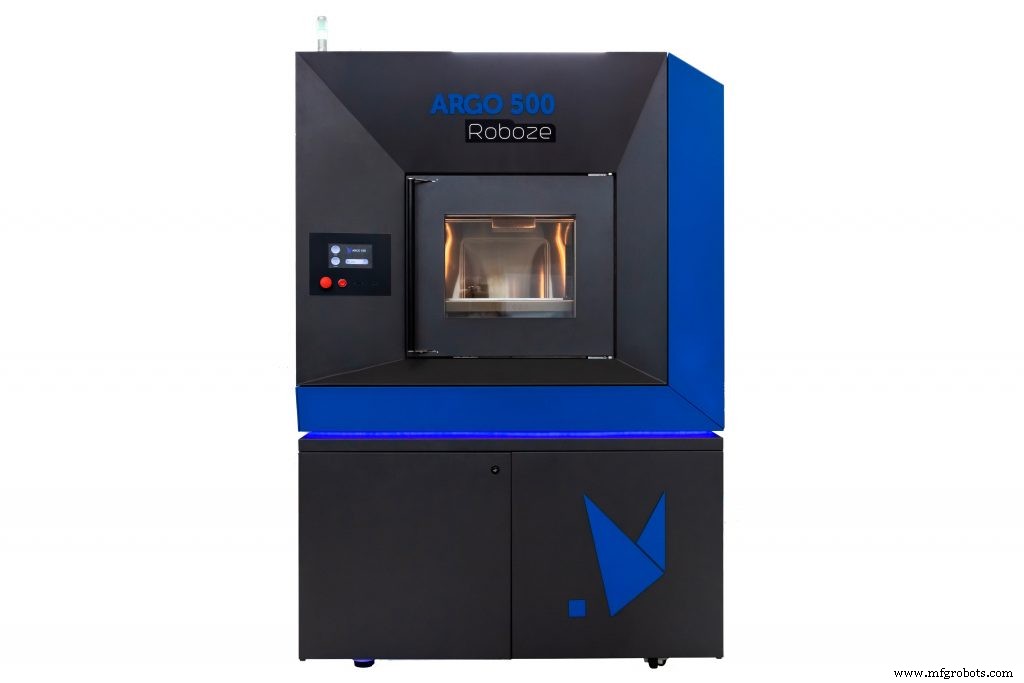
 Founded in 2013, Roboze has delivered precision FFF 3D printers and a library of 12 high‑performance materials. With five printers and a growing portfolio, the company now targets industrial sectors such as aerospace, automotive, oil & gas, medical, and defence. 2024 data shows more than 300 units operating in 25+ countries, powering customers like Airbus, GE, Bosch and Merck.
In this expert interview, we speak with CEO Alessio Lorusso about Roboze’s technology, material innovations and the future of additive manufacturing.
Could you tell me a bit about Roboze?

Roboze designs and builds the most accurate FDM printers for composite and high‑temperature polymers. Our patented Beltless System delivers 25‑micron resolution and unparalleled repeatability, outperforming belt‑driven competitors by a factor of six. The system’s rack‑and‑pinion mechanics reduce vibration and enhance precision, enabling parts that meet aerospace and defence tolerances.
We serve EMEA, the US and Asia, with more than 300 machines deployed across 25+ countries. Customers use our printers for functional prototypes and end‑use parts in extreme environments.
Alongside machines, Roboze also produces advanced composite materials. What are the advantages of these materials when it comes to manufacturing applications?
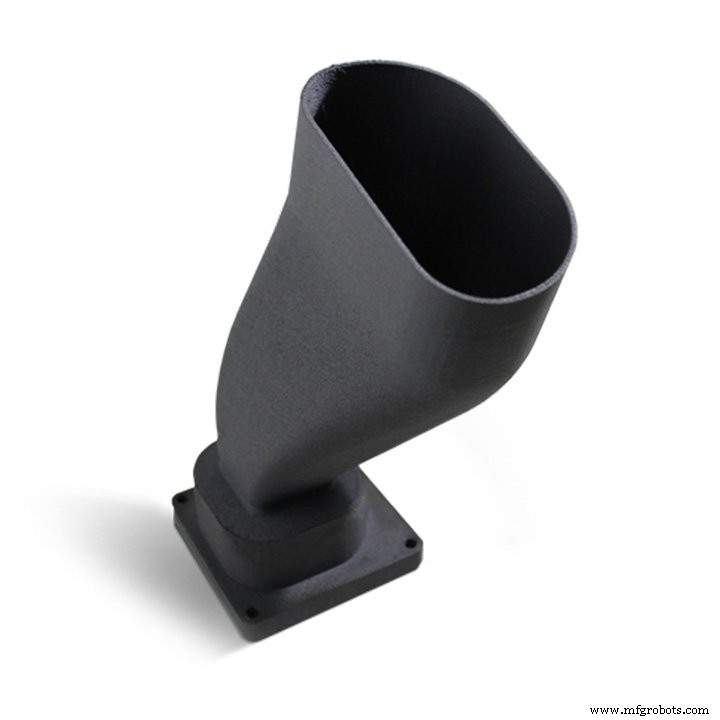
Our in‑house material science team custom‑develops formulations to meet specific client needs. With an in‑line extrusion line, we can tailor carbon‑fiber composites, electrically conductive grades and high‑temperature polymers.
Key attributes include:
- Metal‑grade strength and stiffness thanks to carbon‑fiber reinforcement.
- PEEK variants that operate from –80 °C to +250 °C, enabling use in cryogenic or high‑heat applications.
- Chemical resistance to solvents, making them ideal for fuel‑handling and chemical processing parts.
Which industries offer the biggest growth opportunities for Roboze?
Aerospace remains a long‑term opportunity, though certification cycles can span a decade. Currently, our focus is on motorsport, automotive, oil & gas, injection‑moulding, compression‑moulding and plastics, where we aim to replace traditional manufacturing with composite and high‑temperature 3D printing.
Taking the oil and gas industry as an example, in what way can the industry benefit from your technology?
Oil and gas operators use our printers to fabricate critical spare parts—valves, gaskets and seals—for offshore and onshore platforms, reducing downtime and inventory costs.
How do you identify when it’s more suitable to use 3D printing over traditional manufacturing techniques?
We recommend 3D printing for custom, low‑volume series (2,000–3,000 parts per year). For larger volumes, injection moulding remains cost‑effective. Printing excels when design iterations are frequent or rapid turnaround is required.
What are some of the tips you would give a company looking to get started with 3D printing?
Our solutions engineers collaborate directly with clients to assess current workflows, identify cost‑saving opportunities and determine where 3D printing can deliver speed and flexibility. Only when a clear business case exists do we introduce our technology.
Are there any challenges you see in terms of accelerating the adoption of the technology?
The biggest hurdle is education. Many customers over‑estimate 3D printing’s capabilities and under‑appreciate the limits of current processes. We invest heavily in training to help firms decide when additive manufacturing truly adds value.
How do you see additive manufacturing evolving in the future?
We anticipate consolidation across materials and processes. Within the next 10–15 years, the market will converge toward a handful of versatile platforms capable of producing metal, plastic and ceramic parts within a single system.
Roboze has recently announced its expansion into Japan. What was the reasoning behind that decision and how do you see the 3D printing landscape in Japan?
Japan’s automotive and electronics sectors, alongside its robust research community, present strategic growth opportunities. Our electrically conductive and thermally insulating materials are well‑suited for electronic housings, tooling, and research instrumentation.
Roboze announced €3 million in funding at the end of last year. What does this mean for the company going forward?
The capital will accelerate R&D and expand our global footprint. We are currently advancing seven projects that span new machines, materials and application domains.
What does the future hold for Roboze?
We aim to establish a presence in 30 countries this year, targeting a 500 % growth in revenue versus last year. Plans include opening a California office and expanding into Germany, a key European market.
To learn more about Roboze, visit: https://www.roboze.com/
3D printing
- Interview with Spencer Wright of pencerw.com and nTopology: Expert Insights on Metal Additive Manufacturing
- Felix Ewald, CEO of DyeMansion, Discusses Innovations in Powder-Based 3D Printing Post-Processing
- Digital Alloys CEO Duncan McCallum Discusses Joule Printing and the Future of Metal 3D Manufacturing
- Nanoe CEO Guillaume de Calan Discusses the Future of Ceramic 3D Printing
- Interview with RIZE CEO Andy Kalambi: Advancing Sustainable, Scalable Industrial 3D Printing
- Fortify CEO Josh Martin Discusses Revolutionary Fluxprint™ Digital Composite Manufacturing
- Scaling 3D Printing: Makelab CEO Christina Perla Shares Insights on Building a Resilient Service Bureau
- Inkbit CEO Davide Marini Discusses the Future of Multi‑Material Inkjet 3D Printing
- Why Composite 3D Printing Is a Game Changer – Insights from Anisoprint CEO Fedor Antonov
- High‑Performance 3D‑Printed Fixtures: Solving Skilled Labor Shortages and Boosting Quality