



Scott DeFelice on the Evolution of High‑Performance Polymers for 3D Printing
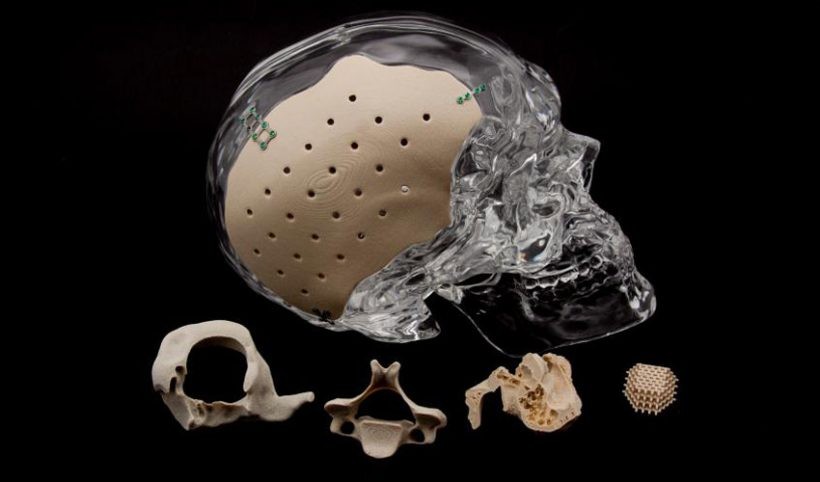
While ABS and nylon still dominate the 3D printing landscape, the demand for robust, high‑temperature materials is rising sharply. Industries such as aerospace and medical are turning to high‑performance polymers that can withstand extreme environments. The current leaders in this space are the Polyaryletherketone (PAEK) family, offering exceptional thermal stability and mechanical strength. Oxford Performance Materials (OPM), a Connecticut‑based company, is one of the few firms dedicated to advancing PEKK, a standout member of the PAEK class.
To dive deeper into OPM’s vision and its groundbreaking PEKK technology, we spoke with the company’s CEO, Scott DeFelice.
Can you tell me a bit about Oxford Performance Materials and your mission as a company?
Founded in 2000, OPM has focused exclusively on the development of Poly Ether Ketone Ketone (PEKK). PEKK is the apex of thermoplastic performance, boasting superior thermal, chemical, and mechanical properties, along with excellent biocompatibility. 
Our portfolio spans the entire value chain—from synthetic production to powder preparation and 3D printing processes. We pioneered selective laser melting for PEKK over a decade ago and introduced the first commercial 3D‑printed medical devices in 2006.
In 2008, we received FDA clearance for a patient‑specific cranial implant, which is now distributed worldwide by Zimmer Biomet. We continue to produce cranial and facial implants daily and have shipped over 70,000 spinal implants through our partnership with RTI Surgical.
Recently, we secured FDA approval for a sports‑medicine suture anchor, and our PEKK technology has earned certifications from Boeing and Northrop Grumman for space and defense applications. We sold that segment to Hexcel, leveraging their manufacturing scale.
Unlike traditional prototyping companies, OPM entered the additive manufacturing arena as a materials specialist. We integrate our proprietary chemistry with advanced manufacturing techniques to deliver end‑to‑end solutions.
How has the 3D printing material space evolved, and what does the future look like in terms of cost and development?
3D printing’s power lies in its material. The ability to print functional parts depends on using materials tailored to the end‑use. As markets demand higher performance, the relative cost of the material diminishes compared to the cost of quality control, regulatory compliance, and manufacturing infrastructure.
For instance, a cranial implant may retail for $10,000, but the material cost represents only a fraction of that price. As the industry moves from prototyping toward production parts, material performance becomes paramount while cost becomes a secondary concern.
Beyond medical, which industries can benefit from your 3D‑printed PEKK?

Our roots lie in biomedical and aerospace, but PEKK’s resilience in acidic and basic environments opens doors to carbon capture, pharmaceutical processing, and bioprocessing—sectors where high‑purity, robust materials can reduce capital costs and improve efficiency. We’re collaborating with leading U.S. government labs in carbon capture and are actively exploring biopharma applications.
What does the material development and testing pipeline look like?
We begin with in‑house analytical and mechanical testing to establish a reproducible baseline. Once validated, we move through industry‑specific standards—such as MIL‑B‑BASIS for aerospace, ISO 10993 for biocompatibility, and ASTM F2077 for spinal implants—before submitting data to regulatory bodies like the FDA.
These processes are resource‑intensive, so internal confidence is critical before engaging with external, expensive testing regimes.
Can you share examples of high‑performance polymers replacing metals?
Polymers have historically replaced metals to reduce weight and cost—from cars to household appliances. In 3D printing, PEKK has replaced titanium in spinal cages, fusion devices, and cranial implants. In emerging sectors such as carbon capture, we are evaluating PEKK as an alternative to expensive machined stainless steel and titanium components.
What trends are shaping the 3D printing materials market?
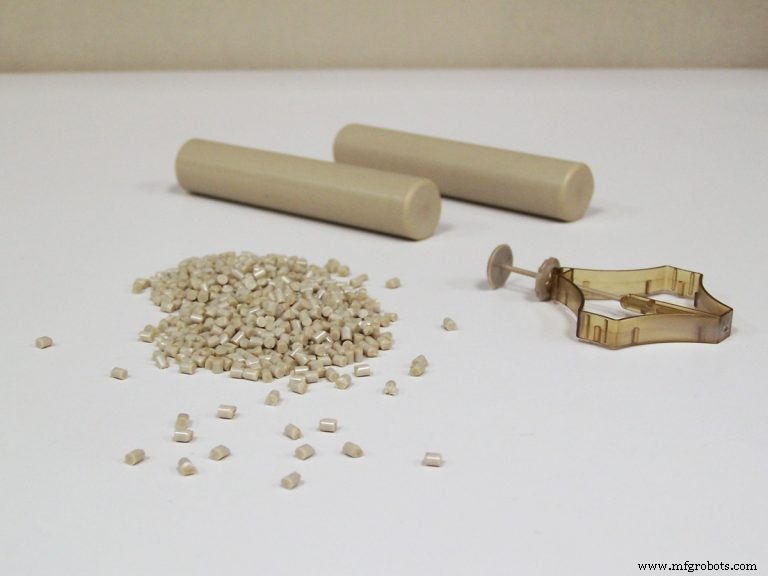
Metal additive manufacturing is advancing toward predictable, repeatable structures, while polymer AM is expanding beyond nylon 11 and 12 toward higher‑performance materials like PEKK and the upcoming Nylon 6 variants from BASF. The trend is clear: the materials pyramid is moving upward.
What challenges remain for the 3D printing materials sector?
The core obstacle is developing polymers that can achieve the low‑pressure consolidation inherent to molding. 3D printing introduces voids that compromise strength. PEKK’s exceptional self‑adhesion mitigates this, but widespread adoption requires new chemistries that bond efficiently under laser or extrusion conditions—a significant investment for the chemical industry.
Do you anticipate change in the near future?
While new polymer chemistries are unlikely to emerge rapidly, process improvements—such as advanced fillers, compatibilizers, and sizing agents—will refine existing materials. OPM will continue to enhance PEKK through such innovations.
What does the coming year hold for OPM?
We’re operating in a “need economy” rather than a venture‑capital‑driven model. Despite pandemic‑related setbacks, demand for medical devices is rebounding. We’re launching a new, lower‑cost suture anchor line and expanding into carbon capture, industrial, and biopharma markets—sectors that value PEKK’s performance and cost‑efficiency.
Any final thoughts?
Now is a pivotal moment for companies that can deliver genuine technological value. In challenging times, leaders seek solutions that reduce cost and unlock new capabilities. OPM’s proven PEKK platform is positioned to meet those needs, and we encourage innovators to pursue substantive breakthroughs rather than incremental prototyping tools.
3D printing
- Scalmalloy: A High‑Strength Aluminium‑Magnesium‑Scandium Alloy for Aerospace‑Grade Metal 3D Printing
- Expert Interview: Simon Fried, Co‑Founder of Nano Dimension, on 3D Printing’s Future in Electronics
- How PostProcess Technologies CEO Jeff Mize is Removing the Post‑Processing Bottleneck in Additive Manufacturing
- Solvay’s Brian Alexander on Building High‑Performance Polymers for Additive Manufacturing
- Expert Interview: Scott Dunham on Metal 3D Printing, Service Bureaus, and the AM Materials Market – Part 2
- Interview with APWORKS CEO Joachim Zettler: Unlocking Business Value in Metal 3D Printing
- Roboze CEO Alessio Lorusso Discusses Cutting‑Edge Composite 3D Printing and Industry Outlook
- Selective Laser Sintering (SLS): Cutting‑Edge Technologies, Advanced Materials, and Expanding Applications
- Lithoz CEO Dr. Johannes Homa Explains the Future of Ceramic 3D Printing
- Interview with Origin CEO Chris Prucha: Advancing Additive Manufacturing through Open Materials