



Altair’s Ravi Kunju Discusses Simulation-Driven Design & the New Inspire Print3D for 3D Printing
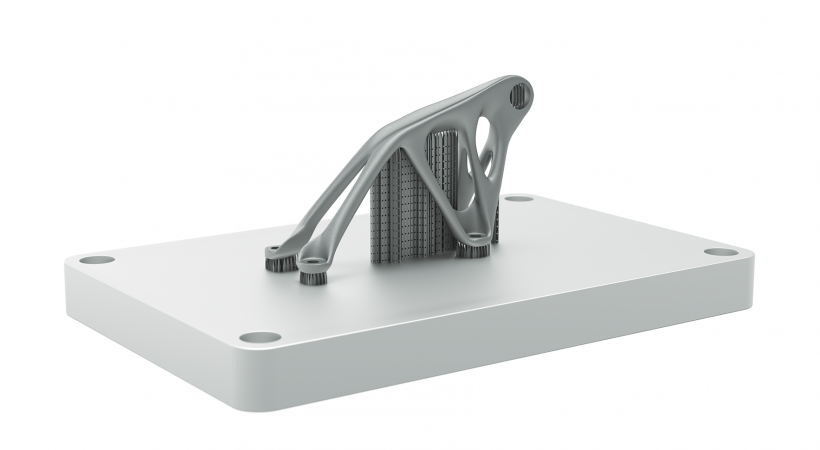
Achieving a simpler and faster design preparation workflow has been an ongoing quest within the 3D printing industry. Designing for Additive Manufacturing is a complex process, with its unique challenges and opportunities.
To harness the full flexibility of AM, engineers need specialised tools. Altair – a global technology leader – delivers software and cloud solutions in product development, high‑performance computing, and data analytics.
In this expert interview, we speak with Ravi Kunju, Senior Vice‑President of Business Development & Strategy for Simulation‑Driven Design at Altair. Ravi explains the launch of Altair Inspire Print3D, the current state of simulation software for 3D printing, and the transformative applications enabled by Altair’s solutions.
Could you tell us a bit about Altair and the challenges you’re solving?
Altair has operated for over 30 years, transforming product and business decision‑making through simulation, data analytics, and industry‑leading design optimisation. I lead the simulation‑driven design portfolio, helping customers embed performance and manufacturability from the earliest design stages.
What does Altair’s Inspire Print3D offer?
Inspire Print3D is one component of a broader Inspire platform that unifies design, optimisation, and simulation. While Altair has long pioneered optimisation for sheet‑metal, casting, extrusion, and injection moulding, Inspire Print3D extends that expertise to additive manufacturing.
The platform enables designers to:
- Create generative designs that satisfy specific AM process constraints (SLM, FDM, binder jetting, WAAM).
- Embed advanced thermo‑mechanical simulations that predict distortion, stresses, and support‑removal effects.
- Iterate design and support structures within a single environment, eliminating the need for separate software tools.
With a first release focused on selective laser melting, users can simulate the entire build cycle – from powder deposition to cooling, support removal, and post‑build distortion – before printing. This holistic approach reduces the 45 % of metal‑AM cost associated with support removal and often eliminates the need for supports altogether.
How would you describe the current state of AM design, simulation, and topology optimisation?
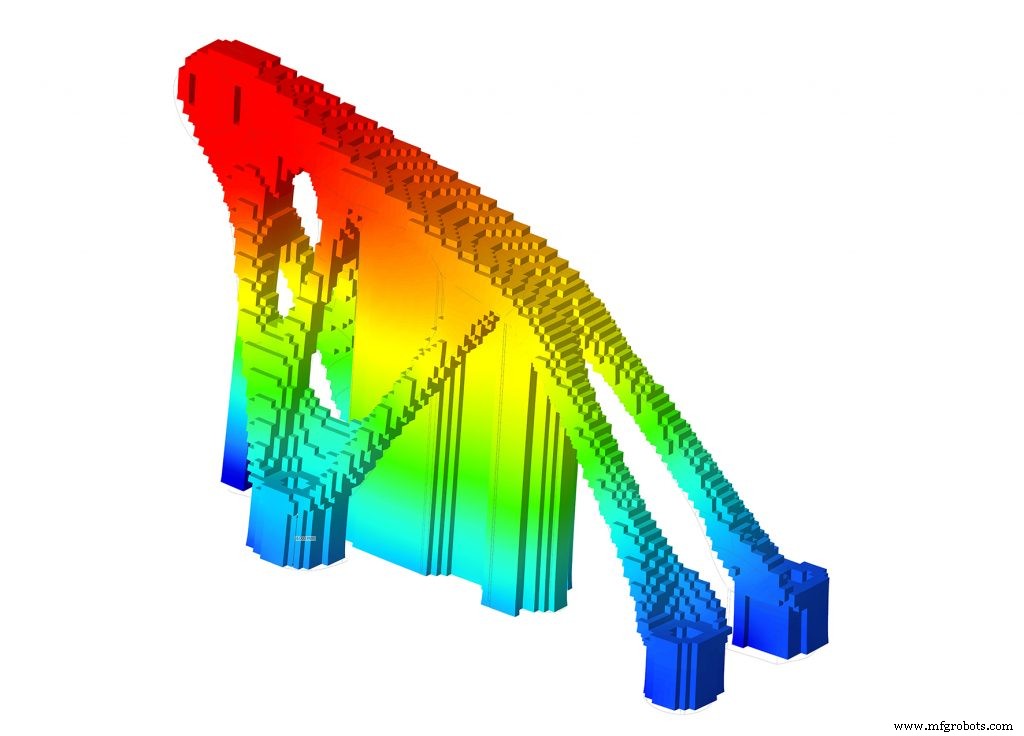
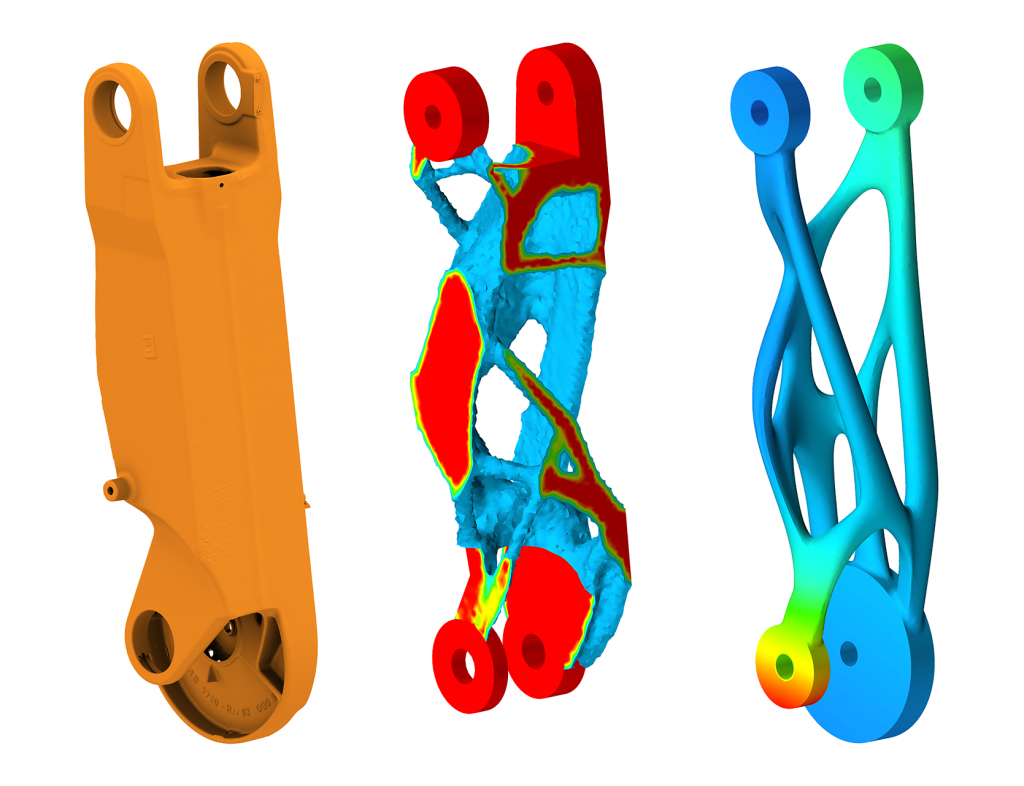
Altair remains a global leader in topology optimisation and generative design, serving over 5,000 customers daily. Our unique advantage lies in integrating performance criteria, load cases, and manufacturing constraints to generate designs tailored to the chosen process.
While many tools can produce organic shapes, true optimisation requires a deep understanding of the manufacturing pathway. Altair’s algorithms evaluate performance and manufacturability simultaneously, ensuring that the final part is not only lightweight and high‑performing but also printable.
Beyond prototyping, Altair supports a full spectrum of AM methods, including binder jetting, hybrid casting, and large‑scale wire‑arc additive manufacturing, enabling customers to convert capability into capacity.
What real‑world applications have benefited from Altair’s design software?
Early adopters span aerospace, automotive, robotics, defence, and medical sectors:
- Aerospace: Optimised telescope brackets and other light‑weight components for EADS and EOS.
- Automotive: BMW, Ford, GM and others use our tools for rapid prototyping and tooling optimisation.
- Robotics: Generative design reduces the weight of end‑of‑arm grippers and large 3‑D‑printed arms (e.g., MX3D collaboration).
- Injection moulding: Structural and conformal‑cooling optimisation cuts cycle times from 9 s to 3 s, tripling production capacity.
- Defence: On‑site, rapid replacement of legacy parts for combat vehicles.
- Medical: Andiamo uses digital scanning and simulation to produce custom orthoses without plaster casts.
- Binder jetting: Partnerships with Desktop Metal and ExOne enable design workflows across FDM, SLM, hybrid casting, and binder jetting.
What key developments do you foresee for 2020?
The AM ecosystem is expanding rapidly – printer manufacturers and material suppliers are doubling yearly. This competition is driving down costs and expanding accessibility. Industries such as dentistry have already achieved a 2‑3‑day turnaround from scan to final part; similar rapid‑turnover models are expected across manufacturing sectors.
What challenges remain to accelerate 3D printing adoption?
Key hurdles include:
- Cost – size and volume dictate the optimal manufacturing route.
- Certification & repeatability – ensuring load‑bearing or safety‑critical parts meet consistent quality across printers and locations.
- Standardisation – industry‑wide material qualification, tolerance, and performance benchmarks are still evolving.
Addressing these issues requires collaboration among material suppliers, printer makers, software vendors, and standard‑setting bodies.
What’s next for Altair?
We’ll deepen our simulation portfolio to validate emerging AM processes and quantify uncertainties. Our focus remains on merging physics, high‑performance computing, and data‑driven techniques, including machine learning, to help customers design more efficiently, produce higher‑quality parts, and make smarter business decisions.
3D printing
- 4 Key Design Principles for Successful 3D Printing
- Top 10 Advanced 3D Printing Simulation Software for Production‑Ready Parts
- Interview with ANSYS Chief Technologist on Driving Metal 3D Printing Success Through Simulation
- AMendate’s CEO Thomas Reiher on Revolutionizing 3D Printing with Automated Topology Optimization
- 5 Emerging Trends Shaping 3D Printing Software
- Interview with Oerlikon's Additive Manufacturing Lead Matthew Donovan on 3D Printing in Aerospace
- Interview with Timm Kragl: Why Additive Manufacturing Execution Systems (MES) Drive Success in 3D Printing
- Expert Interview: nTopology CEO Discusses Advancing Additive Manufacturing with Generative Design Software
- ZBrush for 3D Printing: Unlocking Design Potential
- Choosing the Right 3D Printing Software: A Comprehensive Guide