



AMendate’s CEO Thomas Reiher on Revolutionizing 3D Printing with Automated Topology Optimization
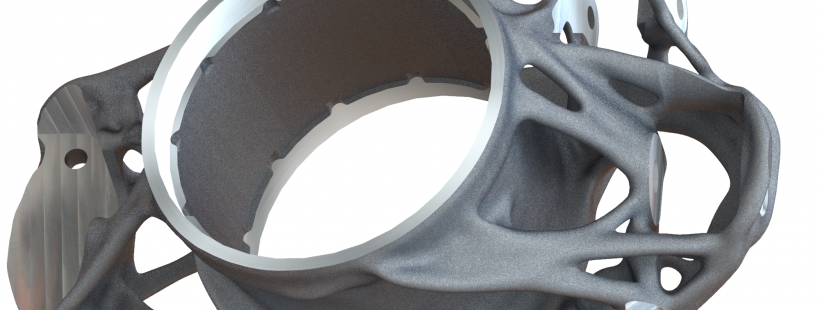
Additive manufacturing (AM) excels at producing highly complex, lightweight structures that traditional methods cannot achieve. Coupled with advanced design tools—especially topology optimisation—AM unlocks unprecedented performance gains.
Industries from aerospace to motorsports rely on weight reduction to cut fuel consumption, improve efficiency, and boost performance. For companies looking to leverage AM for complex, light‑weight designs, award‑winning startup AMendate offers a fully automated optimisation solution that simplifies the entire design pipeline.
We sat down with AMendate Co‑Founder and CEO Thomas Reiher to explore the technology, the challenges it solves, and the growing importance of sophisticated design tools in AM.
What is AMendate?
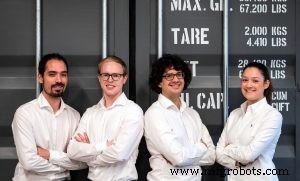
AMendate delivers a fully automated topology optimisation platform tailored for additive manufacturing. While AM can produce lightweight parts cost‑effectively, the design process remains highly complex. To address this, Thomas and co‑founder Steffen Vogelsang developed a novel digital optimisation method during their research at Paderborn University. After more than four years of refinement, they launched AMendate as a full‑time venture, attracting interest from multiple industry players.
Why are topology optimisation and generative design essential for AM?
Lightweight part design is increasingly critical across sectors. Topology optimisation generates intricate geometries that are ideal for AM, while generative design explores a vast parameter space automatically, delivering the best candidates for rapid evaluation. AMendate’s platform performs this entire workflow—generation, evaluation, and conversion—within minutes, drastically reducing time to production.
What challenges does your software address?
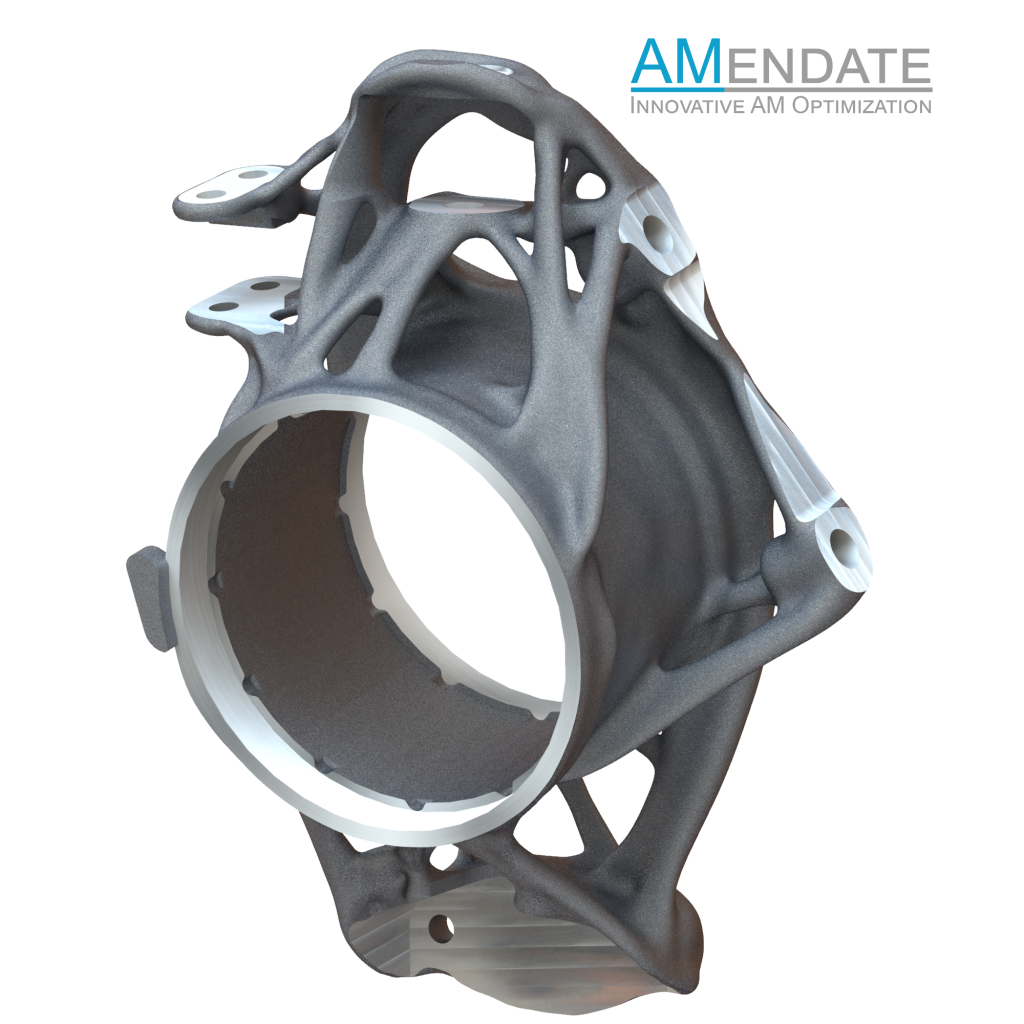
Traditional design methods struggle to produce complex components efficiently. Existing optimisation tools are often time‑consuming, lack full automation, and produce designs that are too simplistic for real‑world applications. AMendate eliminates these bottlenecks by fully automating the optimisation of technical components, enabling organic, lightweight structures that deliver substantial material savings and streamlined, cost‑effective AM production.
Key benefits of AMendate’s software
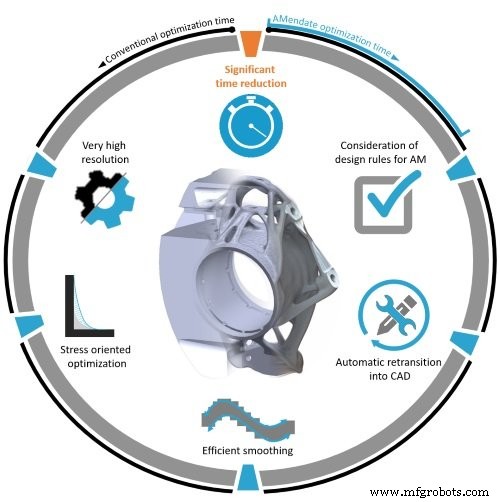
The core advantage is rapid generation of complex, lightweight structures through automation. Unlike conventional workflows that require manual interpretation of simulation results, AMendate automatically converts optimised designs into standard CAD exchange formats, ready for integration into familiar engineering pipelines. Companies without extensive computing resources can now optimise components quickly and affordably—up to 80% faster than traditional methods with average weight savings exceeding 40%.
How does AMendate differentiate itself?
Conventional topology optimisation tools are often laborious and limited in scope. AMendate’s user‑friendly platform automates mesh generation, result interpretation, and CAD conversion, freeing engineers to focus on higher‑value tasks. The software produces superior‑optimised designs by leveraging automated interpretation and file conversion, making it significantly faster and more effective than competing solutions.
Obstacles to designing for AM
Designing for AM presents two main challenges: (1) many tools cannot fully exploit the geometrical freedom that AM offers, and (2) design rules specific to AM are rarely integrated into standard CAD workflows, increasing complexity and error risk. AMendate’s algorithm addresses both by creating highly complex, printable designs that respect AM constraints through its design‑for‑AM module.
Future of additive manufacturing
AM is poised to complement traditional manufacturing processes more extensively over the next five years. Success hinges on rapid hardware advancements and equally rapid software evolution, particularly tools that embed AM‑centric thinking into everyday design. AMendate aims to accelerate this transition by automating critical steps in the design process, unlocking the full potential of additive manufacturing.
Recent accolades and next steps
Winning the 2018 Formnext Start‑Up Challenge gave AMendate a surge of confidence and visibility. The company plans to transform its core technology into a standalone, user‑friendly interface while continuously enhancing speed, optimisation quality, and feature set. Upcoming releases will further solidify AMendate’s position as a leader in automated AM design.
Final thoughts
Additive manufacturing has reshaped traditional manufacturing paradigms over the past decade, opening new avenues for innovation. AMendate believes this is just the beginning of a broader technological revolution that will unfold over the next ten years. The team is eager to contribute to and shape this exciting evolution.
To learn more about AMendate, visit https://amendate.de/ or follow the company on LinkedIn.
3D printing
- Topology Optimisation + 3D Printing: Revolutionizing Design and Production
- 4 Key Design Principles for Successful 3D Printing
- 5 Emerging Trends Shaping 3D Printing Software
- Interview with Oerlikon's Additive Manufacturing Lead Matthew Donovan on 3D Printing in Aerospace
- Interview with Jan Tremel: How Bosch Leverages 3D Printing in Its Powertrain Center of Competence
- Altair’s Ravi Kunju Discusses Simulation-Driven Design & the New Inspire Print3D for 3D Printing
- Interview with Timm Kragl: Why Additive Manufacturing Execution Systems (MES) Drive Success in 3D Printing
- Expert Interview: nTopology CEO Discusses Advancing Additive Manufacturing with Generative Design Software
- ZBrush for 3D Printing: Unlocking Design Potential
- Choosing the Right 3D Printing Software: A Comprehensive Guide