



Interview with Jan Tremel: How Bosch Leverages 3D Printing in Its Powertrain Center of Competence
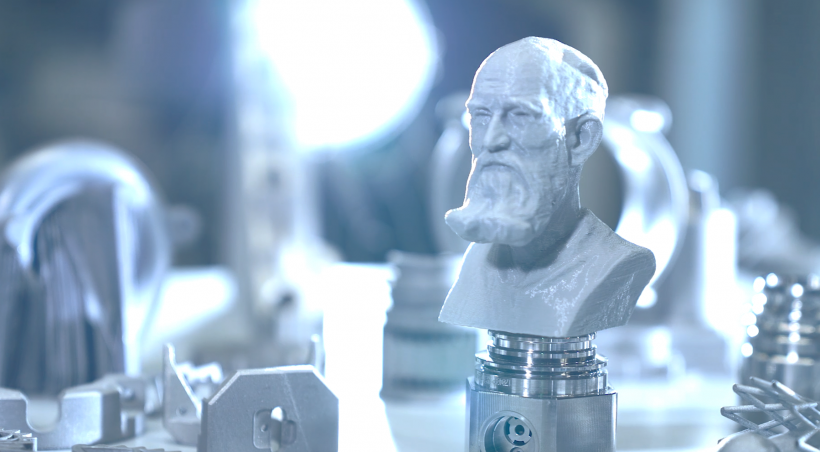
German multinational engineering and technology company Bosch is a global leader in automotive components, industrial technology, consumer goods, energy, and building solutions.
Bosch has embraced additive manufacturing (AM) across every division, using it to accelerate prototyping and enable on‑demand, flexible production that reduces time‑to‑market and streamlines supply chains.
The company maintains a dedicated 3D‑printing Center of Competence (CoC) that drives innovation across all product lines.
Today we speak with Jan Tremel, Head of the CoC within the Powertrain Solutions unit, to uncover how AM delivers value, the challenges of in‑house adoption, and the future of 3D printing in the automotive sector.
Could you tell me a bit about your background and how you became involved in AM?
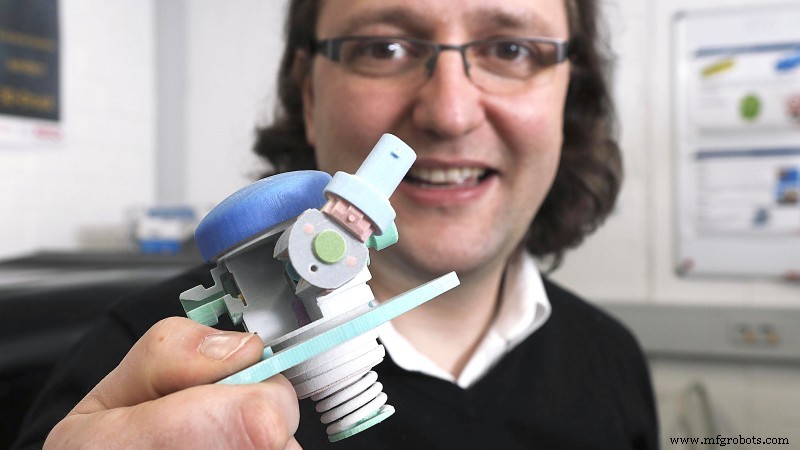
I first became involved between 2006 and 2007, during the rise of the RepRap movement. Fascinated by the technology, I built my first 3D printer at university. When I joined Bosch, I envisioned the impact of having a small, in‑house 3D printer. That vision sparked a series of proposals that ultimately established the CoC. Bosch then realized that integrating AM for both plastics and metals was essential for developing the next generation of combustion‑engine components.
I’m based in the Powertrain Solutions unit, which accounts for nearly one‑quarter of Bosch’s annual revenue and employs about one‑quarter of the company’s workforce. In this role, we focus on deploying 3D printing in high‑impact projects—high‑pressure gasoline and diesel pumps, injectors, and hydraulic systems—where the technology can deliver real performance gains.
You’re currently leading the Center of Competence for 3D Printing. Could you tell me about the work you’re doing there and how you’re applying the technology?
As the head of the 3D‑printing Center of Competence, I oversee a portfolio that spans four major business branches: building technologies, consumer goods, industrial technology, and automotive powertrain solutions. Each branch houses teams dedicated to integrating AM into their product portfolios.
In Powertrain Solutions, roughly 50 % of my time is spent on product engineering. I collaborate closely with R&D to embed 3D‑printed components in new product concepts, leveraging the design freedom that additive manufacturing offers. I also partner with manufacturing plants to train and enable line workers to adopt AM in day‑to‑day operations.
For example, a maintenance crew tasked with keeping a production line running continuously needs to replace a broken robot gripper quickly. I organize workshops that demonstrate how standard materials and a simple 3D printer can produce a functional replacement, eliminating downtime.
We also target cost‑reduction opportunities. By replacing existing parts with optimized 3D‑printed designs, we can shorten cycle times, reduce waste, and cut internal costs—particularly in testing devices where rapid iteration is crucial.
What value does 3D printing bring to the automotive industry?
AM expands the toolkit of a highly mature automotive manufacturing ecosystem that already relies on machining, injection moulding, and coating. Traditional processes excel at high‑volume production, but they can be costly and time‑consuming to iterate. AM offers a rapid, low‑cost alternative that shortens the design‑to‑prototype cycle from months to weeks.
Take a complex plastic part that would normally require a moulding tool—12 to 14 weeks to fabricate. With 3D printing, the same part can be produced in 2 to 4 weeks, enabling up to three design iterations before finalizing the geometry. This agility translates into faster time‑to‑market and improved product quality.
For serial production, AM will likely play a niche role today, primarily in low‑volume, highly customised applications such as luxury or sports cars. However, as build speeds and material performance improve, we anticipate a gradual shift toward larger batch sizes—moving from a few hundred to several thousand parts per run.
Are there any challenges still to be overcome with AM to accelerate its transition to serial production?
Several barriers remain before AM can scale to mass production in automotive. First, material availability and performance are critical. High‑strength steel and glass‑fibre‑filled polyamides—required for high‑pressure components and engine‑adjacent parts—are not yet fully matched by AM materials. The micro‑structure produced by layer‑by‑layer deposition differs from that of conventionally machined parts, affecting mechanical properties and tolerance.
Second, dimensional accuracy and repeatability need improvement. Tight tolerances, such as small holes in connectors, pose challenges for current printers. Consistency across different machines and batches is still a work in progress.
Third, many AM processes involve manual post‑processing steps—e.g., powder removal for metal builds—that add cost and complexity. While automation is advancing, these activities remain labor‑intensive.
Productivity is a key driver; the automotive sector demands high throughput at low unit cost.
How do you see AM evolving in the automotive industry over the next 5 years?
Unlike aerospace or medical devices, automotive components typically have a shorter lifecycle and tighter cost constraints. Consequently, AM will continue to serve primarily as a rapid‑prototype and product‑development accelerator. Full‑scale serial production via additive manufacturing is likely still several years away.
We expect incremental adoption in specialised applications—customised interior trim, lightweight tooling, and parts for low‑volume vehicles—while conventional processes will remain dominant for mass‑produced components.
Is it challenging to convince people of the value of 3D printing, or do you find that people are very receptive to adopting the technology?
Initially, we adopted a “missionary” approach, advocating the transformative potential of 3D printing. Today, our focus has shifted to data‑driven projects that demonstrate tangible benefits. We no longer claim that everything can be printed; we assess each use case critically.
The widespread adoption of home printers has also lowered the barrier to entry. Many employees now have hands‑on experience with 3D printing, making the technology more approachable and enabling them to apply it directly at work.
Are there any trends within the industry that you’re excited about?
We are excited by start‑ups that deliver proven solutions, and by large manufacturers that are investing in advanced AM processes. The market is maturing: filaments now come with full technical specifications—mechanical data, safety information, and qualification certificates—making the technology more reliable and easier to integrate into engineering workflows.
What does 2024 hold for the Powertrain Solutions business unit at Bosch, when it comes to AM?
Over the next year, our strategy will prioritize cost reduction and process optimisation. We plan to broaden the availability of 3D printing across Powertrain Solutions, offering our teams the flexibility to use AM for small‑ to medium‑volume production and to prototype complex parts more rapidly.
3D printing
- Inside 3D Printing: Professor Neil Hopkinson on Innovation, Scale, and the Future
- Dr. Alvaro Goyanes of FabRx on 3D‑Printed Medicines: From Innovation to Personalised Care
- Revolutionizing Healthcare: How 3D Printing Transforms Medicine
- Carbon Co-Founder Philip DeSimone on Scaling 3D Printing for High‑Volume Production
- AMendate’s CEO Thomas Reiher on Revolutionizing 3D Printing with Automated Topology Optimization
- Industry Adoption of 3D Printing: A Maturity Landscape
- America Makes Executive Director John Wilczynski on Advancing 3D Printing: Standards, Workforce, and Future Outlook
- Interview with BCN3D CTO Eric Pallarés: Unlocking the Power of IDEX 3D Printing Technology
- Fixing a 3D Printer That Prints Off-Center: Quick Troubleshooting Guide
- 3D Printing a Protective Mask: A Step-by-Step Guide